

Because sarcasm is often difficult to discern and improperly used, it can operate as a linguistic mulligan. But deploy the excuse too much, and you might raise some eyebrows.
Articles on Linguistics
Displaying 241 - 260 of 458 articles

Worried you won’t be understood while wearing a mask? Don’t be. We studied how people sound while talking through fabric and the results are encouraging.

Those with a diagnosis of schizophrenia may be more likely to interpret metaphorical thoughts literally.

Generic names can take on a linguistic life of their own, becoming powerful forms of social commentary.
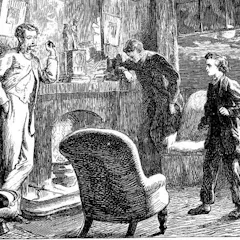
Dickens had some clever little narrative tricks, which become clear when his work is analysed as a single data set.

The Scripps National Spelling Bee highlights the richness of the English lexicon by picking some tough entries with foreign roots.

The etymology of an epidemic.

One anthropologist found 1,072 similar words for ‘mom’ and ‘dad’ in the world’s languages. It turns out a mix of biology, culture and encouragement from parents explains this phenomenon.

Second-language learners from different age groups seem to have equal chances of becoming highly proficient speakers as long as they are placed in a supportive environment.

Have you been pulled up by a “grammar Nazi”? Now you can correct them back.

It’s all about context.

On International Mother Language Day, Canadians can celebrate multilingual heritage by recognizing flexible uses of languages.

Accents differ depending on where we’re from, even in the same country.

Irony is a slippery concept. Sometimes it’s used in speech, other times it’s used to describe a situation – oh, and it can also characterize an attitude. Is its versatility its downfall?

African American Vernacular English is part and parcel of Black identity. Its distinctive linguistic features are — wrongly — denigrated.

The unpleasant ‘Happy Brexit Day’ poster misses the fact that the vast majority of people in the UK recognise the benefits of multilingualism.

People still find ways to express old ways of speaking in a new language, so that language does not fundamentally alter their cultural identity.

Compared to other politicians who tend to be indirect and evasive, Nkrumah was direct, explicit and assertive.

Pronouns rarely, if ever, change. Then along came the gender nonbinary ‘they,’ which was just anointed ‘word of the decade.’

A new study analyzes the language in nearly 680,000 pet adoption ads.
Top contributors
-

Professor of Linguistics, Monash University
-
Senior Lecturer in Linguistics, Monash University
-
Roger J. Kreuz is a Friend of The Conversation.
Associate Dean and Feinstone Interdisciplinary Research Professor, University of Memphis
-
Associate Professor in Linguistics, Macquarie University
-
Associate Professor in Sociolinguistics, University of Cambridge
-
Professor of Linguistics, University of York
-
Professor of Linguistics, University of Nevada, Reno
-
Senior Research Fellow of Linguistics, University of Colorado Boulder; Griffith University; University of New England
-
Professor of Linguistics and English, Florida International University
-
Associate Professor of Linguistics and Director of Language Lab, The University of Western Australia
-
Professor of English Language and Literature, University of Oxford
-
Francesco Perono Cacciafoco is a Friend of The Conversation.
Associate Professor in Linguistics, Xi'an Jiaotong-Liverpool University
-
Professor of Psychology, Cornell University
-
Maïa Ponsonnet is a Friend of The Conversation.
Researcher, Linguistics, Centre national de la recherche scientifique (CNRS)
-
Honorary Associate Professor in Writing, The University of Queensland