
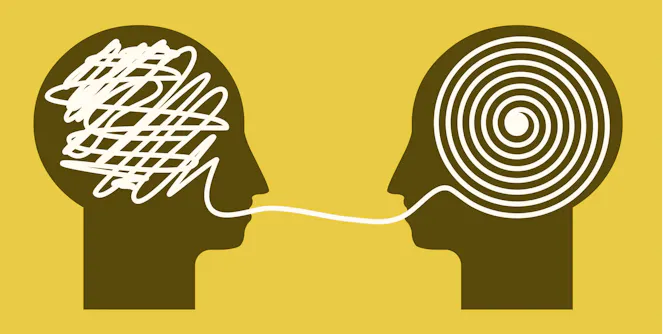
A new, extensive database of language grammars from around the world indicates an alarming trend of global language loss.
Articles on Linguistics
Displaying 141 - 160 of 457 articles

The aggressive efforts of social media platforms to police language have spawned a new lexicon meant to evade censors.

Large language models can’t understand language the way humans do because they can’t perceive and make sense of the world.

Learning how online misogynists use language can help teachers and parents intervene in radicalisation.

English is spoken by over a billion people around the world, often at the expense of local languages.

The language question in Ukraine goes back centuries. It is deeply rooted in the history of old empires and Ukraine’s position as the borderland between the West and the East.

Beliefs about language are never just about language. They reflect institutional power dynamics.

Despite increasing use of non-English languages demonstrating broader acceptance of linguistic diversity in a globalized world, films sometimes suggest associations between ‘foreignness’ and villainy.

Phrases like ‘I suppose’ and ‘I would argue’ can project a lack of confidence when speaking.

Colloquialisms such as barbie and smoko are like accents – part of the glue that sticks Australian English speakers together.

The events of Jan. 6, 2021, have been called an insurrection. The same word has often been used to describe the mostly forgotten rebellions against plantation owners by enslaved people.

The extraordinary Chinese writing system has over 4,000 core complex characters – and they’ve been getting more complex over time.

There’s a lot to the pronunciation of the word ‘no’ in an Australian accent.

Many people fear the disappearance of the unique way some communities speak. But accent loss is a complicated notion and embracing both language variation and change can be an important social goal.

The first speech sounds were uttered about 70,000 years ago and not hundreds of thousands of years ago as is sometimes claimed.
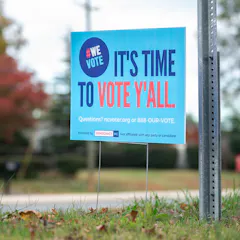
The use of ‘y'all’ has often been seen as vulgar, low-class and uncultured. That’s starting to change.

Linguistic analysis shows that activists and politicians have very different messages when it comes to the environment.
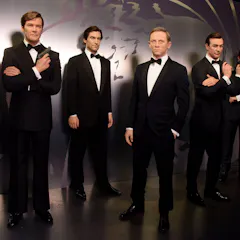
007 uses an English upper-class, ‘Received Pronunciation’ accent.
African American Vernacular English is a stigmatized dialect that is still ridiculed in education and the workplace. Its speakers are coherent and intelligent communicators, but remain disadvantaged.
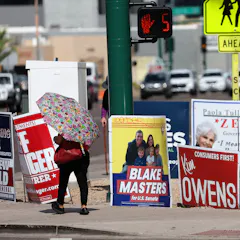
Supporters and volunteers love them. But it’s difficult for political scientists to determine whether they even influence the outcome of elections, since no two campaigns or election cycles are alike.
Top contributors
-

Professor of Linguistics, Monash University
-
Senior Lecturer in Linguistics, Monash University
-
Roger J. Kreuz is a Friend of The Conversation.
Associate Dean and Feinstone Interdisciplinary Research Professor, University of Memphis
-
Associate Professor in Linguistics, Macquarie University
-
Associate Professor in Sociolinguistics, University of Cambridge
-
Professor of Linguistics, University of York
-
Professor of Linguistics, University of Nevada, Reno
-
Senior Research Fellow of Linguistics, University of Colorado Boulder; Griffith University; University of New England
-
Professor of Linguistics and English, Florida International University
-
Associate Professor of Linguistics and Director of Language Lab, The University of Western Australia
-
Professor of English Language and Literature, University of Oxford
-
Francesco Perono Cacciafoco is a Friend of The Conversation.
Associate Professor in Linguistics, Xi'an Jiaotong-Liverpool University
-
Professor of Psychology, Cornell University
-
Maïa Ponsonnet is a Friend of The Conversation.
Researcher, Linguistics, Centre national de la recherche scientifique (CNRS)
-
Honorary Associate Professor in Writing, The University of Queensland