

A new database that shows the use of gendered words in major Australian newspapers tells us much about whose voices are being heard.
Articles on Linguistics
Displaying 381 - 400 of 457 articles
Our communications revolution is changing the way we write and speak, and ‘Slanglish’ has never had it so good.

With the taboo on swearing loosening over the past few decades, will profanity lose its effectiveness in spoken language?

How did K come to be used more often in brand names than would be expected by chance?

The use of adjectives in English has caused an internet storm – here are the ‘rules’ explained.

When botany and linguistics collide: pumpkins are fruits and there’s technically no such thing as a vegetable. But try telling that to a five-year-old and see how far you get.

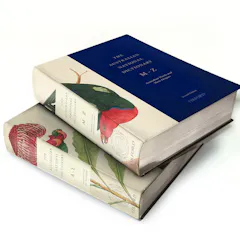
Words from 100 Indigenous languages are in the new edition of the Australian National Dictionary – reflecting a heightened interest in Aboriginal and Torres Strait Islander culture.

A “passion” was once thought of as a love or desire so irresistible as to take one to the threshold of death. What are we to make, then, of a passion for innovation or management consulting? What’s happening to our words?

From Jabberwocky to the BFG’s gobblefunking, playing with words is the first step to mastering them – not something to be ironed out of teaching.

From ‘shiok’ to ‘narcocorrido’ to ‘sweary’, the OED’s new words are a linguistic smorgasbord. They include, for the first time, entries from Singapore and Hong Kong English - and an expression dating back to 1723.

Going forward, perhaps we ought to cut office patois some slack – it greases the wheels of business, after all.

Fibbers beware: experts have developed a new digital lie detector.

New research shows how we can track and even anticipate terrorists’ movements using social media.

We all know about the ‘jobs and growth’, but there was also ‘tax’ and various forms of ‘new’ – read innovation – in this year’s federal budget.

Even if you don’t have a word for it, you can make one up.

The word “cunt” has made its way into popular discourse, and while some are still offended by it, it’s nowhere near as outrageous as it once was.

Children don’t learn all aspects of language from their parents, but invent a language structure themselves.

As genders blur, language is rapidly adapting. Look no further than the American Dialect Society’s 2015 Word of the Year.
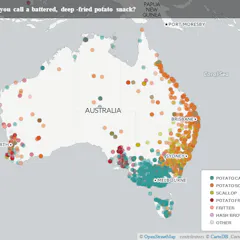
Australian’s care so much about regional differences in words because it’s a reflection on a person’s identity.

The taboo meaning of the f-word is not nearly as common as the use of the word as an “emphatic intensifier”, or in the various idioms.
Top contributors
-

Professor of Linguistics, Monash University
-
Senior Lecturer in Linguistics, Monash University
-
Roger J. Kreuz is a Friend of The Conversation.
Associate Dean and Feinstone Interdisciplinary Research Professor, University of Memphis
-
Associate Professor in Linguistics, Macquarie University
-
Associate Professor in Sociolinguistics, University of Cambridge
-
Professor of Linguistics, University of York
-
Professor of Linguistics, University of Nevada, Reno
-
Senior Research Fellow of Linguistics, University of Colorado Boulder; Griffith University; University of New England
-
Professor of Linguistics and English, Florida International University
-
Associate Professor of Linguistics and Director of Language Lab, The University of Western Australia
-
Professor of English Language and Literature, University of Oxford
-
Francesco Perono Cacciafoco is a Friend of The Conversation.
Associate Professor in Linguistics, Xi'an Jiaotong-Liverpool University
-
Professor of Psychology, Cornell University
-
Maïa Ponsonnet is a Friend of The Conversation.
Researcher, Linguistics, Centre national de la recherche scientifique (CNRS)
-
Honorary Associate Professor in Writing, The University of Queensland