

Computers break examples of human speech into small bits of sound, then put them together to sound like people do.
Articles on Speech
Displaying 1 - 20 of 100 articles

A new study of great ape laughter also gives clues about how humans’ ancient ancestors started speaking.

Spoonerisms can be silly and make you laugh. But linguists see something more: a rare glimpse of how the mind plans speech before we even open our mouths.

Throughout the history of the language, what has been considered ‘bad’ speech often becomes ‘proper.’ You just have to give it time.

Writing is a relatively recent invention layered on top of something much older and more fundamental.

If a baby doesn’t show a clear response at a particular age, it does not necessarily mean they have stopped learning or missed an important step.

This rare speech motor disorder prevents effective speech planning, leaving some children persistently difficult to understand without specialist support.
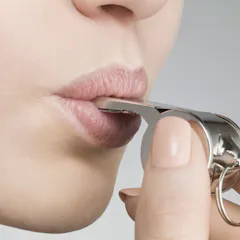
Whistleblowers’ stories show how accountability is shifting from formal legal institutions to solidarity networks built outside the state.

Many Native American languages only have a few native speakers left.

For around a third of autistic people, speaking is hard.

This common condition affects children’s spoken language development, but similarity to other disorders makes it hard to detect.

Left and right brains hear speech differently, yet how this divide forms was unclear − until mouse studies showed each hemisphere runs on its own developmental clock.

Is it better to chat to babies in the tone and pace we’d use when talking to other adults, or is it OK to talk in a slower, higher pitched, sing-song voice?

Spotting Alzheimer’s disease early can help find the right treatments and support.

From the cold war to civil rights to Trump 2.0, award ceremonies have always been stages for activism.
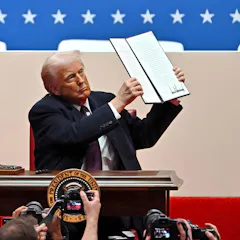
US President Donald Trump claimed that “national unity is now returning to America” in an inaugural speech marked by vows to radically change government. But a razor-thin Republican majority in Congress and a divided electorate could complicate his plans.

People can have their own personal dialect based on their own linguistic and social experiences.

Accents provide listeners with information about speakers, such as where they come from or what other languages they speak. However, accents can also be a source of listener bias.

A new study suggests that talking speed is a more important indicator of brain health than difficulty finding words.
We are constantly talking to ourselves, but our internal monologues have received surprisingly little attention from philosophers, until now.
Top contributors
-

Professor of English and English Education, Kennesaw State University
-
Professor in Psychology, UCL
-
Professor of English, Kennesaw State University
-
Professor of Linguistics, University of Nevada, Reno
-
Senior Lecturer in Linguistics, Monash University
-
Roger J. Kreuz is a Friend of The Conversation.
Associate Dean and Feinstone Interdisciplinary Research Professor, University of Memphis
-
Lecturer in Communications Studies, University of Limpopo
-
Associate professor, El Bosque University
-
Research Professor, Speech & Language Development, Western Sydney University
-
Master's Student in Emerging Media Studies, Boston University
-
Associate Professor of Evolutionary Biology, Anglia Ruskin University
-
Senior lecturer, Department of Psychology, Northumbria University, Newcastle
-
Professor of Politics & International Studies, The Open University
-
Lecturer in Computer Science and Informatics, University of East London
-
Assistant Professor of Psychology, The Ohio State University