
As the year winds down, we’ll get you up to speed. Plus, there’s no better way to kill a trend than to bring it up at the dinner table in front of your kids.
Articles on Linguistics
Displaying 261 - 280 of 458 articles
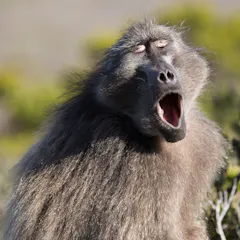
Researchers say it’s time to finally discard a decades-old theory about the origins of human language – and revise the date when human ancestors likely were able to make certain speech noises.

One side wants to ‘get Brexit done’ while the other shouts the ‘NHS is not for sale!’. What does it all really mean?

‘Greengrocer’s’ may be in mourning, but the rest of us can sigh with relief.
There is a negative feel to many of the shortlisted contenders for The Macquarie Dictionary’s Word of the Year.
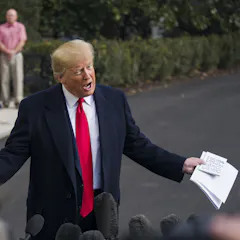
The history of the Latin phrase at the centre of the impeachment investigation into Donald Trump.

Behind the magical tale is a deep layer of linguistic meaning.
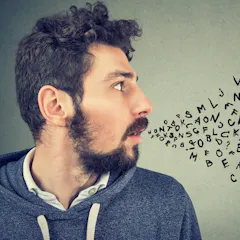
Non-native speakers often face an uphill struggle to be heard and taken seriously.
How members of America’s two parties view the country – and its place in the world – might explain this phenomenon.

Some people claim it’s already been passed. But Alan Turing’s test of whether artificial intelligence can act like a human remains an important benchmark for our species.
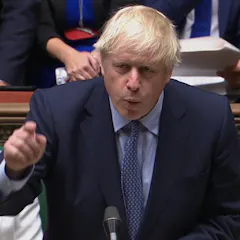
Use of the words ‘traitor’, ‘surrender’ and ‘betrayal’ have increased inside parliament but everyone outside needs to watch their language too.

The AFL Grand Final is more than a physical contest between professional athletes: it is a day we collectively make meaning, and create culture.
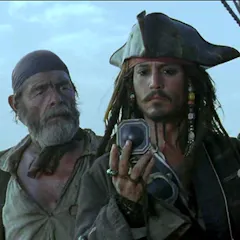
We may no longer say ‘shiver me timbers’, but we still use plenty of pirate words for other things.

As we get older, our eyesight may dim and our recall may falter. But our linguistic abilities don’t seem to erode.
Some animals, like rats, learn linguistic patterns better than humans can.

The word ‘OK’ has only been around for 180 years, but it’s become the most spoken word on the planet.
Children as young as eight or nine could be taught in a more adult, analytical way.

The word ‘like’ has a grammar, and by looking at it, we can learn a lot about what ‘like’ means and what it contributes to someone’s speech.
Linguists have a lot of largely untested theories. Borrowing a tool from ecology, researchers built a model that didn’t look for one worldwide explanation.
As calls are made to ban swearing at work, in public and even at home, a linguist comes out fighting for harsh language.
Top contributors
-

Professor of Linguistics, Monash University
-
Senior Lecturer in Linguistics, Monash University
-
Roger J. Kreuz is a Friend of The Conversation.
Associate Dean and Feinstone Interdisciplinary Research Professor, University of Memphis
-
Associate Professor in Linguistics, Macquarie University
-
Associate Professor in Sociolinguistics, University of Cambridge
-
Professor of Linguistics, University of York
-
Professor of Linguistics, University of Nevada, Reno
-
Associate Professor of Linguistics and Director of Language Lab, The University of Western Australia
-
Senior Research Fellow of Linguistics, University of Colorado Boulder; Griffith University; University of New England
-
Professor of Linguistics and English, Florida International University
-
Professor of English Language and Literature, University of Oxford
-
Francesco Perono Cacciafoco is a Friend of The Conversation.
Associate Professor in Linguistics, Xi'an Jiaotong-Liverpool University
-
Professor of Psychology, Cornell University
-
Maïa Ponsonnet is a Friend of The Conversation.
Researcher, Linguistics, Centre national de la recherche scientifique (CNRS)
-
Honorary Associate Professor in Writing, The University of Queensland