

We often imitate styles of speech we hear – what’s known as ‘linguistic convergence.’ But a researcher wanted to see if we alter our speech based on the mere expectation of how someone will sound.
Articles on Linguistics
Displaying 181 - 200 of 457 articles

Non-standard ways of speaking are often deemed inferior, affecting schooling, social lives and job prospects.

There’s a long history of communities speaking Romany in the UK, so it’s hardly surprising that some of its words have found their way into everyday English.
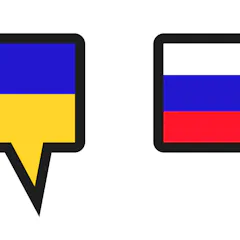
The difference between a language and dialect is just as much about politics as it is linguistics.

The words that doctors choose during a consultation – and even the verb tense – can help or hurt a patient dealing with a difficult diagnosis.

Metaphors, analogies and comparisons abound when talking about the war in Ukraine, but are they helpful? An expert in peace and conflict resolution explains.

Linguicism sees people penalised for speaking in non-standard forms of English.

To Russian nationalists, if the Ukrainian language is classified as a derivative of the Russian language, the invasion looks less like an act of aggression and more like reintegration.

Putin has suggested Ukrainians and Russians share one language, but there are many differences that are important to understand.

Is there a connection between sound and meaning?

Everyone has words they struggle to pronounce – and that’s no bad thing.

Certain letters appear more frequently in words so starting with this one increases your chances of getting more correct letters on your first go.

Wordle has become an obsession online, with over 3 million daily players around the world. But the game has more in common with code-breaking than it does with crosswords.

Could bringing back words with positive meanings make us happier?

The Downing Street party scandals have presented numerous linguistic puzzles to explore.

You can only properly translate French scatological swear words if you consider who is using them. In this case, the most powerful person in France.

The Australian summer has provided its own colourful vocabulary over the years, from Spooners to speedos and bush walks to hikes.

Technology has brought significant changes to the way we use language.

As you make your yuletide preparations, ever wonder where some of the season’s strange words come from? Well, our linguistic experts have the answers.

It appears that the rhythms of your brain waves get in sync with the speech patterns of the person you’re conversing with. Videoconferencing throws off that syncing process.
Top contributors
-

Professor of Linguistics, Monash University
-
Senior Lecturer in Linguistics, Monash University
-
Roger J. Kreuz is a Friend of The Conversation.
Associate Dean and Feinstone Interdisciplinary Research Professor, University of Memphis
-
Associate Professor in Linguistics, Macquarie University
-
Associate Professor in Sociolinguistics, University of Cambridge
-
Professor of Linguistics, University of York
-
Professor of Linguistics, University of Nevada, Reno
-
Senior Research Fellow of Linguistics, University of Colorado Boulder; Griffith University; University of New England
-
Professor of Linguistics and English, Florida International University
-
Associate Professor of Linguistics and Director of Language Lab, The University of Western Australia
-
Professor of English Language and Literature, University of Oxford
-
Francesco Perono Cacciafoco is a Friend of The Conversation.
Associate Professor in Linguistics, Xi'an Jiaotong-Liverpool University
-
Professor of Psychology, Cornell University
-
Maïa Ponsonnet is a Friend of The Conversation.
Researcher, Linguistics, Centre national de la recherche scientifique (CNRS)
-
Honorary Associate Professor in Writing, The University of Queensland