

Accents are constantly changing.
Articles on Linguistics
Displaying 121 - 140 of 457 articles

Gendered words can be offensive in certain contexts – it’s all in what’s being signaled, according to a sociolinguist
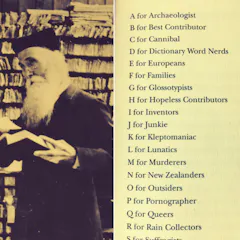
An irresistible history of the OED reveals that English is a global language in its sources, its reach and its ownership.

Corpus linguistics – using computers to analyse texts – can spot patterns and nuances that might otherwise go unnoticed.

Language, geography, age and other factors can all affect how fast a person talks. But sometimes, these perceived differences are only in the listener’s head.
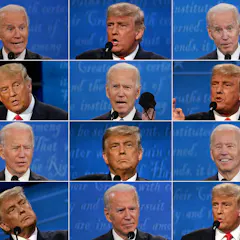
Long treated as a sign of anxiety or a delaying tactic, ‘filled pauses’ are a linguistic trick to signal that what you are about to say might be complicated.

The idea a language should grow simpler if people need to learn it as adults has an intuitive appeal. But an analysis of more than 1,200 languages shows this doesn’t quite stack up.

Bilinguals may struggle with hangman but they excel at remembering and categorising objects.

How politicians have cynically used metaphor to imply meaning through language.

The word shows that language isn’t static, it evolves to reflect developments in a society.

Jumping in too quickly with ‘Oh yes, that happened to me’ can end up saturating conversation and make your friend feel they were never heard in the first place.

People with a common history – often due to significant geographic or social barriers – often share genetics and language. New research finds that even a dialect can act as a barrier within a group.

Similar techniques used to identify criminals have been employed to unmask anonymous authors. But they aren’t foolproof.

We humans like to think that our language is original, but we absorb large amounts of it from others and liberally repeat and remix what we hear – just as language AIs do.

It came about through sustained contact with native Spanish speakers who directly translated phrases from Spanish into English, a form of linguistic borrowing called ‘calques.’

Researchers have identified ways to have more productive conversations – even when you’re talking to someone who holds an opposite view.

Diasporic placemaking is often a story of connections and hidden stories. It is also a complicated story about who owns public spaces and who decides who gets to use it.

Called your ‘inner voice,’ it develops along with your reading skills.

The oath of allegiance is meaningless on several counts.

Through characters such as Bazza McKenzie, the late comedian promoted Australian vernacular – the witty, the crude and both – to new audiences.
Top contributors
-

Professor of Linguistics, Monash University
-
Senior Lecturer in Linguistics, Monash University
-
Roger J. Kreuz is a Friend of The Conversation.
Associate Dean and Feinstone Interdisciplinary Research Professor, University of Memphis
-
Associate Professor in Linguistics, Macquarie University
-
Associate Professor in Sociolinguistics, University of Cambridge
-
Professor of Linguistics, University of York
-
Professor of Linguistics, University of Nevada, Reno
-
Senior Research Fellow of Linguistics, University of Colorado Boulder; Griffith University; University of New England
-
Professor of Linguistics and English, Florida International University
-
Associate Professor of Linguistics and Director of Language Lab, The University of Western Australia
-
Professor of English Language and Literature, University of Oxford
-
Francesco Perono Cacciafoco is a Friend of The Conversation.
Associate Professor in Linguistics, Xi'an Jiaotong-Liverpool University
-
Professor of Psychology, Cornell University
-
Maïa Ponsonnet is a Friend of The Conversation.
Researcher, Linguistics, Centre national de la recherche scientifique (CNRS)
-
Honorary Associate Professor in Writing, The University of Queensland