
Einstein was awarded a Nobel prize for his explanation for how light can be described as being made up of individual particles of energy under certain conditions.
Articles on Light
Displaying 61 - 80 of 136 articles

By measuring how and when elephant seals sleep, researchers were able to figure out how elephant seals change their risk-taking behavior as they gain weight.
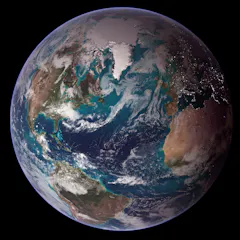
The presence of water on the Earth’s surface is the result of a subtle balance between different mechanisms in the atmosphere and below the surface.

Dark skies have value. They are a profoundly wonderful yet highly threatened natural asset.
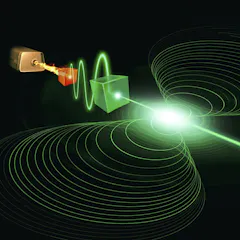
For 60 years, physicists thought they knew exactly how coherent a laser could get. Now the ultimate quantum limit to laser coherence has been found, and it’s much much bigger than anybody thought.
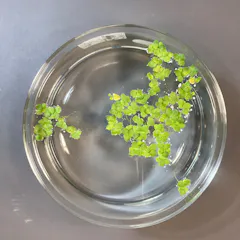
Duckweed is the perfect space food: small, fast-growing and nutritious. By studying how light levels changed the production of radiation-fighting antioxidants, researchers made it even better.

Twisted sound beams suggest an advanced civilisation may be able to harness immense amounts of power from a black hole.
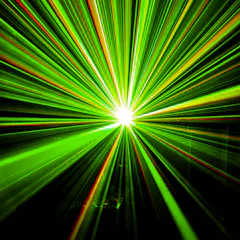
Physicists can use bright, hot lasers to slow atoms down so much that they measure -459 degrees Fahrenheit.

To boost your immune defenses against corona and other viruses, one of the most effective things you can do is maintain your natural circadian rhythms. Here’s how to do that.

A simple chemical reaction turns the red pigment of beets into a new, nontoxic blue dye.
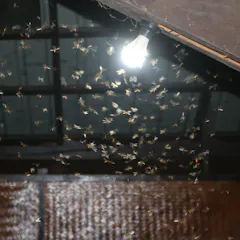
Moths and insects cluster around lights at night. Why?
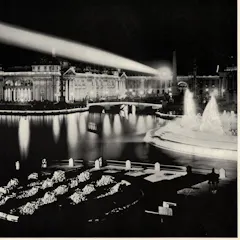
Long before Apple vs. Microsoft or Facebook vs. Google, there was Edison vs. Westinghouse.
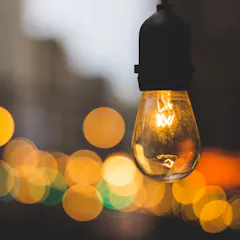
Light bulbs can turn electricity into light (and a bit of heat) – an expert explains how they do it.

Just the tiniest bit of light can let you see in the ‘dark.’ Here’s how your eyes do it.
Hardware could exploit the properties of scattered light so that computations happen at high speed and with low power consumption.

Indoor plant factories have high energy costs since LEDs replace the sunlight outdoor plants get for free. Scientists found a way to dial back how much light is needed by breaking it into tiny bursts.
Gravity exists because the universe is full of ‘stuff’ – here’s how it came to be.
Most people are familiar with lasers. But what about a laser made with sound rather than light? A couple of physicists have now created one that they plan to use for measuring imperceivable forces.

Photons stream from the sun and interact with all matter on Earth. Depending on what the light touches, some of the photons will get absorbed or soaked up. And some will bounce back.
Nature can produce fractals, computers can, too. Could light be a fractal? The answer is yes.
Top contributors
-

Professor, Australian National University
-
Professor, School of Medicine, University of Connecticut
-
Assistant Professor of Astronomy and Astrophysics, University of Maryland, Baltimore County
-
Professor of Psychology, University of Essex
-
Professor, Philosophy of Science, The University of Melbourne
-
Ph.D. Candidate in Chemistry, University of Colorado Boulder
-
Chercheur au Laboratoire de Physique des Lasers, Atomes et Molécules, Université de Lille
-
Professeur au Laboratoire de Physique des Lasers Atomes et Molécules (PHLAM), CNRS UMR8523, IRCICA, Université de Lille
-
Associate Professor in Biophysics, University of Pretoria
-
Professeur Titulaire. École d'optométrie. Expertise en santé oculaire et usage des lentilles cornéennes spécialisées, Université de Montréal
-
University Distinguished Professor of Astronomy, University of Arizona
-
Professor of Biological Sciences, Florida International University
-
Professor of Optics, University of Ferrara
-
Professor, University of the Witwatersrand
-
Senior Lecturer in Parasite Epidemiology, School of Natural and Environmental Sciences, Newcastle University