
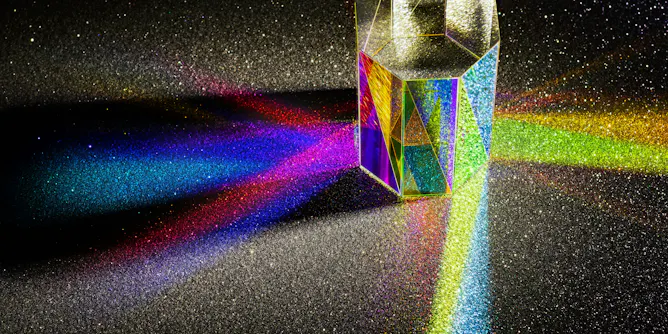
A light particle can appear to leave a cloud of atoms before it enters – a new experiment, asking the atoms, confirms the light spends ‘negative time’ with them.
Articles on Optics
Displaying 1 - 20 of 38 articles
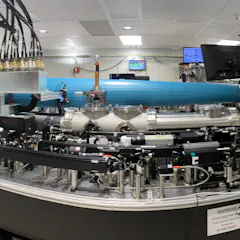
It would take hours to set up the perfect shot at the Texas Petawatt Laser facility. Once it fired, the beam released an incredible amount of energy.
Fiber optics allow you to search the internet, text your friends and check your social media feeds. They also have geological, security and manufacturing applications.
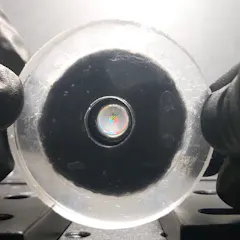
This lens modeled on biological eyes could make it easier to give soft machines and bio-safe tools the ability to see.
19th-century Irish physicist William Rowan Hamilton’s pioneering work contained hints of the enigmatic wave–particle duality that governs the universe.
Scientists on the African continent have made notable contributions to photonics research.
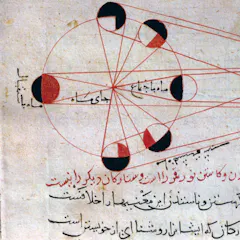
The West’s Eurocentric version of scientific history omits some of the most important events that shaped modern thinking.
With summer approaching, we need to make sure we take care of our eyes.
Space telescopes are limited in size due to the difficulties and cost of getting into orbit. By revamping an old optical technology, researchers are working on a lightweight and thin telescope design.
A new way to make high-frequency light could make it easier to look at things 10 times smaller than conventional microscopes can see.
In an update of one of the most famous experiments in physics, scientists have used ‘slits in time’ to explore the properties of light and ultrafast optical materials.

The sky looks blue on a sunny day – but at night we can see the faint glow of its true colour.
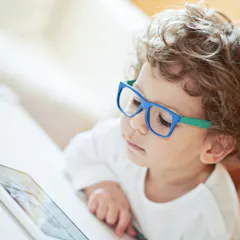
The impact of using electronic devices is critical during the first years of life, both visually and on the cognitive and social development of the child.
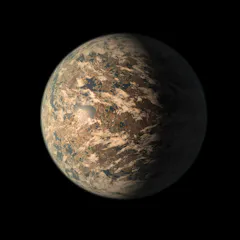
Life on Earth has dramatically changed the chemistry of the planet. Astronomers will measure light that bounces off distant planets to look for similar clues that they host life.
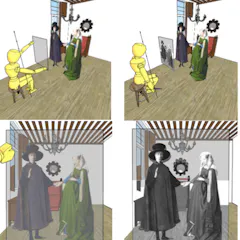
Researchers have long tried to unravel the puzzle of Jan van Eyck’s use of perspective in his masterpiece, the Arnolfini Portrait. New research suggests he may have had help from a novel machine.

The English astronomer and navigator Thomas Harriot died in 1621, leaving behind 8,000 pages of notes containing a trove of unpublished scientific discoveries.
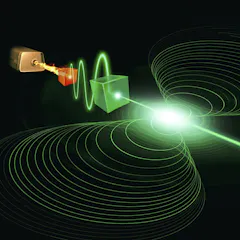
For 60 years, physicists thought they knew exactly how coherent a laser could get. Now the ultimate quantum limit to laser coherence has been found, and it’s much much bigger than anybody thought.
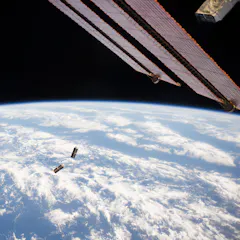
Free space optical communication will allow the same connectivity in space we already have on Earth. And this will provide benefits across a number of sectors.
Using lasers to trap and move particles changed the way we’re able to study microscopic life.

Anish Kapoor made “Cloud Gate”, a giant bean-shaped mirror in Chicago. Visitors play with the light in the city and its surroundings, where our future lays.
Top contributors
-

Affiliate, School of Mathematics, Monash University
-
Associate Dean for Research and Professor of Astronomy and Planetary Sciences, University of Arizona
-
Director, Centre for Quantum Dynamics, Griffith University
-
Associate Deputy Vice-Chancellor for Research Innovation and Entrepreneurship, RMIT University
-
Associate Professor of Dermatology, Harvard University
-
Associate Professor of Physics, University of Nottingham
-
Visiting Professor of Film, Brown University
-
Head of School of Engineering and Physical Sciences, Heriot-Watt University
-
Associate Professor of Photonics and Optics, University of Sydney
-
Professor of Antennas and Electromagnetics, Queen Mary University of London
-
Chercheur au Laboratoire de Physique des Lasers, Atomes et Molécules, Université de Lille
-
Project Scientist at the Steward Observatory and Associate Research Professor of Optical Sciences, University of Arizona
-
Professor of Bionanotechnology, Deakin University
-
Royal Society Research Professor and Kelvin Chair of Natural Philosophy (Physics and Astronomy), University of Glasgow
-
Research Fellow in Dermatology, Harvard University