
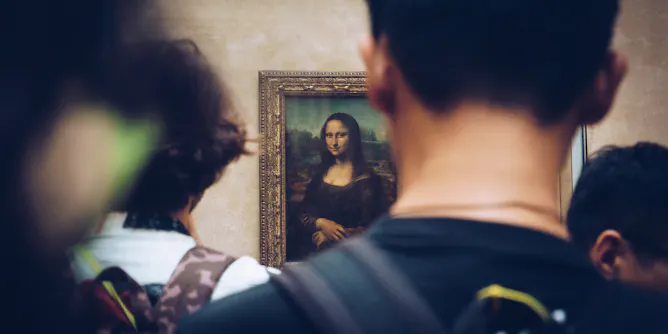
Researchers have found a way to reduce light damage to artworks by up to 47% by optimising LEDs to prevent light from being absorbed by the artwork.
Articles on Light
Displaying 81 - 100 of 136 articles
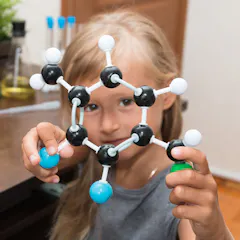
Everything you can touch is made of molecules – but feelings, sound and light are something different.
What colours we see depends not just on how things are in the world around us, but also on what happens in our eyes and our brains.

Despite the primacy of Christmas in American culture, the visibility of Hanukkah in pop culture reminds Jews that they have their own holiday in which they can take pride.
Encouraging people to buy LED bulbs is not a long-term solution. We need lighting which is kind to the planet and our health.

Anish Kapoor made “Cloud Gate”, a giant bean-shaped mirror in Chicago. Visitors play with the light in the city and its surroundings, where our future lays.
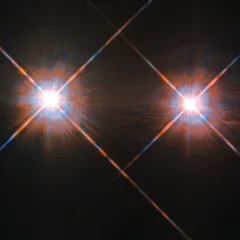
An astronomer suggests an idea to piggyback on the ambitious Breakthrough Starshot project that aims to send nano spacecraft to Alpha Centauri at a major fraction of the speed of light.
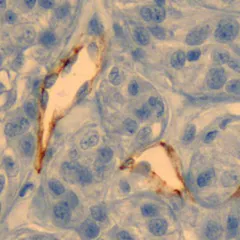
Gold can be used to make jewelry, but also to fight cancer. Several clinical trials are currently underway in the United States where patients are being treated with gold nanoparticles.
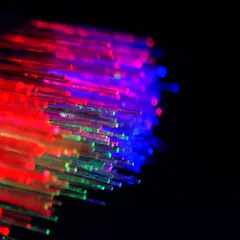
In 1954, three scientists observed a paradox to which they gave their name: the Fermi-Pasta-Ulam recurrence. Now, fibre optics are on the way to finally providing an explanation.
Pretty much as soon as we understood what galaxies were, we realised they are all moving away from each other. And the ones that are further away are moving faster. In short, the universe is expanding.

Whether at a family gathering or in a research lab, getting access to images immediately was a game-changer. And Land’s innovations went far beyond the instant photo.
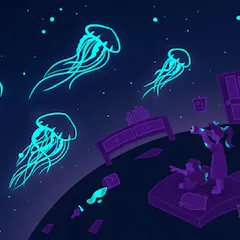
You can see glow-in-the dark paint, but if you touch it, it is just as cold as the bedroom wall. So the glowing of the paint is different to the glowing of a light bulb.
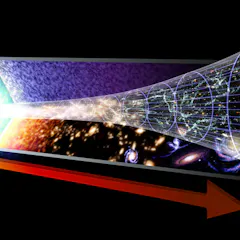
From blindingly bright and burning hot to pleasantly ‘candle-lit’, the first years of the universe would have been spectacular to see.
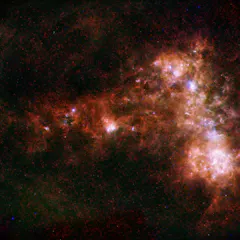
The galaxies, stars and planets in our universe can look very different when you view them through equipment that sees beyond the visible light our eyes can see.
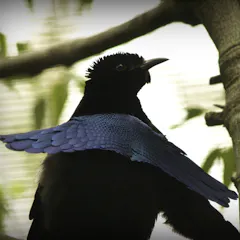
Male Birds of Paradise have patches of super-black plumage that absorb 99.95 percent of light. New research identified their feathers’ microscopic structures that make them look so very dark.
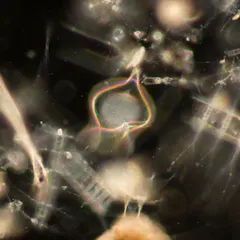
Diatoms’ tricks may offer new insights that keep solar cell energy running efficiently and robustly throughout their processes.
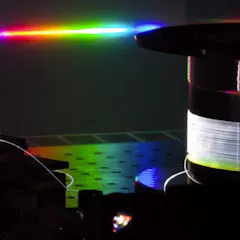
To understand what is happening in an optical fibre, physicists can mimic a rupture of the flow of grains of light – the photons – thanks to a laser device.
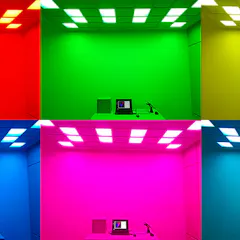
The brain processes colour in more ways that just creating visual images – here’s how.
Whether you’re a night owl or a morning lark, circadian rhythms control just about every aspect of your health.
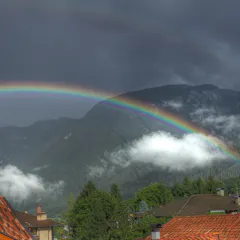
Georgina, age 5, wants to know why rainbows are round.
Top contributors
-

Professor, Australian National University
-
Professor, School of Medicine, University of Connecticut
-
Assistant Professor of Astronomy and Astrophysics, University of Maryland, Baltimore County
-
Professor of Psychology, University of Essex
-
Professor, Philosophy of Science, The University of Melbourne
-
Ph.D. Candidate in Chemistry, University of Colorado Boulder
-
Chercheur au Laboratoire de Physique des Lasers, Atomes et Molécules, Université de Lille
-
Professeur au Laboratoire de Physique des Lasers Atomes et Molécules (PHLAM), CNRS UMR8523, IRCICA, Université de Lille
-
Associate Professor in Biophysics, University of Pretoria
-
Professeur Titulaire. École d'optométrie. Expertise en santé oculaire et usage des lentilles cornéennes spécialisées, Université de Montréal
-
University Distinguished Professor of Astronomy, University of Arizona
-
Professor of Biological Sciences, Florida International University
-
Professor of Optics, University of Ferrara
-
Professor, University of the Witwatersrand
-
Senior Lecturer in Parasite Epidemiology, School of Natural and Environmental Sciences, Newcastle University