
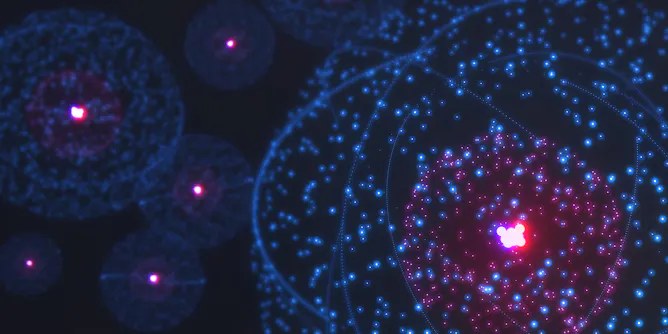
Three scientists won the 2023 Nobel Prize in physics for their work developing methods to shoot laser pulses that only last an attosecond, or a mind-bogglingly tiny fraction of a second.
Articles on Light
Displaying 41 - 60 of 136 articles

They’re heavily promoted. Your optometrist may even prescribe them. But when we looked at the evidence, this is what we found.
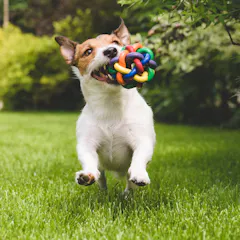
Your faithful companion sees the world differently than you do, but it’s a mistake to assume dogs only see black, white and shades of grey.
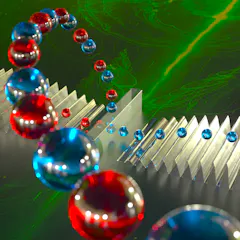
Scientists show they can create quantum superpositions of sound particles, pointing to the potential for mechanical quantum computers.
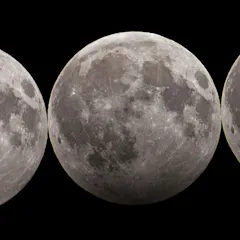
Not all lunar eclipses are alike. An astronomer explains the science behind the slight dimming of the Moon on May 5, 2023.
A new way to make high-frequency light could make it easier to look at things 10 times smaller than conventional microscopes can see.

Each rainbow is personal – the rainbow you see isn’t exactly the same rainbow the next person sees. It’s all in the eye of the beholder.

Some parts of North America will witness a total solar eclipse in April 2024. This may seem far away, but you should think about preparing for this rare and fascinating phenomenon.
In an update of one of the most famous experiments in physics, scientists have used ‘slits in time’ to explore the properties of light and ultrafast optical materials.
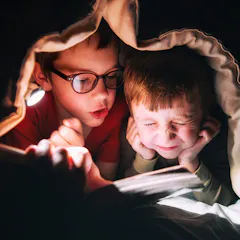
Evidence suggests that neither books nor electronic devices are directly to blame for the increase in myopia worldwide. Rather, they enhance this phenomenon by keeping children out of the sunlight.

Rainbows are made when water droplets split light up into colours.
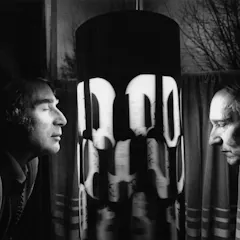
Flickering light can make people see different colours and shapes or feel altered emotions or sense of time.

Why is it so difficult to swat a fly? A team of insect experts explains how a fly’s sophisticated vision allows it to quickly react to visual cues.
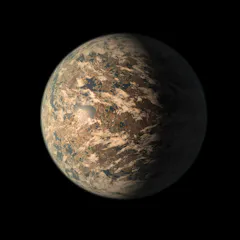
Life on Earth has dramatically changed the chemistry of the planet. Astronomers will measure light that bounces off distant planets to look for similar clues that they host life.
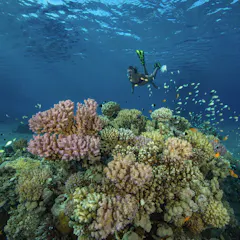
Researchers have long suspected that an ingredient in sunscreen called oxybenzone was harming corals, but no one knew how. A new study shows how corals turn oxybenzone into a sunlight-activated toxin.
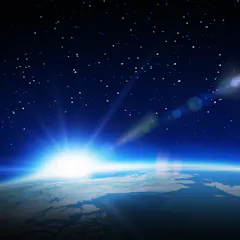
The fastest things ever made by humans are spacecraft, and the fastest spacecraft reached 330,000 mph – only 0.05% the speed of light. But there are ways to go faster.

Energy isn’t really made of anything else. It’s a kind of capacity to do things
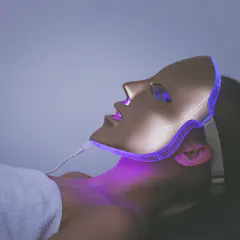
LED face masks are popular with celebrities and promise a glowing complexion. But should they come with ‘daytime use’ recommendation?
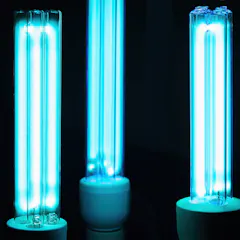
UV lights come in a variety of different wavelengths, but not all are equally effective at disinfection. Researchers tested a number of commercially available lights to find the best.

Museum lighting standards assume galleries are still using incandescent bulbs or fluorescent lights. But LEDs offer more for both audiences and conservation.
Top contributors
-

Professor, Australian National University
-
Professor, School of Medicine, University of Connecticut
-
Assistant Professor of Astronomy and Astrophysics, University of Maryland, Baltimore County
-
Professor of Psychology, University of Essex
-
Professor, Philosophy of Science, The University of Melbourne
-
Ph.D. Candidate in Chemistry, University of Colorado Boulder
-
Chercheur au Laboratoire de Physique des Lasers, Atomes et Molécules, Université de Lille
-
Professeur au Laboratoire de Physique des Lasers Atomes et Molécules (PHLAM), CNRS UMR8523, IRCICA, Université de Lille
-
Associate Professor in Biophysics, University of Pretoria
-
Professeur Titulaire. École d'optométrie. Expertise en santé oculaire et usage des lentilles cornéennes spécialisées, Université de Montréal
-
University Distinguished Professor of Astronomy, University of Arizona
-
Professor of Biological Sciences, Florida International University
-
Professor of Optics, University of Ferrara
-
Professor, University of the Witwatersrand
-
Senior Lecturer in Parasite Epidemiology, School of Natural and Environmental Sciences, Newcastle University