
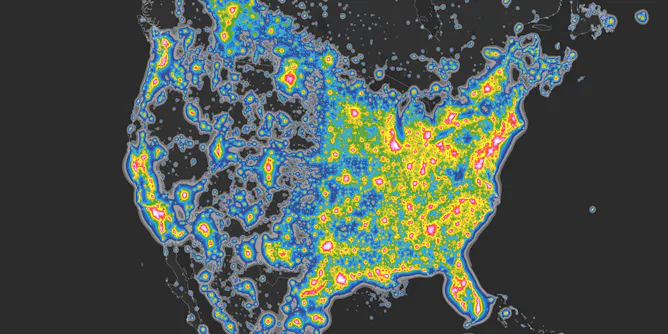
Study uses satellite data to add to growing evidence that nighttime light exposure raises risk of breast cancer, with the strongest link among young women.
Articles on Light
Displaying 101 - 120 of 136 articles
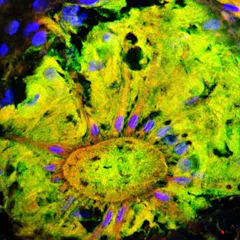
We’re used to thinking of our eyes detecting light as the foundation of our visual system. But what’s going on in other cells throughout the body that can detect light, too?
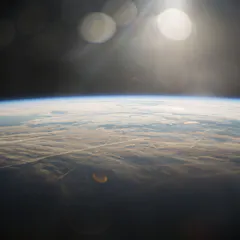
Some people think the sky is blue because of sunlight reflected off the ocean and back into the sky. But that’s not the real reason.
We asked five design experts – what’s your favorite product of all time, and why?
Individual light-harvesting protein complexes have a remarkable ability. Light, which is normally effectively harvested, is also used to finely control how much of it should be harvested.

Gaining a better sense of what genes are involved in regulating circadian clocks could put us on a path to find better treatments and therapies to help people adjust to time shifts.
The wrong kind of light can seriously impact your well-being.
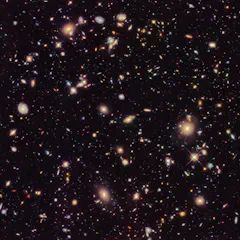
A new telescope aims to figure out what became of the universe’s original atoms once the first stars began to shine.
Freezing light in mid-air isn’t just the realm of Star Wars, as new research shows. But what do you do with the light once it’s trapped? One option is to use it to develop new forms of computers.
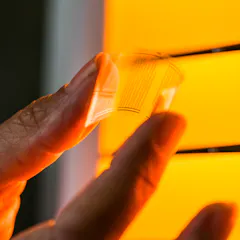
Flexible light-emitting screens mean you soon won’t need bulbs because your wallpaper – or even your furniture – will light up at the flick of a switch.

Eighty percent of North Americans can no longer see the Milky Way at night. But the problem with light pollution isn’t just about stargazing.

What’s the deal with fat in our foods and drinks? Should we avoid it?
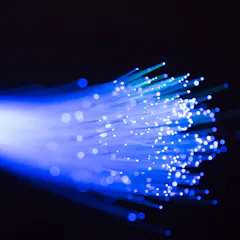
The design of a new chip to detect the twisted nature of light waves could pave the way for next generation of optical communication technologies.
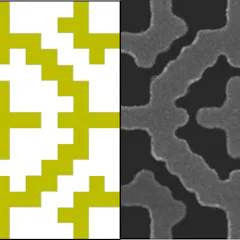
We are beginning to be able to control very precisely how light interacts with matter, creating opportunities for invisibility, soundproofing and even earthquake damage prevention.

A new technique could help the police identify more criminals from just their footprints.

A bold theory suggests the Vikings may have used a mysterious method of studying sunlight to navigate the oceans.
It might be that teaching people to reframe their thoughts about winter can help them overcome seasonal affective disorder year after year.
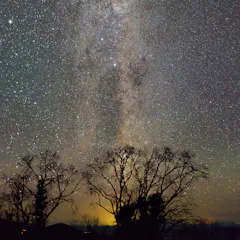
Darkness is precious to astronomers, but it’s also good for everybody. We should ensure we preserve the dark by using the latest technologies responsibly.

Many people think relativity puts a hard speed limit on the universe, but it actually opens up the possibility of faster-than-light travel - if we can overcome some significant practical hurdles.
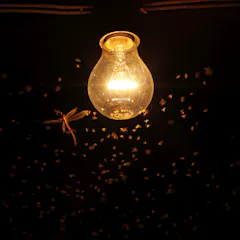
Solar is a vital piece of the energy puzzle for Africa, but there is an insect problem that comes with the light from solar.
Top contributors
-

Professor, Australian National University
-
Professor, School of Medicine, University of Connecticut
-
Assistant Professor of Astronomy and Astrophysics, University of Maryland, Baltimore County
-
Professor of Psychology, University of Essex
-
Professor, Philosophy of Science, The University of Melbourne
-
Ph.D. Candidate in Chemistry, University of Colorado Boulder
-
Chercheur au Laboratoire de Physique des Lasers, Atomes et Molécules, Université de Lille
-
Professeur au Laboratoire de Physique des Lasers Atomes et Molécules (PHLAM), CNRS UMR8523, IRCICA, Université de Lille
-
Associate Professor in Biophysics, University of Pretoria
-
Professeur Titulaire. École d'optométrie. Expertise en santé oculaire et usage des lentilles cornéennes spécialisées, Université de Montréal
-
University Distinguished Professor of Astronomy, University of Arizona
-
Professor of Biological Sciences, Florida International University
-
Professor of Optics, University of Ferrara
-
Professor, University of the Witwatersrand
-
Senior Lecturer in Parasite Epidemiology, School of Natural and Environmental Sciences, Newcastle University