
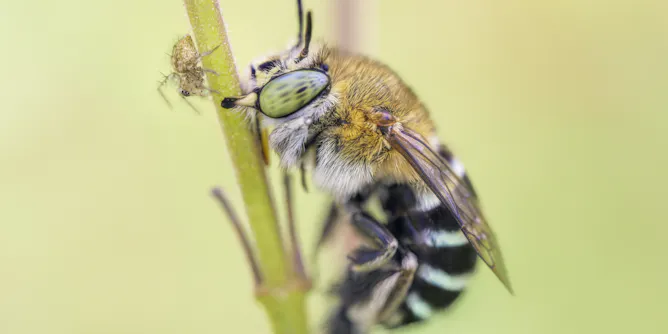
Some of the most impressive visual performances measured in a new study came from rarely studied, solitary species.
Articles on Vision
Displaying 1 - 20 of 138 articles

Some animal species have their eyes positioned on their heads differently than how people do – and it comes with pluses and minuses for how they see.

Returning a tennis serve depends on one of the brain’s most remarkable abilities: predicting the future.

As one piece of more than a century of baseball traditions, eye black is part science experiment, part routine and part uniform.

There’s a lot going on in your brain all the time. To power your imagination, the neurons need some silence.

About 1-4% of people have synaesthesia, a trait that both fascinates and puzzles scientists.

Genetically transmitted eye diseases affect around 1 in 2,000 people.
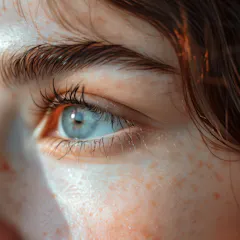
The now extinct worm-like animal first lost paired eyes, then re-evolved them.

How psychedelics induce intense visuals.
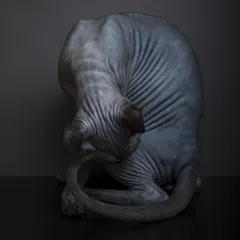
People and computers perceive the world differently, which can lead AI to make mistakes no human would. Researchers are working on how to bring human and AI vision into alignment.
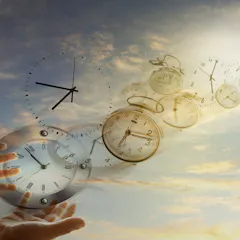
For a starfish, most of life is literally a blur.
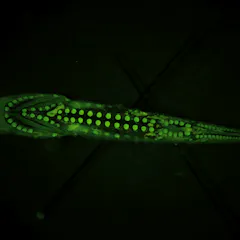
Deep-sea fish larvae combine features of both rods and cones into a single, highly specialised cell that is optimised for life in between light and darkness.

Decorations brighten winter, but certain lights can be overwhelming and headache inducing.
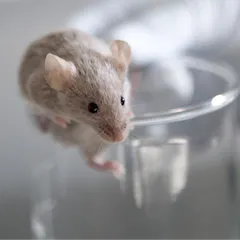
It was once believed that mice had relatively poor vision. Turns out mice are far from blind – and studying how their vision is shaped by their environment and behavior can clarify the same in people.
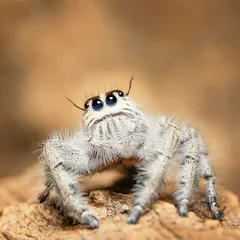
Spiders - are they really more afraid of you than you are of them?
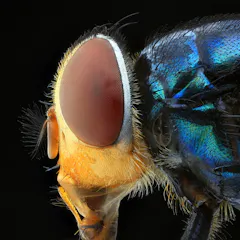
Flies see things differently.
Scientists have created a universal colour experience using lasers.

Light comes in through our eyes upside down – but we can still interact with the world just fine.

Up to 50% of computer users face symptoms of digital eye strain. This condition isn’t just a matter of discomfort, it can significantly affect your quality of life.

In December, the U.S.-based National Academy of Sciences published a report classifying myopia, for the first time, as a disease and no longer as a refractive error.
Top contributors
-

Professeur Titulaire. École d'optométrie. Expertise en santé oculaire et usage des lentilles cornéennes spécialisées, Université de Montréal
-
Postdoctoral Research Associate, Florida International University
-
Professor, School of Psychology, The University of Queensland
-
Technical Officer, Deakin University
-
Senior Research Scientist, South Australian Museum; Flinders University
-
Clinical Associate Lecturer, University of Sydney
-
Professor in Robotics, Queensland University of Technology
-
Professor of Biological Sciences, University of Maryland, Baltimore County
-
Associate Professor, Department of Physiology, Monash University
-
Senior Investigator at the National Eye Institute, Section on Perception, Cognition, and Action, National Institutes of Health
-
Lecturer, Faculty of Business, Sport and Enterprise, Southampton Solent University
-
Professor of Psychology, University of Washington
-
Professeur d’économie, Mines Paris - PSL
-
Associate Head of Education, University of Portsmouth
-
Professor of Visual Development, University of Bradford