
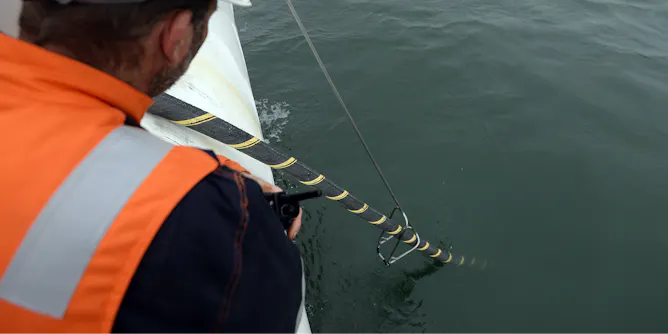
Australia’s access to the global internet depends on a surprisingly small number of undersea cables.
Articles on Lasers
Displaying 1 - 20 of 63 articles
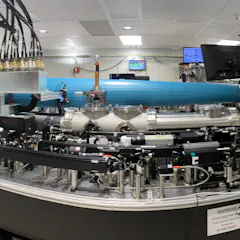
It would take hours to set up the perfect shot at the Texas Petawatt Laser facility. Once it fired, the beam released an incredible amount of energy.

Atomic clocks undergird modern timekeeping. A nuclear clock could be even more precise.
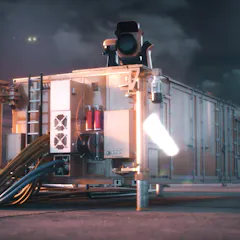
‘Directed energy weapons’ are a cheap way to hit a lot of targets – and militaries around the world are taking notice.

Researchers say a palm-sized piece of glass could store the equivalent of 2 million books for over 10,000 years.
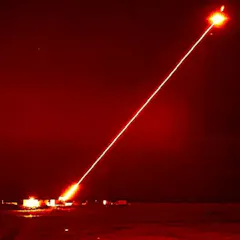
Direct-energy weapons are being developed as a way to defend against drone attacks.

Super short X-ray pulses help scientists study materials at the atomic level. Researchers found that certain lasing effects can make these pulses even shorter.

Research on Tasmania’s large old trees has given designers good reason to reflect on the many things about trees that humans don’t value enough. Here’s the top five.

Scientists on the African continent have made notable contributions to photonics research.

Attosecond science allows the extremely fast movements of electron particles to be observed. This emerging field brings both opportunity and controversy.
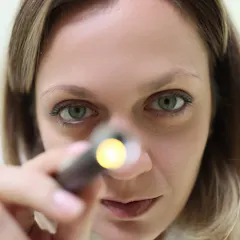
Your GP shines a light in your eyes, orders a blood test and requests some medical imaging. All rely on light to help diagnose disease.

Militaries around the world are rapidly developing science fiction-like laser weapons, motivated in part by the growing threat from swarms of drones.
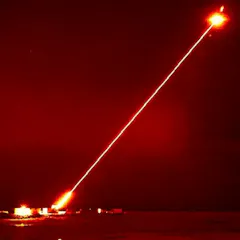
Operating the DragonFire laser system for ten seconds costs the equivalent of using a heater for an hour (less than £10 per shot).
The 2023 Nobel Prize in physics recognized researchers studying electron movement in real time − this work could revolutionize electronics, laser imaging and more.
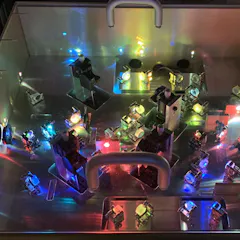
A researcher explains developments in using light rather than electrons to transmit information securely and quickly, even over long distances.
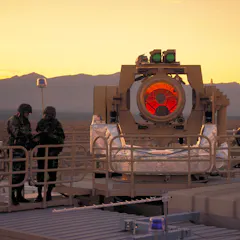
Militaries around the world are scrambling to realise the ‘God mode’ of invulnerability and infinite ammunition promised by laser weapons.
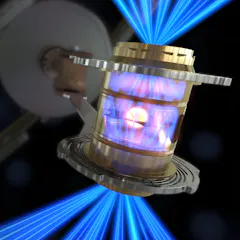
Huge challenges remain before working fusion reactors are possible.
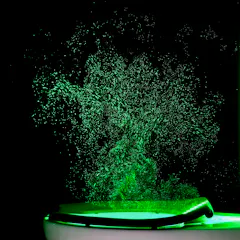
Toilets eject aerosol droplets that may carry disease-causing pathogens. Learning about how these particles move could help reduce exposure in public restrooms.

Build a powerful enough laser, and you can shine it into space. Aim it well, and you can blind satellites.
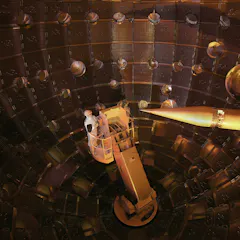
A US laboratory has announced an exciting new leap forward in nuclear fusion, but it may be several decades before we see this form of energy come to fruition.
Top contributors
-

Professor at the School of Mathematics and Physics, Queen's University Belfast
-
Professor of Dermatology, The University of Melbourne
-
Associate Professor of Aviation and the Environment, Cranfield University
-
Professor, University of the Witwatersrand
-
Director of the Center for National Security Initiatives and Professor of Aerospace Engineering Sciences, University of Colorado Boulder
-
Teaching Fellow in Strategic and Air Power Studies, University of Portsmouth
-
Chercheur au Laboratoire de Physique des Lasers, Atomes et Molécules, Université de Lille
-
Reader, Department of Physics, University of Bath
-
Professor Geography, Archaeology and Environmental Studies, University of the Witwatersrand
-
Reader in Physics, University of Bath
-
Professor of Chemistry, Northwestern University
-
Royal Society Research Professor and Kelvin Chair of Natural Philosophy (Physics and Astronomy), University of Glasgow
-
Associate Professor of Dermatology, Harvard University
-
Professor of Optics, University of Ferrara
-
Professor of Astrophysics, University of Nevada, Las Vegas