
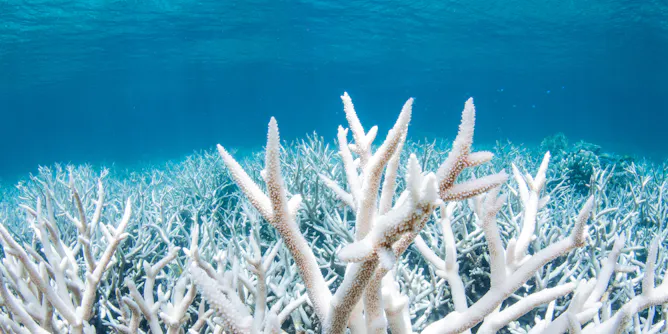
Efforts to save the reef aren’t tackling the main cause: climate change. What we need from our next federal government is strong leadership to avert the climate crisis.
Articles on La Nina
Displaying 81 - 100 of 131 articles
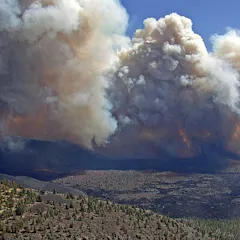
Fire season is getting longer, and the result is transforming iconic desert ecosystems. The start to 2022 has been so dire, one governor called for a federal disaster declaration.
This score is a massive four points higher than the year prior. But as La Niña subsides, we’ll quickly feel the long-term warming trend again, with bushfires picking back up next season.

On a hot and humid day, the fan is your friend. But ice cream won’t make the difference you think it will.
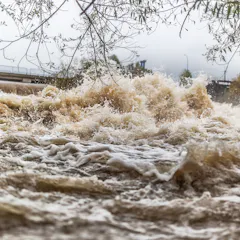
Southern Africa’s current above-average rainfall is a climate variability signal - a short-term fluctuation in average wet-season conditions.

Extreme heat over 50°C is likely to become more common, giving us yet another reason for Australia to act fast on climate change.

Severe coastal flooding inundated islands in the Pacific last week, including the Marshall Islands, Papua New Guinea and Solomon Islands. It’s a taste of things to come.
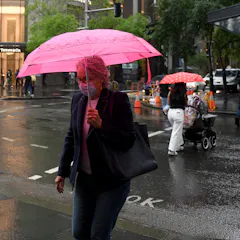
After one La Niña, the Pacific sometimes retains cool water which enables a second La Niña to form.
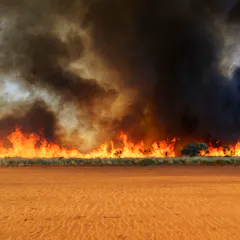
Fires in arid Australia are extensive, largely unmanaged, often destructive and significantly under-reported.

Many farmers are welcoming an expected summer of La Niña rain, while others have been hit by heavy rain and floods
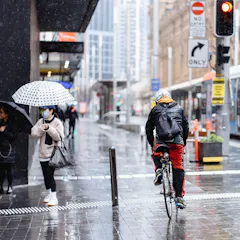
The southern parts of Australia are expected to become increasingly dry due to climate change. Yet, we now find ourselves subject to another La Niña event. What’s going on?
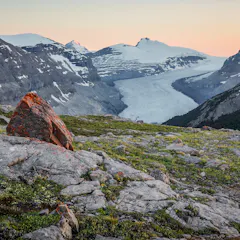
Policy-makers need the courage to commit to meaningful reductions of greenhouse gas emissions if we want to avoid the widespread loss of mountain glaciers.
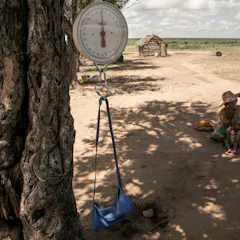
Out of the last six years in Madagascar, five years have had poor or very bad rainy seasons.
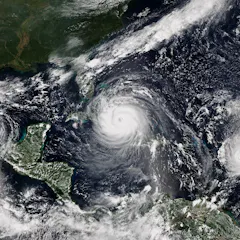
To get a sense of how bad the 2021 hurricane season will be, keep an eye on the African monsoon, ocean temperatures and a possible late-blooming La Niña.
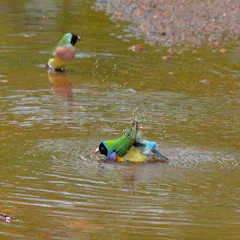
This autumn, embrace puddles. Even tiny pools of water can be essential for birds, trees and pets — from washing away chemicals on leaves to forcing worms to emerge.

The NSW floods are a textbook example of the theoretical impacts we can expect on Australian rainfall as climate change continues.

Given long-term forecasts for growing urban populations and an increasingly variable climate, local authorities will have to think about how best to encourage people to conserve water.
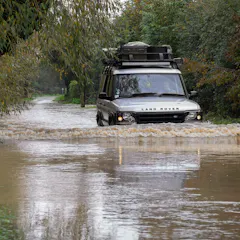
La Niña means we are forecast a wet winter – and people are struggling and ill-prepared.
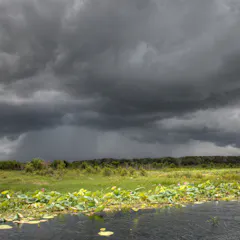
Mosquitoes love the wetter weather La Niña brings to some parts of Australia. But will we see more mosquito-borne disease?
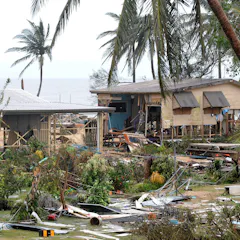
A new statistical model predicts the number of tropical cyclones up to four months before the start of the season from November to April.
Top contributors
-

ARC Future Fellow and Associate Professor in Climate Science, ARC Centre of Excellence for 21st Century Weather, The University of Melbourne
-
Adjunct Professor (Practice) in the School of Earth, Atmosphere and Environment, Monash University
-
Distinguished Scholar, National Center for Atmospheric Research; Affiliate Faculty, University of Auckland, Waipapa Taumata Rau
-
Senior Climatologist, Australian Bureau of Meteorology
-
Climate Scientist, Australian Bureau of Meteorology
-
Climate scientist, Australian Bureau of Meteorology
-
Principal Research Scientist, CSIRO
-
Adjunct Professor in Climate Science, Monash University
-
Professor, Water and Landscape Dynamics, Fenner School of Environment & Society, Australian National University
-
Senior Research Associate, UNSW
-
Lecturer, School of Agriculture, Food and Ecosystem Sciences, The University of Melbourne
-
Climate Scientist, Australian Bureau of Meteorology
-
Adjunct Professor of Environmental Geography, CQUniversity Australia
-
Chief Research Scientist, Oceans and Atmosphere, CSIRO, CSIRO
-
Honorary Associate Professor of Climate Science, The University of Melbourne