

The Hubble Space Telescope could gaze back 13.4 billion years, and with the JWST we expect to improve on this possibly to 13.55 billion years.
Articles on James Webb Space Telescope (JWST)
Displaying 81 - 100 of 106 articles
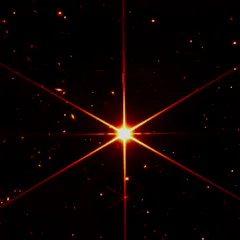
The telescopes primary mirror segments are now working together to provide a single, sharp image.

With about 200 orbital launches scheduled and ambitious missions on everything from lunar bases to the search for life in the works, there’s a lot to watch in 2022. An astronomer explains the highlights.

Webb is NASA’s largest and most powerful ever space telescope – set to investigate the formation of the furthest galaxies from Earth.
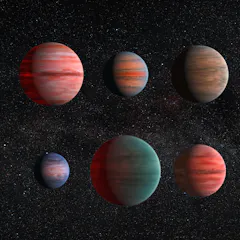
Clouds, hellish temperatures, endless nights? Characterizing the atmosphere of exoplanets, planets that orbit stars other than the sun, is a formidable task.
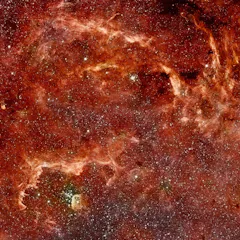
As we await the launch of the James Webb Space telescope, it’s timely to look back on what previous generations of telescopes have shown us.
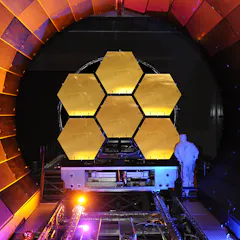
JSWT may be able to discover signs of life on planets around other stars.
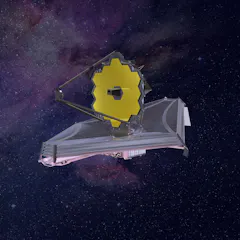
It will be a nail-biting wait as scientists launch and deploy the most complex observatory ever built.
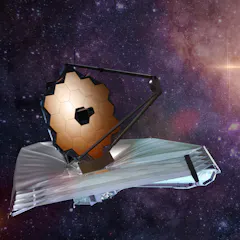
Plus, the tactics the food industry is using to boost sales of ultra-processed foods in middle-income countries. Listen to The Conversation Weekly.
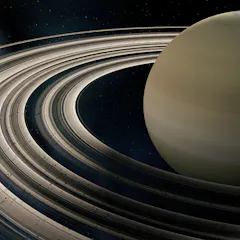
Saturn, Jupiter, Neptune and Uranus all have rings.
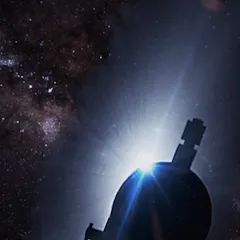
Such a mission could be developed soon, allowing astrophysicists to take selfies of the solar system and use the Sun’s gravity as a lens to peer deep into space.
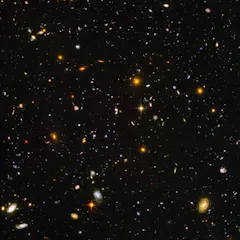
The James Webb Space Telescope is set to launch into orbit in December 2021. Its mission is to search for the first light to ever shine in the universe.

The largest orbital telescope ever made will allow astronomers to study the atmospheres of alien planets, learn about how stars form in the Milky Way and peer into the farthest reaches of the universe.
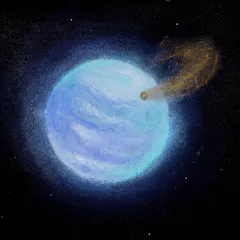
The hottest exoplanet known so far has metals in its atmosphere – something scientists thought would be impossible.
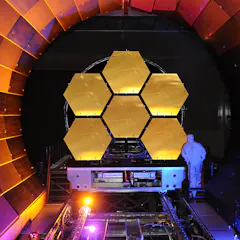
India may land on the Moon this coming year, while Nasa will launch its new, powerful rocket farther into space than any other human rated spacecraft.
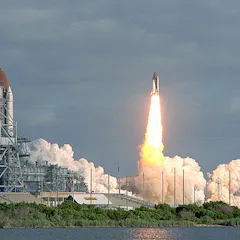
Thirty years ago the Hubble Space Telescope began snapping photos of distant stars, providing a time machine that has taken astronomers back to when the universe was less than a billion years old.

New research using the Hubble Space Telescope reveals that galaxies may be forming at faster rates than previously believed.
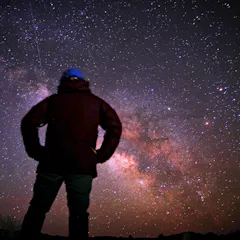
From the subatomic to the cosmic, don’t think for a second that we’re at the end of scientific history.
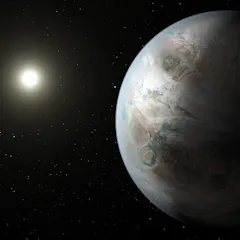
Life could have evolved on exoplanets Kepler-452b and Kepler-62e, according to a new study.
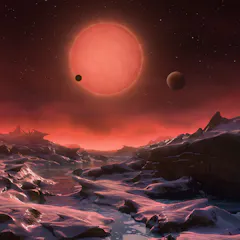
We don’t need to look for Earth-like planets exclusively around Sun-like stars. Tiny, dim TRAPPIST-1 has only 11 percent the diameter of the Sun and is much redder.
Top contributors
-

University Distinguished Professor of Astronomy, University of Arizona
-
ARC Laureate Fellow & Distinguished Professor, Centre for Astrophysics & Supercomputing, Swinburne University of Technology
-
Professor of Astrophysics and Space Science, University of Leicester
-
Senior Lecturer in Astrophysics, University of Sydney
-
Associate Dean for Research and Professor of Astronomy and Planetary Sciences, University of Arizona
-
Regents Professor of Astronomy, University of Arizona
-
Senior Lecturer in Physics, Nottingham Trent University
-
ARC Future Fellow / Associate Professor, Swinburne University of Technology
-
Associate Professor in Astronomy, Monash University
-
Host, The Conversation Weekly Podcast, The Conversation
-
Professor of Astrophysics, The Open University
-
Astrophysicist/Cosmologist, Australian National University
-
Professor (Astrophysics), University of Southern Queensland
-
Research Fellow, School of Physics and Astronomy, University of Nottingham
-
Associate Science Editor & Co-Host of The Conversation Weekly Podcast, The Conversation