
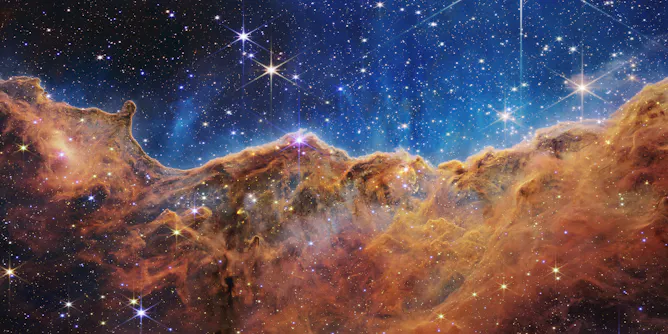
A year on since the historic launch of the most powerful infrared telescope in human history, we admire and explore some of the best images it delivered in 2022.
Articles on James Webb Space Telescope (JWST)
Displaying 61 - 80 of 105 articles

It has been one year since the launch of the James Webb Space Telescope and six months since the first pictures were released. Astronomers are already learning unexpected things about the early universe.
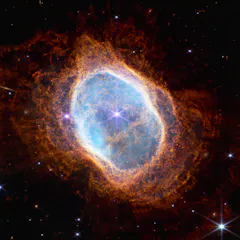
Astronomers have unpacked the mystery of how one star’s death created the nebula NGC3132 – never before seen in such detail.
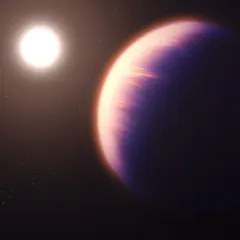
The James Webb space telescope is making the headlines again – this time completing its first chemical inventory of a distant, exotic world.
The technology of an advanced alien civilization is likely to produce many signs that could be detected across the vastness of space. Two astronomers explain the search for technosignatures.
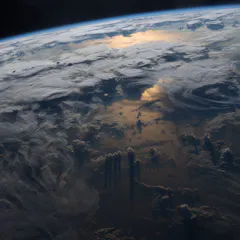
We should not rule out taking a closer look at exoplanets that have a poorly oxygenated atmosphere.
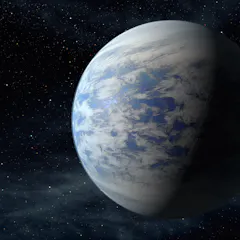
Newly discovered super-Earths add to the list of planets around other stars that offer the best chance of finding life. An astronomer explains what makes these super-Earths such excellent candidates.
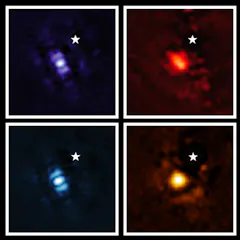
The James Webb Space Telescope just released its first-ever exoplanet image. Here’s what’s so exciting about it, and what we can stand to learn.
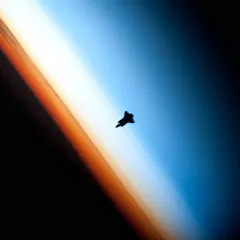
A new publication clarifies how existing legal frameworks apply to space exploration and development. The McGill Manual also highlights the catastrophic implications of conflict in space.
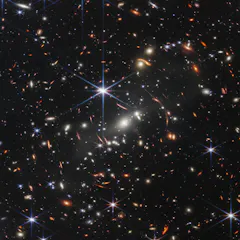
James Webb has spotted extremely distant galaxies formed soon after the Big Bang, but are they old or young? Or is this the wrong question to ask?
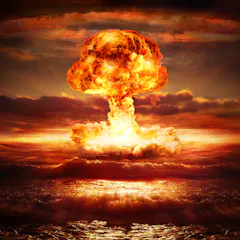
Humanity’s remarkable powers of comprehension can be aggrandising, but ultimately they demand a sense of humility.
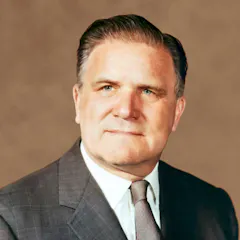
In the excitement, it’s easy to forget the James Webb Space Telescope’s namesake has been the subject of controversy.
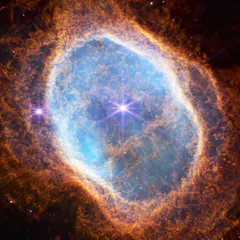
Why is the universe 13.8 billion years old, but 93 billion light-years across? It’s all about how light travels through the cosmos.
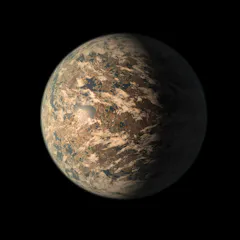
Life on Earth has dramatically changed the chemistry of the planet. Astronomers will measure light that bounces off distant planets to look for similar clues that they host life.
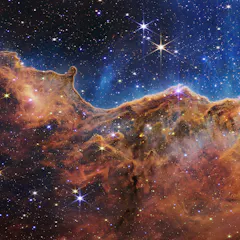
Long before the James Webb telescope brought us these deep field images, artists have been capturing notions of space.

Through direct comparison with images from Hubble, you can start to see the exquisite detail and clarity Webb provides.
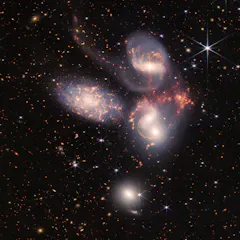
NASA released five new images from the James Webb Space Telescope, revealing incredible details of ancient galaxies, stars and the presence of water in the atmosphere of a distant planet.

Even experts were not prepared for the crispness of the new images from the James Webb space telescope.
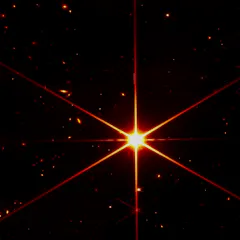
It has taken eight months to test and calibrate all of the instruments and modes of the James Webb Space Telescope. A scientist on the team explains what it took to get Webb up and running.
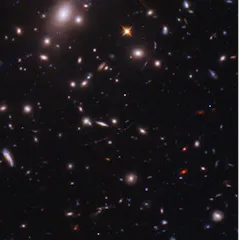
The Hubble Space Telescope could gaze back 13.4 billion years, and with the JWST we expect to improve on this possibly to 13.55 billion years.
Top contributors
-

University Distinguished Professor of Astronomy, University of Arizona
-
ARC Laureate Fellow & Distinguished Professor, Centre for Astrophysics & Supercomputing, Swinburne University of Technology
-
Professor of Astrophysics and Space Science, University of Leicester
-
Senior Lecturer in Astrophysics, University of Sydney
-
Associate Dean for Research and Professor of Astronomy and Planetary Sciences, University of Arizona
-
Regents Professor of Astronomy, University of Arizona
-
Senior Lecturer in Physics, Nottingham Trent University
-
ARC Future Fellow / Associate Professor, Swinburne University of Technology
-
Associate Professor in Astronomy, Monash University
-
Host, The Conversation Weekly Podcast, The Conversation
-
Professor of Astrophysics, The Open University
-
Astrophysicist/Cosmologist, Australian National University
-
Professor (Astrophysics), University of Southern Queensland
-
Research Fellow, School of Physics and Astronomy, University of Nottingham
-
Associate Science Editor & Co-Host of The Conversation Weekly Podcast, The Conversation