
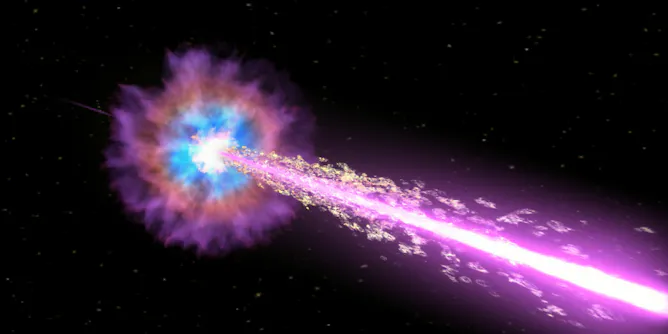
Analysis of two major cosmic blasts deepens the mystery of where the universe’s ‘heavy’ elements come from.
Articles on James Webb Space Telescope (JWST)
Displaying 41 - 60 of 105 articles
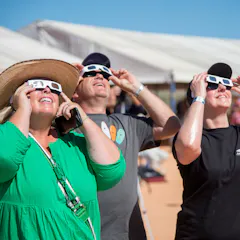
A type of eclipse is crucial for measuring what’s in the atmospheres of planets orbiting distant stars.
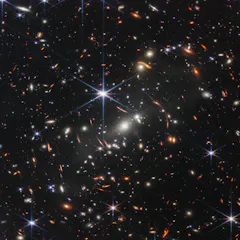
Now out in space for more than two years, the James Webb Space Telescope is a stunningly sophisticated instrument.
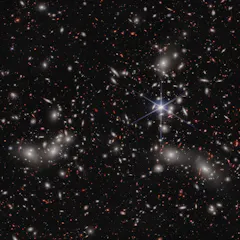
With the help of a magnifying glass 4 million lightyears wide, astronomers may have solved the riddle of what burned away the hydrogen fog that pervaded the early universe.
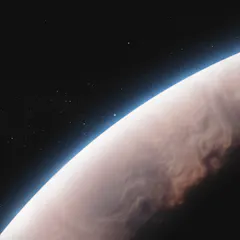
The atmosphere is a reflection of extreme conditions on the super-heated planet.
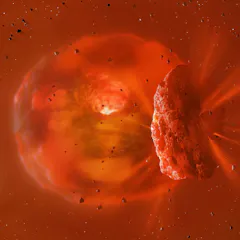
The discovery provides a way to study the birth of an entirely new planet in real time.
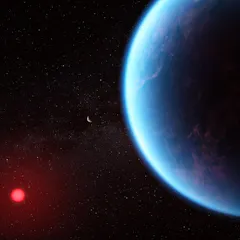
The results are intriguing, but analysing the atmospheres of exoplanets is no easy task.
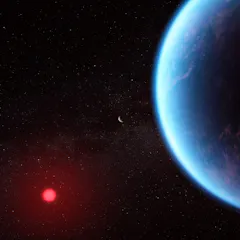
The James Webb Space Telescope has detected key carbon-bearing molecules on the potential ocean world K2-18b, including tantalising hints of a substance produced by tiny plankton on Earth.

An astronomer and ‘black hole historian’ explains how the parts of the universe black holes grow in might influence how quickly they become bright, supermassive objects.
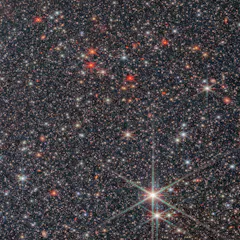
A new hypothesis suggests that the universe may be twice as old as we had believed. Observations from the James Webb Space Telescope provide new information on the rate of the universe’s expansion.

The universe used to be filled with a hydrogen fog, before early stars and galaxies burned through the haze. Astronomers are studying galaxies that tell them about this period in the early universe.
Both Stephen Alexander’s elementary teachers and televised NASA missions throughout the ‘60s influenced his journey into science. He recounts NASA’s legacy, 65 years after the agency’s inception.
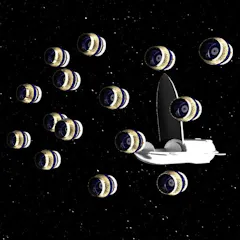
Space telescopes are limited in size due to the difficulties and cost of getting into orbit. By revamping an old optical technology, researchers are working on a lightweight and thin telescope design.
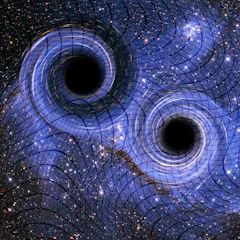
Astronomers have for the first time detected the background hum of gravitational waves likely caused by merging black holes.
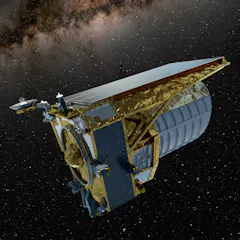
A spacecraft set to launch this year will throw a spotlight on the mysterious ‘dark side’ of the universe.

The current race to the Moon is opening up opportunities for lunar astronomy.
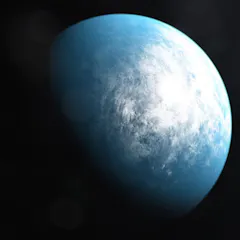
With more than 5,000 known exoplanets, astronomers are shifting their focus from discovering additional distant worlds to identifying which are good candidates for further study.
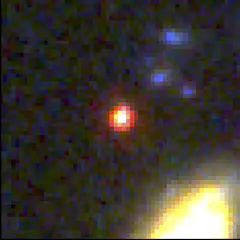
The discovery of massive, early galaxies could force scientists to rethink how the first galaxies formed after the Big Bang.
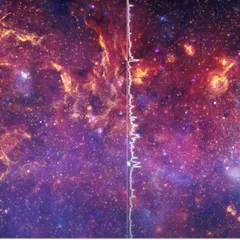
Since ancient times, the stars have been set to music. Modern technology now enables scientists to convert images of space into real compositions.
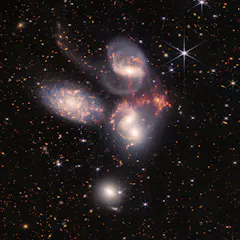
NASA has been gaining momentum in recent years as investment into space has ramped up in the US. In 2022, missions dealt with the farthest, closest, hottest and coldest conditions in the universe.
Top contributors
-

University Distinguished Professor of Astronomy, University of Arizona
-
ARC Laureate Fellow & Distinguished Professor, Centre for Astrophysics & Supercomputing, Swinburne University of Technology
-
Professor of Astrophysics and Space Science, University of Leicester
-
Senior Lecturer in Astrophysics, University of Sydney
-
Associate Dean for Research and Professor of Astronomy and Planetary Sciences, University of Arizona
-
Regents Professor of Astronomy, University of Arizona
-
Senior Lecturer in Physics, Nottingham Trent University
-
ARC Future Fellow / Associate Professor, Swinburne University of Technology
-
Associate Professor in Astronomy, Monash University
-
Host, The Conversation Weekly Podcast, The Conversation
-
Professor of Astrophysics, The Open University
-
Astrophysicist/Cosmologist, Australian National University
-
Professor (Astrophysics), University of Southern Queensland
-
Research Fellow, School of Physics and Astronomy, University of Nottingham
-
Associate Science Editor & Co-Host of The Conversation Weekly Podcast, The Conversation