
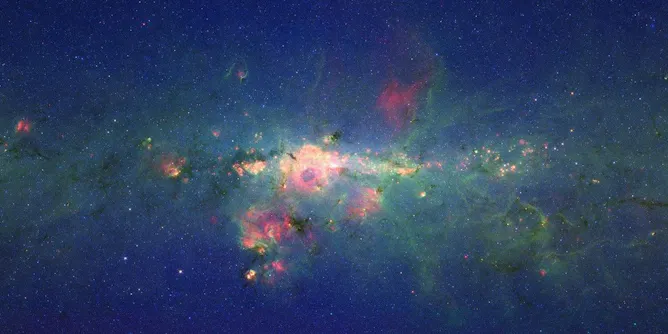
From supernovae in distant galaxies to the packed centre of the Milky Way, the new Roman telescope will help us see and understand the ever-changing cosmos.
Articles on Hubble Space Telescope
Displaying 1 - 20 of 54 articles
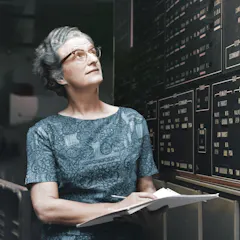
The US astronomer battled discrimination in a male dominated field.
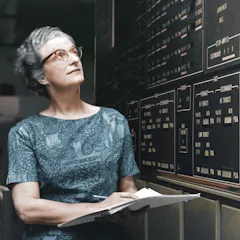
In August 2018, just four months before she died, I had the great fortune to interview Nancy Grace Roman about her extraordinary life studying the stars.
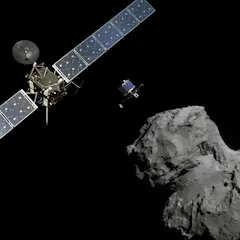
The space agency faces major competition from rising space powers such as China and India.
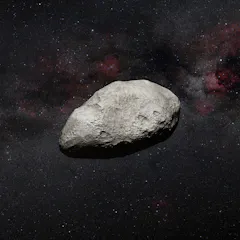
The chances of asteroid 2024 YR4 hitting Earth are small but fluctuating.
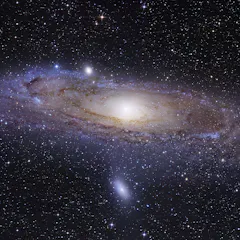
Hubble’s work pushed the field of astronomy forward, starting with his paper demonstrating that some objects exist outside our galaxy.

In 1924, astronomer Edwin Hubble realised two objects were too distant to be inside our galaxy.
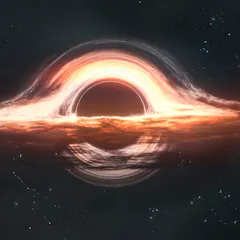
New research can help us understand how supermassive black holes formed – and why many of them appear to be more massive than expected.
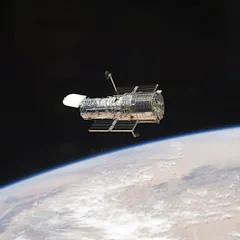
Hubble’s technical issues continue. But through some clever engineering, the telescope can continue operations with just 1 gyroscope.
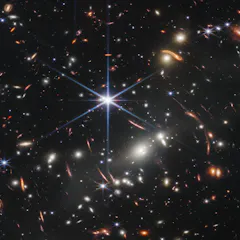
Astronomers Vicent Martínez and Bernard Jones explain the mystery of the Hubble tension, and why it matters so much for our understanding of the universe, on The Conversation Weekly podcast.
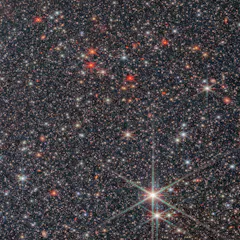
A new hypothesis suggests that the universe may be twice as old as we had believed. Observations from the James Webb Space Telescope provide new information on the rate of the universe’s expansion.

The universe used to be filled with a hydrogen fog, before early stars and galaxies burned through the haze. Astronomers are studying galaxies that tell them about this period in the early universe.
Both Stephen Alexander’s elementary teachers and televised NASA missions throughout the ‘60s influenced his journey into science. He recounts NASA’s legacy, 65 years after the agency’s inception.

The current race to the Moon is opening up opportunities for lunar astronomy.

Through direct comparison with images from Hubble, you can start to see the exquisite detail and clarity Webb provides.
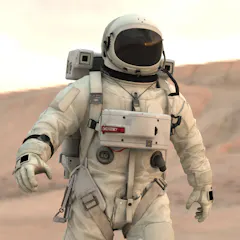
Mars is the fourth planet from the Sun and one of our closest neighbors in space. But it’s not a very welcoming place for an Earthling to visit.
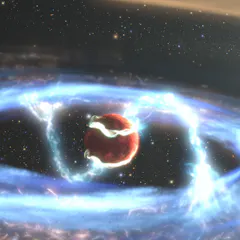
A glimpse of a distant Jupiter-sized exoplanet sheds light on how gas giants form.
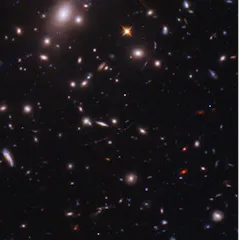
The Hubble Space Telescope could gaze back 13.4 billion years, and with the JWST we expect to improve on this possibly to 13.55 billion years.
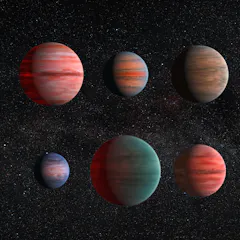
Clouds, hellish temperatures, endless nights? Characterizing the atmosphere of exoplanets, planets that orbit stars other than the sun, is a formidable task.
Plus, the tactics the food industry is using to boost sales of ultra-processed foods in middle-income countries. Listen to The Conversation Weekly.
Top contributors
-

Pro Vice-Chancellor Flagship Initiatives, Swinburne University of Technology
-
ARC Laureate Fellow & Distinguished Professor, Centre for Astrophysics & Supercomputing, Swinburne University of Technology
-
Associate Professor in Astronomy, Monash University
-
Host, The Conversation Weekly Podcast, The Conversation
-
Professor (Astrophysics), University of Southern Queensland
-
Senior Curator (Astronomy), Museums Victoria Research Institute; The University of Melbourne
-
Professor of Astrophysics and Space Science, University of Leicester
-
Senior Lecturer in Physics, Nottingham Trent University
-
Professor (Physics), University of Southern Queensland
-
Professor, National Astronomical Observatories, Chinese Academy of Sciences
-
Honorary Fellow, Space and Astronomy, CSIRO; Western Sydney University
-
Professor of Astronomy & Astrophysics, Penn State
-
Adjunct Professor, University of Southern Queensland
-
Dean of Science, University of California, Santa Cruz
-
Senior Instrument Scientist, Australian Nuclear Science and Technology Organisation