
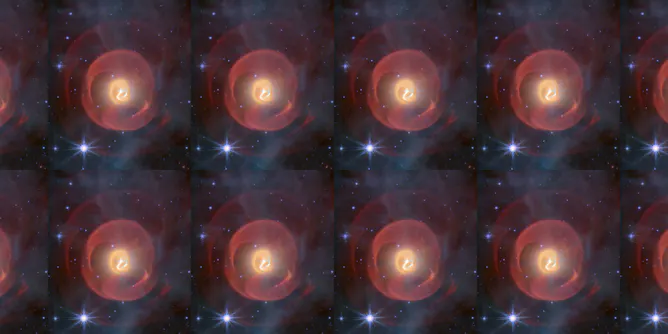
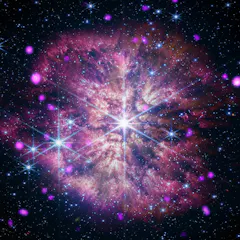
The stars are wreathed in a huge spiral of dust, like a snake eating its own tail.
Articles on James Webb Space Telescope (JWST)
Displaying 21 - 40 of 105 articles
The James Webb Space Telescope has 2 powerful instruments that see light the human eye can’t.
The space agency faces major competition from rising space powers such as China and India.
An astronomer breaks down 3 key components that allow researchers to make groundbreaking discoveries – and decide when results aren’t significant.
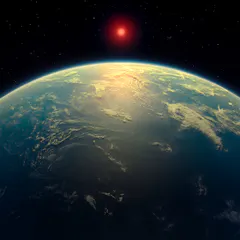
Looking at the history of ‘biosignature’ discoveries shows why they can be problematic.
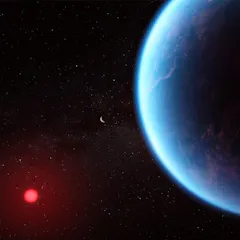
The exoplanet K2-18b could harbor a massive ocean, but scientists will need to study the planet more to see if it’s really likely to host life.
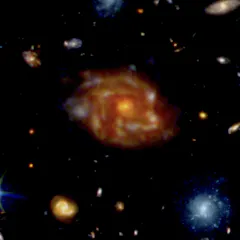
This enormous disk object formed soon after the Big Bang, challenging what we know about how galaxies grow.
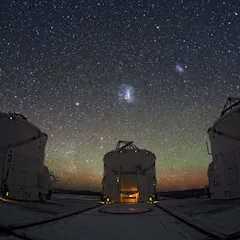
Scientists already knew how to study the chemical composition of the atmosphere of exoplanets. Now, they can also study details about their powerful winds.
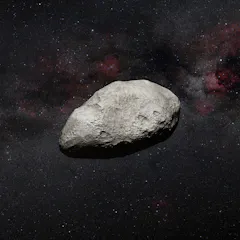
The chances of asteroid 2024 YR4 hitting Earth are small but fluctuating.
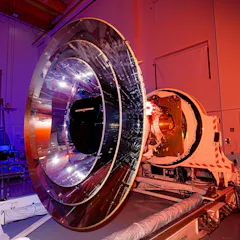
The SPHEREx mission will image 1 billion galaxies, 100 million stars, and 10,000 asteroids – and help to answer some of the biggest scientific mysteries.
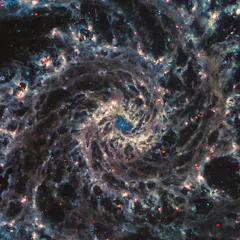
The James Webb Space Telescope is celebrating three years from its launch. Its discoveries have already changed our understanding of the early universe.
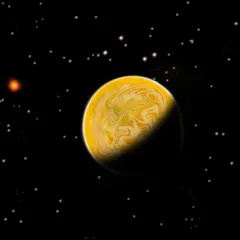
Astronomers have detected possible signs of gases released by volcanic activity.
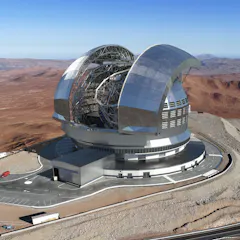
Cosmology could be transformed by a new wave of telescopes – both on the ground and in space.
We may never know – and the universe may not even have an edge. But here’s what we do know.
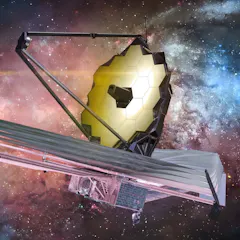
Some of the earliest galaxies found with JWST are also the brightest. That’s a problem for our ideas about the universe.
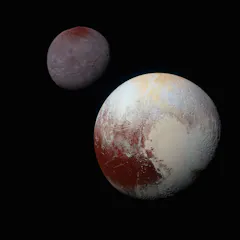
The discovery can also give clues not only about Charon, but other objects out near Pluto.
Right now, it looks like cosmology is at a tipping point.
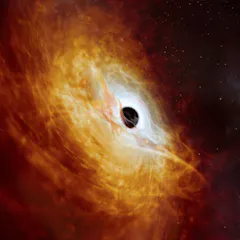
These small galaxies are either crammed with stars or they host gigantic black holes. The data astronomers have collected continues to puzzle them.
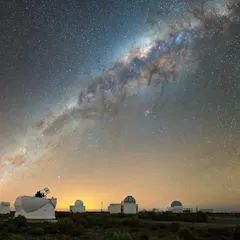
The first International Astronomical Union General Assembly was held just over 100 years ago, in Rome, Italy.
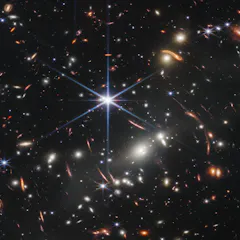
Astronomers Vicent Martínez and Bernard Jones explain the mystery of the Hubble tension, and why it matters so much for our understanding of the universe, on The Conversation Weekly podcast.
Top contributors
-

University Distinguished Professor of Astronomy, University of Arizona
-
ARC Laureate Fellow & Distinguished Professor, Centre for Astrophysics & Supercomputing, Swinburne University of Technology
-
Professor of Astrophysics and Space Science, University of Leicester
-
Senior Lecturer in Astrophysics, University of Sydney
-
Associate Dean for Research and Professor of Astronomy and Planetary Sciences, University of Arizona
-
Regents Professor of Astronomy, University of Arizona
-
Senior Lecturer in Physics, Nottingham Trent University
-
ARC Future Fellow / Associate Professor, Swinburne University of Technology
-
Associate Professor in Astronomy, Monash University
-
Host, The Conversation Weekly Podcast, The Conversation
-
Professor of Astrophysics, The Open University
-
Astrophysicist/Cosmologist, Australian National University
-
Professor (Astrophysics), University of Southern Queensland
-
Research Fellow, School of Physics and Astronomy, University of Nottingham
-
Associate Science Editor & Co-Host of The Conversation Weekly Podcast, The Conversation