
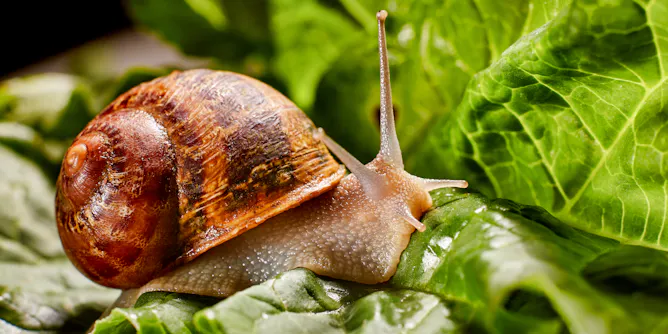
The UK wants gardeners to stop thinking of slugs and snails as pests and to embrace garden biodiversity. Is it worth considering in Australia?
Articles on Invasive species
Displaying 141 - 160 of 382 articles

Clearing alien trees from mountain catchments is a more cost-effective approach to providing water than building and maintaining desalination plants.
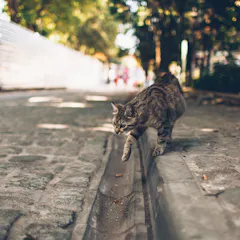
A new study shows that when free-ranging cats are more than a few blocks from forested areas in cities, such as parks, they’re more likely to prey on rats than on native wildlife.
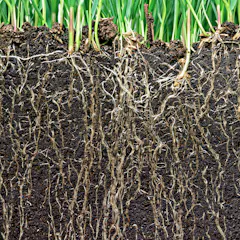
Plants communicate with the fungi on their roots, but the effects on the ecosystem of deliberately adding fungi as a fertilizer are unknown — and might be harmful.

Clearing alien trees before the drought hit could have reduced the impact of climate change on water supply during the ‘Day Zero’ drought.

New research finds 74% of land managers who reported releasing a powerful biocontrol release it during the peak rabbit breeding period. This can lead to rabbit populations actually increasing.
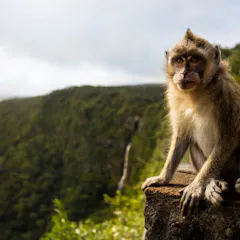
Macaques are an alien species - and the endemic plants and animals of the island haven’t adapted to protect themselves against these monkeys.
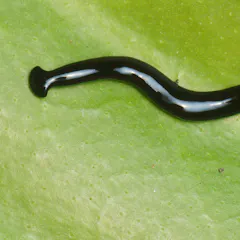
A new species of flatworm is invading us. It is metallic black in color and its name is Humbertium covidum.
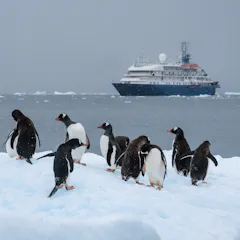
New research maps how ship traffic connects Antarctica to worldwide ecosystems.

What scientists learnt from analysing alien marine organisms that hitch-hike around the world on ships and other vessels that make their way into South African shores.
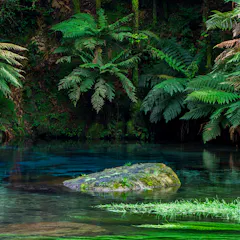
Introduced species that become invasive are clearly destructive, but many exotic species are not detrimental to the existing ecosystem – some become complementary or take on lost ecological roles.

While some invasive animals have breached Antarctica, the continent is still pristine. Our challenge is keeping it that way.

Shoreline communities are already faltering under the weight of billions of dollars in damages — and worrying that climate change will continue to make things even worse.
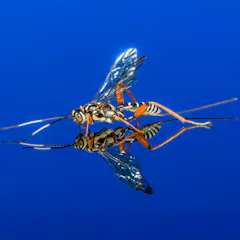
Parasitic wasps are body-snatchers — if you’re an insect. But these much-maligned creatures have saved millions of human lives by controlling the spread of the cassava mealybug.
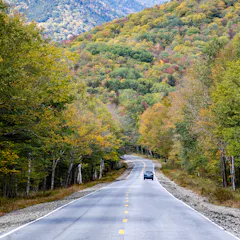
Warm autumn weather has produced dull leaf colors across the eastern US this year, but climate change isn’t the only way that humans have altered trees’ fall displays.

This year’s unprecedented fall armyworm invasion has laid waste to lawns, athletic fields and crops. Is it a fluke? When will it end?
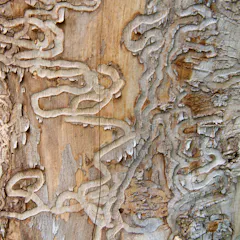
Biological control strategies curb pests using other species that attack the invader. A biologist explains why it can take more than a decade to develop an effective biological control program.
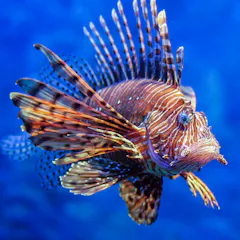
The lionfish has few natural predators, and its venomous spines deter potential predators. But there may still be ways to naturally control the growth of this invader’s population.
CC BY-NC-ND10.8 MB (download)
The diverse plant collections in botanical gardens increase the chance of pests and pathogens encountering suitable hosts and becoming invasive.
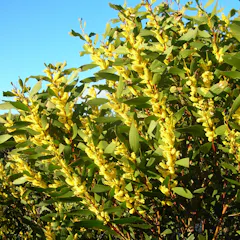
Not all Australian native species belong in all Australian environments. In fact, many Australian plant species have become pests in places far from their original homes. Could some be in your garden?
Top contributors
-

Professor in Wildlife Ecology and Conservation, School of Life & Environmental Sciences, Deakin University
-
Honorary Research Fellow, University of Sydney
-
Professor in Terrestrial Ecology, Deakin University
-
Professor in Evolutionary Biology, Macquarie University
-
Professor of Wildlife Conservation, University of Tasmania
-
Professor Emeritus in Terrestrial Ecology, University of Sydney
-
Professor in Environmental Science, Charles Darwin University
-
Professeur, UMR ISYEB (Institut de Systématique, Évolution, Biodiversité), Muséum national d’histoire naturelle (MNHN)
-
Director of the Wildlife Crime Research Hub, Australian Research Council Industry Laureate Fellow, Adelaide University
-
Professor of Conservation Biology, Charles Darwin University
-
Associate Professor, Global Ecology, University of Sydney
-
Research Director CSIRO Health & Biosecurity, CSIRO
-
Professor in Zoology, James Cook University
-
Lecturer in the School of Applied Sciences, Edinburgh Napier University
-
Adjunct Professor, The University of Western Australia