

Conservation dogs perform vital roles across Australia. Some are guardians protecting wildlife from predators while others put their powerful sense of smell to use as sniffer dogs or detection dogs.
Articles on Invasive species
Displaying 81 - 100 of 382 articles
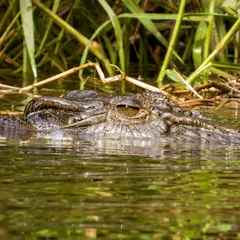
Invasive species such as deer, pigs and rabbits might help boost native predator populations.
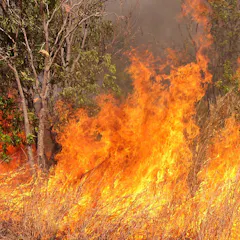
Grassfires are normal in central and northern Australia. But fast-growing invasive grasses are supercharging grassfires – and this summer looks like it will be big.
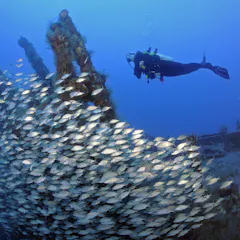
When ships sink, they add artificial structures to the seafloor that can quickly become diverse, ecologically important underwater communities.

Feral hogs are one of the most destructive invasive species in North America, harming land, crops and wildlife.
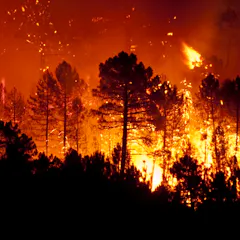
Non-native species tend to be better at exploiting the disturbance caused by storms, fires or droughts.

Controlling invasive sea urchins is expensive. Why not make it profitable by fishing for them and selling their roe as a delicacy?
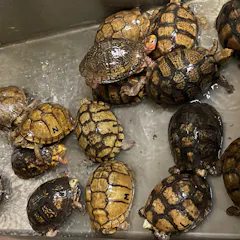
More than half of the world’s turtle species are endangered or threatened, and overhunting of wild species is a major cause.

The Peach Blossom Jellyfish is an invasive species in Canada, and a lack of data is hampering efforts to control populations.
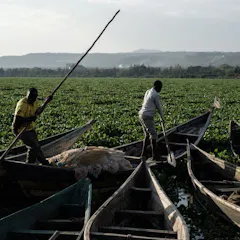
The new report on alien invasive species doesn’t just concentrate on problems. It also offers solutions.
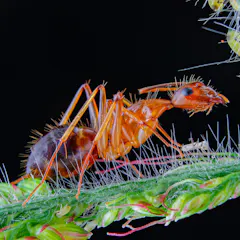
Invasive ants are a major threat to biodiversity, according to a study.

Invasive Asian hornets are a top predator of bees in the UK – and sightings are starting to soar.

According to a new UN report, invasive species do more than US$423 billion in damage worldwide every year. Four articles explore examples, from mollusks to poisonous fish.
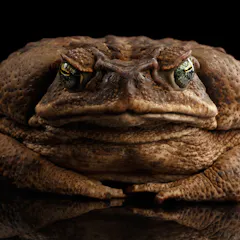
Modern ecosystems are very different to how they were just a few centuries ago.
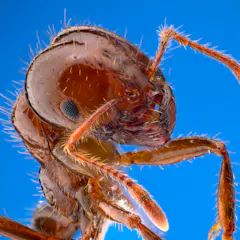
Australia’s biosecurity system is on high alert for alien invaders. Here’s a hit list of eight baddies we believe pose the greatest threat to Australia’s biodiversity.
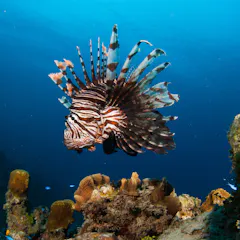
Not all alien species are a significant hazard to people and ecosystems.

Alien invaders are penetrating the borders of every country in the world. Now the full extent of the problems and potential solutions have been exposed, in a new United Nations report.

Introduced species and diseases can drive native species into smaller environmental niches – and that could mean change to how we work to conserve them.

Mathematical models, video games and experiments with ants can all further our understanding of the dynamics of war.
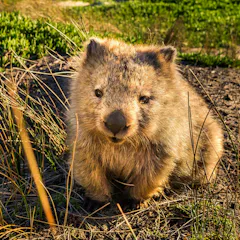
Despite their solitary lifestyle, wombats are at risk from a disease that spreads via their burrows.
Top contributors
-

Professor in Wildlife Ecology and Conservation, School of Life & Environmental Sciences, Deakin University
-
Honorary Research Fellow, University of Sydney
-
Professor in Terrestrial Ecology, Deakin University
-
Professor in Evolutionary Biology, Macquarie University
-
Professor of Wildlife Conservation, University of Tasmania
-
Professor Emeritus in Terrestrial Ecology, University of Sydney
-
Professor in Environmental Science, Charles Darwin University
-
Professeur, UMR ISYEB (Institut de Systématique, Évolution, Biodiversité), Muséum national d’histoire naturelle (MNHN)
-
Director of the Wildlife Crime Research Hub, Australian Research Council Industry Laureate Fellow, Adelaide University
-
Professor of Conservation Biology, Charles Darwin University
-
Associate Professor, Global Ecology, University of Sydney
-
Research Director CSIRO Health & Biosecurity, CSIRO
-
Professor in Zoology, James Cook University
-
Lecturer in the School of Applied Sciences, Edinburgh Napier University
-
Adjunct Professor, The University of Western Australia