
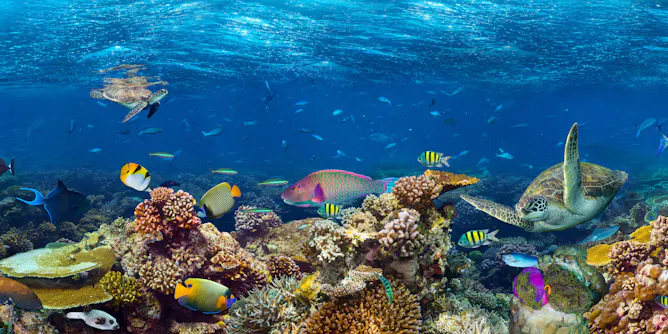
New findings from the Chagos Islands are a perfect parable for the Anthropocene.
Articles on Invasive species
Displaying 241 - 260 of 382 articles
Why home owners shouldn’t panic over knotweed on their property.
Feral rabbits previously exposed to myxoma virus are more likely to be killed by rabbit haemorrhagic diease, meaning that these two biocontrol agents can become even more powerful when used in tandem.

The average Australian feral cat kills 225 reptiles a year, which adds up to 596 million in total, according to a new estimate. Pet cats, meanwhile, kill a further 53 million.
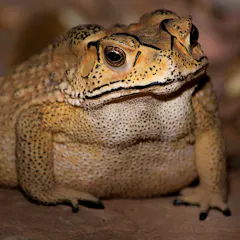
New study confirms fears that the island’s native wildlife can be poisoned by introduced Asian toads.
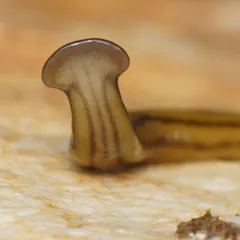
Several giant terrestrial Plathelminth species have invaded France and its overseas territories, threatening biodiversity. Thanks to participatory science, the invasion is finally recognized.
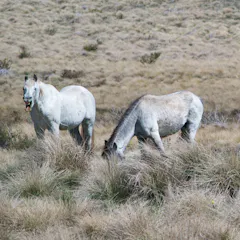
Failing to cull feral horses in Kosciuszko National Park may end up promoting environmental destruction while actually increasing the horses’ suffering.
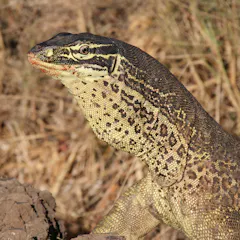
Rat baits are widely used to keep rodent pests at bay. But many Australian reptiles are resistant to the poison, potentially spreading these deadly compounds up the food chain.
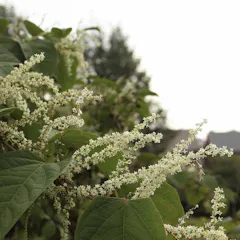
It’s nearly impossible to kill, so we need to start working with Japanese knotweed to control it.
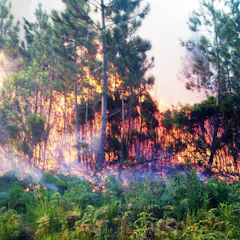
Invasive alien species that costs South Africa’s economy billions can be eliminated.
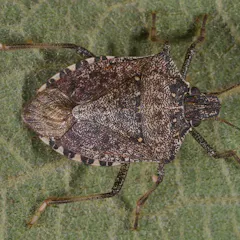
An invasive insect native to Asia, Halyomorpha halys, has been detected in the US, Canada and southern Europe. It’s now made its debut in Paris.
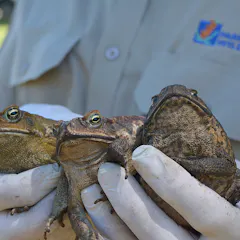
New cane toad traps that carefully imitate mating males successfully target breeding females. Males, meanwhile, will turn up for anything that sounds remotely like a toad.
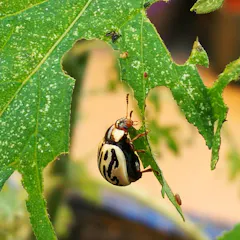
Famine weed spreads rapidly and is devastatingly destructive. Biocontrol is one way of dealing with the problem.
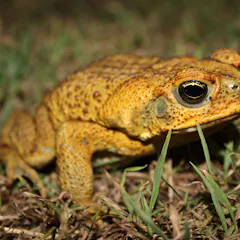
In richer countries, the socio-economic impact of invasive species can be tackled through technology or adaptive behaviour. But this isn’t the case in poor countries.
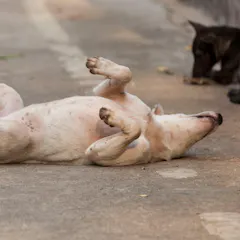
Everywhere humans go, we take our pets. Fleas are along for the ride, spreading everything from typhus to bubonic plague.
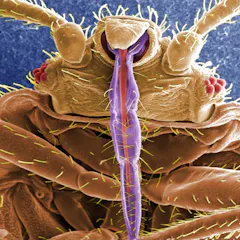
Bed bugs make us shudder and cringe. So arm yourself with the courage to learn about the biology and successes of Cimex lectularius – as well as the ways to get rid of it.
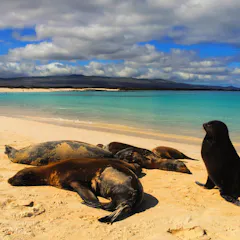
More than 1,500 introduced species have been recorded on the Galapagos Islands, and most have arrived since the archipelago’s tourism industry was expanded in the 1970s.
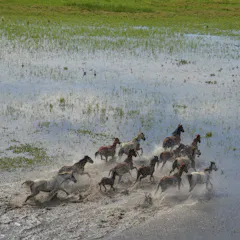
From 30,000-year-old cave paintings to The Man From Snowy River, wild horses have always been part of human culture. As Australia debates what to do with ‘brumbies’ in mountain environments, it’s time to reconsider their place.
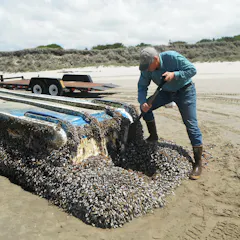
As well as thousands of deaths and huge destruction, Japan’s 2011 tsunami carried potentially invasive species en masse across an entire ocean.
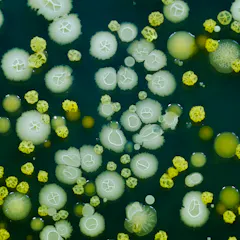
When jetting off on holiday, we rarely give a second thought to what microbes we might be taking with us. But humans spread trillions of bacteria around the globe, potentially harming ecosystems’ balance.
Top contributors
-

Professor in Wildlife Ecology and Conservation, School of Life & Environmental Sciences, Deakin University
-
Honorary Research Fellow, University of Sydney
-
Professor in Terrestrial Ecology, Deakin University
-
Professor in Evolutionary Biology, Macquarie University
-
Professor of Wildlife Conservation, University of Tasmania
-
Professor Emeritus in Terrestrial Ecology, University of Sydney
-
Professor in Environmental Science, Charles Darwin University
-
Professeur, UMR ISYEB (Institut de Systématique, Évolution, Biodiversité), Muséum national d’histoire naturelle (MNHN)
-
Director of the Wildlife Crime Research Hub, Australian Research Council Industry Laureate Fellow, Adelaide University
-
Professor of Conservation Biology, Charles Darwin University
-
Associate Professor, Global Ecology, University of Sydney
-
Research Director CSIRO Health & Biosecurity, CSIRO
-
Professor in Zoology, James Cook University
-
Lecturer in the School of Applied Sciences, Edinburgh Napier University
-
Adjunct Professor, The University of Western Australia