
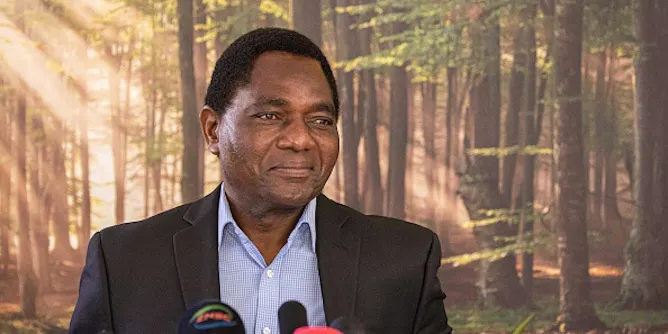
Zambia’s new president will have to balance austerity and the high expectations of the many unemployed young people and struggling people who voted for him.
Articles on International Monetary Fund (IMF)
Displaying 81 - 100 of 247 articles
The IMF’s injection of US$650 billion worth of Special Drawing Rights into the global economy opens a window for African countries to reform their relationship with the fund.
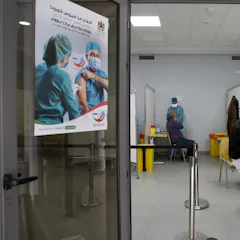
Low-income countries that sought to spend more on health care during the pandemic have been hit with ratings downgrades, while others avoided borrowing entirely.
Eurobonds are costly for governments. But they are also attractive because investors buy them without preconditions.
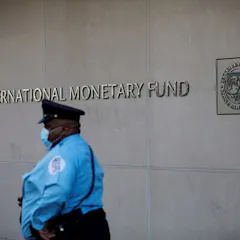
IMF programmes run the risk of having too many conditions. This may drive countries into financial disaster. And back to the IMF again.
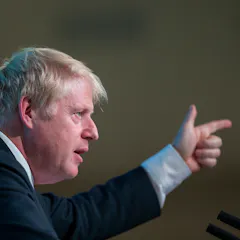
It has consequences for everything from voting rights at the IMF to international borrowing costs.
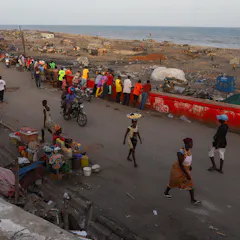
Global economic policy excludes low-income countries from the spending options that developed nations use to buffer their economies in times of crisis, and the pandemic has inflamed that inequality.
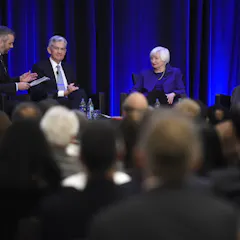
An analysis of 100 of the most powerful organizations in the world shows women are still struggling to penetrate the deepest corridors of power.
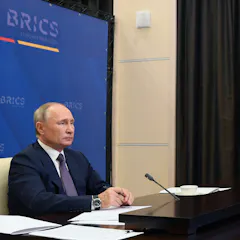
Hosted by Russia, the summit gave the BRICS group a chance to harmonise their approach before the G20 meeting in Riyadh.
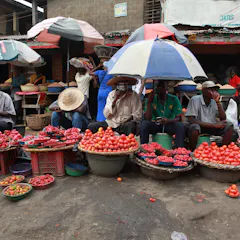
The continued entrapment of African countries in the global circuit of capital and its proclivity to large scale accumulation imperils the ability of many to cope with the pandemic.

South Africa’s National Treasury now proposes to reduce salaries. On the face of it this seems sensible. But the fundamental issue is the structure of the public service.

The IMF wants government intervention on climate change. It’s now abundantly clear Australia’s climate policies are at odds with even the most conservative approach to economic management.
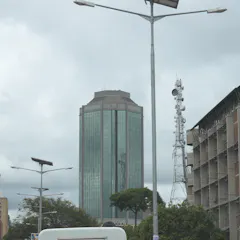
Zimbabwe wants to issue a sovereign bond to raise $3.5 billion it has agreed to pay as compensation to white farmers, but the economic and political conditions aren’t conducive to such an issuance.
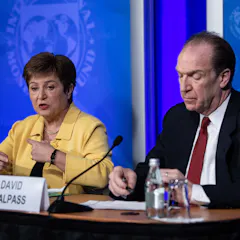
African countries should tread carefully over the debt relief offered by multilateral institutions and other lenders. It could prove very costly in the medium to long term.
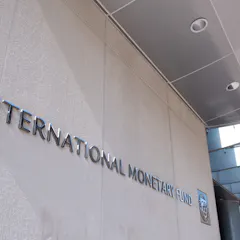
The deal that South Africa will get from the International Monetary Fund will in part depend on how well South Africa’s representatives negotiate.
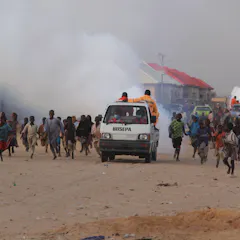
A blanket solution to Africa’s debt burden risks costing African countries dearly in terms of access to international capital markets and the relatively lower cost of borrowing.

Africa is facing a profound crisis that could set its development back a generation. It needs a solution to its debt problems that doesn’t cripple countries.
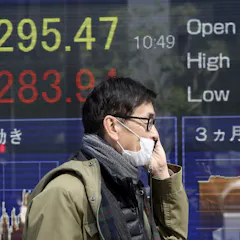
As countries get ready to re-open their economies, will there be a post-pandemic recovery? History and current economic models suggest those looking for a quick rebound will be disappointed.

With government debt soaring following moves to combat the coronavirus pandemic, now is the ideal moment to change how states borrow money.

The IMF is forecasting an Australian downturn that will dwarf every one since the Great Depression.
Top contributors
-

Professor/Senior Research Fellow, Centre for Advancement of Scholarship, University of Pretoria
-
Dean of Business School, University of Southern Queensland
-
Post Doctoral Researcher, Graduate School of Business (GSB), University of Cape Town
-
School of Social Sciences, Monash University
-
Professorial Fellow, University of Canberra
-
Associate Lecturer, University of Aberdeen
-
Professor of Finance, University of Liverpool
-
Professor of International Political Economy and Development, University of Glasgow
-
Scientia Professor of Economics, UNSW
-
Professor of Practice in Climate Policy, University of Oxford
-
Reader in International Relations, Royal Holloway, University of London
-
Professor of Economics & Business, Allegheny College
-
Associate Professor of Economics, Indiana University
-
Professor of History, Tufts University
-
Professor in The Division of Global Affairs and The Department of Political Science, Rutgers University - Newark