
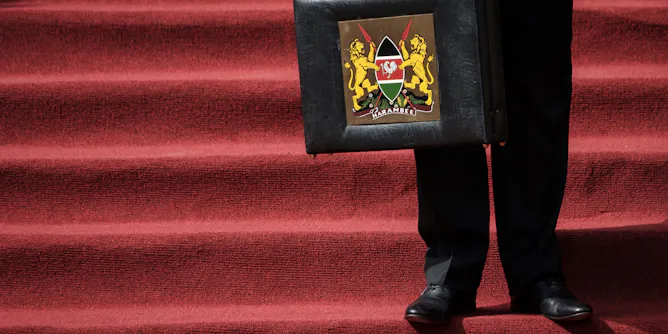
Njuguna Ndung'u has the experience that suits Ruto’s bottom-up economics but lacks the political gravitas to appease voters.
Articles on International Monetary Fund (IMF)
Displaying 61 - 80 of 247 articles
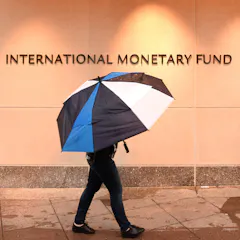
Why the IMF has weighed into the UK’s current financial situation and what it means for markets.
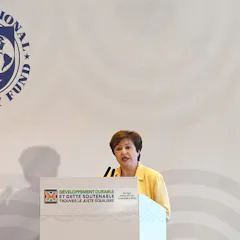
The IMF sends its staff on two types of mission to member countries: to assess the state of the country’s macro economy or to assess the need for financial support.
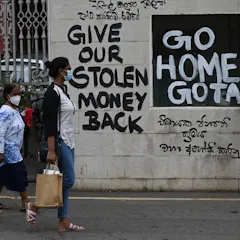
An expert on Sri Lanka’s economy identifies and explains three key challenges that Ranil Wickremesinghe will have to overcome if he hopes to steer the country out of its crisis.
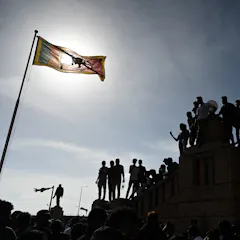
Protests over shortages forced the ouster of Sri Lanka’s president, but the crisis has deep-set roots in ethnonationalism, which has encouraged corruption, argues an expert on the country’s politics.
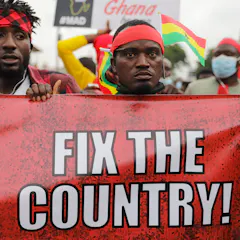
Ghana hasn’t been able to withstand economic shocks or manage its debt because it hasn’t dealt with structural economic problems.

A return to debt sustainability will create room for African policy makers to stave off risks to the post-pandemic recovery.

Whoever wins the presidential election will inherit a host of challenges that have persistently tormented previous Somali leaders.
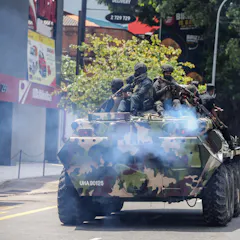
Sri Lankans are contending with growing levels of starvation, death and disruption. Now they are also facing the brutal violence of the state.
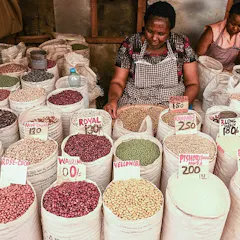
The Ukraine crisis is significantly increasing political stress and potential conflict throughout Africa.
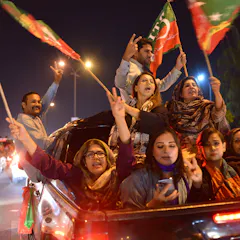
The former prime minister was forced from office by a vote of no confidence. But that doesn’t mean the political drama is over, an expert on Pakistani politics explains.
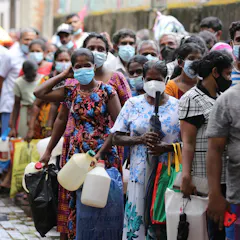
Sri Lanka is facing one of its worst ever economic crises. There are a host of reasons, but China is not to blame.
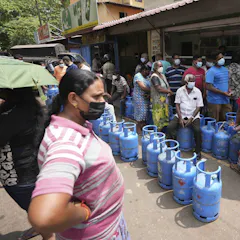
Sri Lanka was already experiencing a severe economic and financial crisis. Then Russia invaded Ukraine.
A liaison group with large financial institutions has worked in the US and the Netherlands.
Ghana’s economy is in its most precarious state in decades.
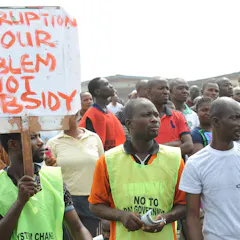
Removal of the fuel subsidy in Nigeria is long overdue, but replacing it with a transport grant is not the best approach.
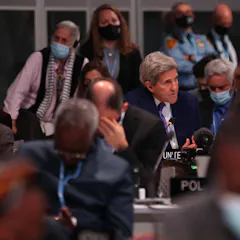
The world promised progress at the Glasgow climate conference. Now it has to turn those promises into reality. A former senior UN official describes what to watch for in the coming year.
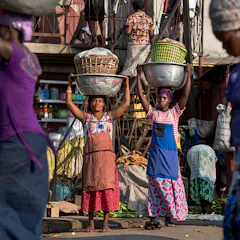
Influential international actors like the World Bank and the IMF should focus on expanding social protection rather than focusing on eliminating the informal economy.

Nigeria must remove fuel subsidies and channel the funds to critical sectors of its economy.
CC BY-NC-ND9.85 MB (download)
If done effectively, the reallocation could help African countries deal with COVID-19, climate change and their many other economic and social challenges.
Top contributors
-

Professor/Senior Research Fellow, Centre for Advancement of Scholarship, University of Pretoria
-
Dean of Business School, University of Southern Queensland
-
Post Doctoral Researcher, Graduate School of Business (GSB), University of Cape Town
-
School of Social Sciences, Monash University
-
Professorial Fellow, University of Canberra
-
Associate Lecturer, University of Aberdeen
-
Professor of Finance, University of Liverpool
-
Professor of International Political Economy and Development, University of Glasgow
-
Scientia Professor of Economics, UNSW
-
Professor of Practice in Climate Policy, University of Oxford
-
Reader in International Relations, Royal Holloway, University of London
-
Professor of Economics & Business, Allegheny College
-
Associate Professor of Economics, Indiana University
-
Professor of History, Tufts University
-
Professor in The Division of Global Affairs and The Department of Political Science, Rutgers University - Newark