

The World Bank risks looking hypocritical and becoming redundant if it doesn’t improve its own management.
Articles on International Monetary Fund (IMF)
Displaying 161 - 180 of 247 articles
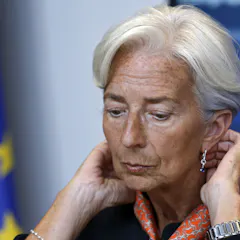
The IMF has lowered its forecasts for the US, UK and other advanced economies, even if post-Brexit negotiations go smoothly.
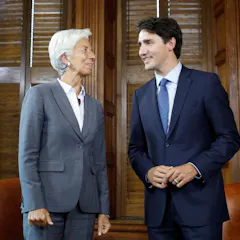
Boosting growth could be as simple as getting more women into the workforce.
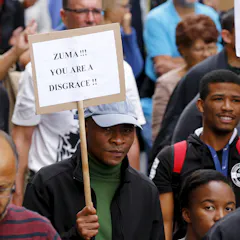
South Africa’s ruling party has lost its moral and intellectual capacity to claim the mantle of leadership. The country’s economy won’t recover unless new political alignments emerge.

The G20’s lack of leadership will continue to contribute to the current global economic malaise.
Africa needs billions of dollars to finance the Sustainable Development Goals. Its not clear where this money will come from.
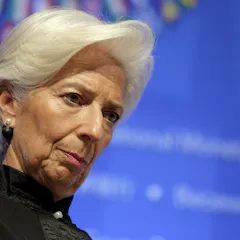
A report into the IMF’s handling of the euro crisis carefully avoids blame, while attempting to reclaim influence.
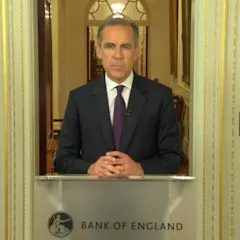
Mark Carney has announced the first part of a plan to settle investor nerves and avoid a market trainwreck. Despite best efforts it may not be enough.
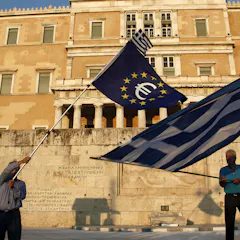
Economic sense has been largely irrelevant in the unfolding Greek drama. Instead, morality has been at its heart.

No election in recent times has so clearly presented American voters with such a stark choice when it comes to U.S. foreign policy. A guide to the major differences.

Big new investors such as the Asian Infrastructure Development Bank are key players in a worldwide infrastructure, and that could be bad news for the environment.
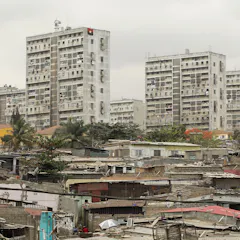
Angola’s Dos Santos is buying time. His promise to step down is an attempt to diffuse growing political tensions, as repression continues. He might relinquish his position, but not his power.
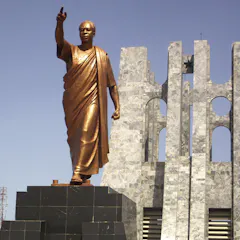
Nobel laureate and Kwame Nkrumah’s economic adviser Arthur Lewis saw Ghana as a testing ground for his ideas on economic development. But he was met with fierce resistance.
Forecasts are crucial for all economic and business activity. But looking into the future involves uncertainty and risk. Forecasts may be inaccurate, which creates a serious dilemma for policy makers

Recent studies show that development aid to poor countries contributes in the long term to their economic growth. But the aid architecture has adapted slowly to a new reality.
How the importance of the IMF’s top echelon is often overstated.

The international conference for the economic recovery of Mali resulted in promises of substantial aid, but the areas targeted fail to address the country’s real needs.
This week delivered more evidence that advanced economies are suffering from secular stagnation, hampering any real growth.
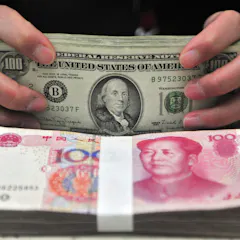
The inclusion of the yuan into the IMF’s currency basket shouldn’t stop ongoing Chinese financial market reforms.

A group of junior doctors, nurses and healthcare workers will not be employed by the Malawian government this year as it is cuts its wage bill to satisfy its international donors.
Top contributors
-

Professor/Senior Research Fellow, Centre for Advancement of Scholarship, University of Pretoria
-
Dean of Business School, University of Southern Queensland
-
Post Doctoral Researcher, Graduate School of Business (GSB), University of Cape Town
-
School of Social Sciences, Monash University
-
Professorial Fellow, University of Canberra
-
Associate Lecturer, University of Aberdeen
-
Professor of Finance, University of Liverpool
-
Professor of International Political Economy and Development, University of Glasgow
-
Scientia Professor of Economics, UNSW
-
Professor of Practice in Climate Policy, University of Oxford
-
Reader in International Relations, Royal Holloway, University of London
-
Professor of Economics & Business, Allegheny College
-
Associate Professor of Economics, Indiana University
-
Professor of History, Tufts University
-
Professor in The Division of Global Affairs and The Department of Political Science, Rutgers University - Newark