
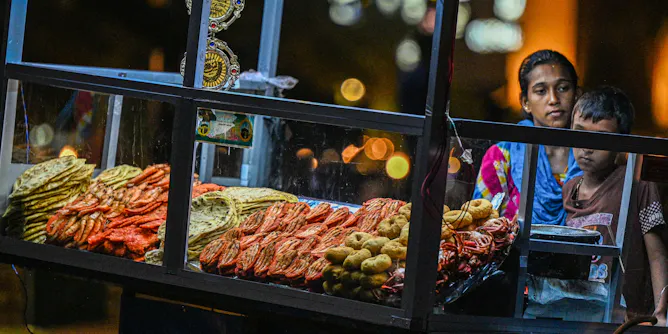
Almost two-thirds of low-income countries are at risk of debt distress – in part because of higher borrowing costs. And that isn’t the only problem.
Articles on International Monetary Fund (IMF)
Displaying 41 - 60 of 247 articles
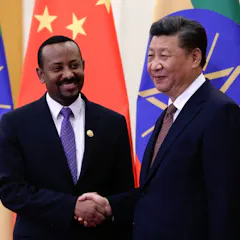
There is increased demand to join BRICS in the emerging world order, partly as a countervailing power to “the west”.
This week’s summit for a “New Global Financing Pact” will look to secure some much-needed climate cash for developing countries, while ensuring their debt remains manageable.
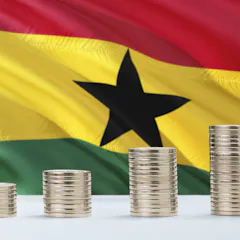
Ghana’s deal with the IMF is the 17th in its history.
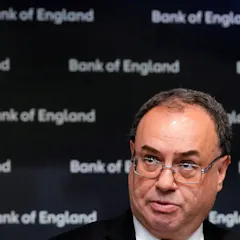
The bank has set hares running by forecasting actual growth of the UK economy in 2023, while most other forecasters are more downbeat.

Alongside the global economic outlook, Russian supply and Chinese demand are contributing to ‘a cocktail of uncertainty’ for oil prices.
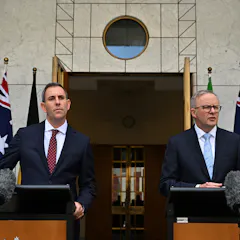
The Albanese government had no intention of giving the Low and Middle Income Tax Offset a further lease of life. It just would have preferred that a pesky journalist hadn’t highlighted the fact
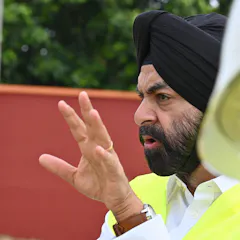
It’s a crucial time for the World Bank, with growing calls for reform and sky-high expectations of what one leader needs to do. A former World Bank official explains the challenges ahead.
Thirty years ago the World Bank recognised that its position was untenable. It put in place mechanisms to make the bank more accountable to ordinary people.
In being grey listed South Africa joins a list of countries with poor governance. Others are war zones or countries with jihadist terror groupings operating on their land.
William Ruto is determined to reduce public debt by collecting more taxes to pay for what the country needs.
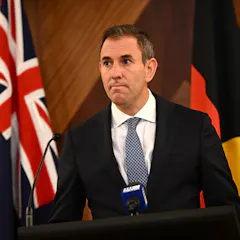
Chalmers has bought himself a doozy of a conversation, with his essay advocating we embrace “values-based capitalism”
Ghana’s finance ministry is struggling to build consensus on the country’s debt burden.
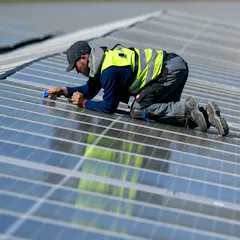
Look for significant progress in 2023 in two key areas, writes a veteran of international climate policy.

Zimbabwe, Turkey, Argentina, Pakistan and Nigeria all have presidential or general elections in 2023.
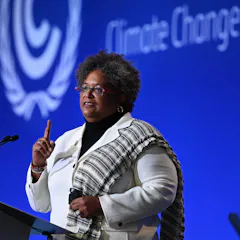
Two of the largest financial institutions are not doing enough to scale up funding for climate action.
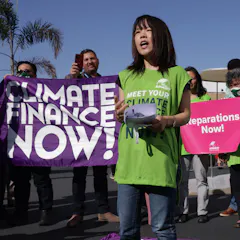
The biggest issues at COP27 involve financing for low-income countries hit hard by climate change. A former World Bank official describes some promising signs she’s starting to see.
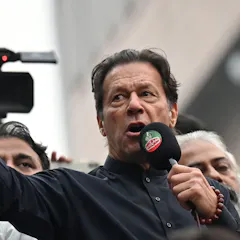
Former prime minister emerges from assassination attempt wounded, but vowing to continue protest against government.
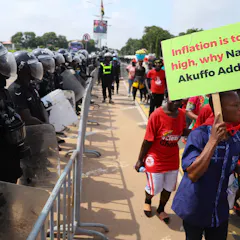
Various scholars weigh in on the state of Ghana’s economy, how it got into this situation and on the IMF’s involvement.

Crisis, which crisis?
Top contributors
-

Professor/Senior Research Fellow, Centre for Advancement of Scholarship, University of Pretoria
-
Dean of Business School, University of Southern Queensland
-
Post Doctoral Researcher, Graduate School of Business (GSB), University of Cape Town
-
School of Social Sciences, Monash University
-
Professorial Fellow, University of Canberra
-
Associate Lecturer, University of Aberdeen
-
Professor of Finance, University of Liverpool
-
Professor of International Political Economy and Development, University of Glasgow
-
Scientia Professor of Economics, UNSW
-
Professor of Practice in Climate Policy, University of Oxford
-
Reader in International Relations, Royal Holloway, University of London
-
Professor of Economics & Business, Allegheny College
-
Associate Professor of Economics, Indiana University
-
Professor of History, Tufts University
-
Professor in The Division of Global Affairs and The Department of Political Science, Rutgers University - Newark