
Sovereign creditworthiness is interpreted and reassessed through several overlapping evaluations.
Articles on International Monetary Fund (IMF)
Displaying 1 - 20 of 247 articles
Africa does not need another grand vision. It needs to treat the vision it already has as a discipline.

Economic conditions for ordinary Mozambicans are deteriorating. Poverty has risen, public services are unreliable and there are few decent job opportunities.
The IMF is not a neutral arbiter on any discussions relating to preferred creditor status. It is itself a direct beneficiary of the creditor hierarchy.
The sad truth is that African countries cannot avoid being harmed by the current Gulf war. But they can make efforts to emerge from the crisis in a better place.

The G20 2025 declaration issued in Johannesburg will be just empty words unless the endorsements are turned into action.
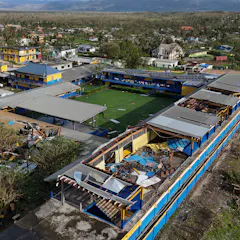
The structural vulnerability of many Jamaican schools is linked to decades of under-resourcing, where the state has adopted austerity measures imposed by the International Monetary Fund and other international institutions.

South Africa can continue to advocate for its G20 presidency priorities beyond its 2025 term.
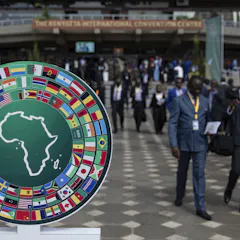
Africa must challenge the misleading narrative on preferred creditor status of its multilateral development banks.

By any measure, the multi-lateral BRICS forum is an economic and diplomatic powerhouse. NZ would not have to give up other alliances if it joined.

The World Bank has long sought to replace it’s annual index that fell to scandal in 2021. But a new replacement repeats some of the flaws.

Uncertainty is far worse for the economy than a fixed, high tariff.

The IMF has drastically scaled back growth forecasts for the US and a host of other economies for 2025.
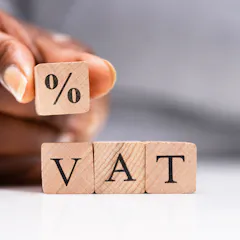
Tax experts usually refer to the three Es in taxes – equity, efficiency and ease of administration. A VAT increase, done properly, would tick all the boxes.
South Africa could use its leadership role to champion the establishment of a global credit rating capacity building initiative.
The ‘liberal international order’ emerged out of the devastation of World War II − is it still relevant today?
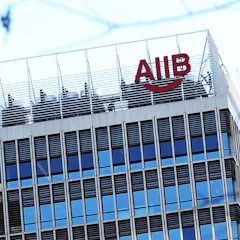
The AIIB is a paradox: an institution connected to the rules and norms of the liberal international order, but one created by an illiberal regime.

Trump’s power is not absolute. It is constrained by the relative decline in US power in the world.

Nigeria can benefit from a Brics partnership but it must find a careful balance between the relationship and the interests of its western allies.
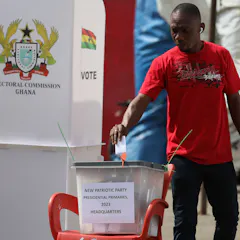
Ghana’s economy has struggled over the past four years.
Top contributors
-

Professor/Senior Research Fellow, Centre for Advancement of Scholarship, University of Pretoria
-
Dean of Business School, University of Southern Queensland
-
Post Doctoral Researcher, Graduate School of Business (GSB), University of Cape Town
-
School of Social Sciences, Monash University
-
Professorial Fellow, University of Canberra
-
Associate Lecturer, University of Aberdeen
-
Professor of Finance, University of Liverpool
-
Professor of International Political Economy and Development, University of Glasgow
-
Scientia Professor of Economics, UNSW
-
Professor of Practice in Climate Policy, University of Oxford
-
Reader in International Relations, Royal Holloway, University of London
-
Professor of Economics & Business, Allegheny College
-
Associate Professor of Economics, Indiana University
-
Professor of History, Tufts University
-
Professor in The Division of Global Affairs and The Department of Political Science, Rutgers University - Newark