
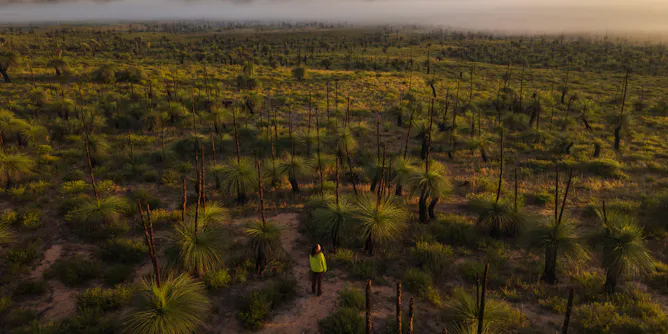
Decisions made now could shape Indigenous relations with the government around AI for years to come.
Articles on Indigenous rights
Displaying 1 - 20 of 159 articles

Secession, the formal withdrawal of a region from a country, involves trade-offs. Preliminary research shows those trade-offs would be significant for Albertans.

New research shows that Canadian attacks on Indigenous rights are part of a clear international trend of what’s known as recolonization.
Destacamos formas de celebrar la sabiduría, la alegría, la belleza y la resistencia de los indígenas wounaan mientras hablamos de la historia.

We highlight ways to celebrate Wounaan wisdom, joy, beauty and resistance while discussing centuries of taking from Indigenous communities.

A newly proposed pipeline to B.C.’s coast promises tens of thousands of jobs and billions in GDP growth. But falling Asian oil demand and a track record of cost overruns complicate the picture.
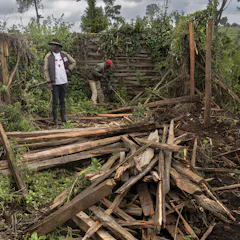
Efforts to protect land and environmental resources, including fighting climate change, often end up displacing people who have lived in those places for generations.
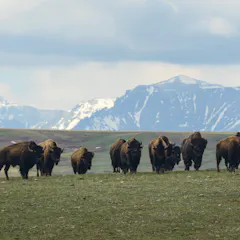
Approximately 400,000 bison roam the North American landscape today, of which nearly 90% are considered livestock.

The explosive political climate Danielle Smith is stoking in Alberta could lead to Constitutional unravelling, further harm to treaty rights and violence against those she suggests a threat to her agenda.

For Canada’s regulatory reform proposals to work, federal leaders need to stick to tight timelines even when faced with lawsuits and provincial pushback.

To be Indigenous in Canada has often meant living under continuous observation.
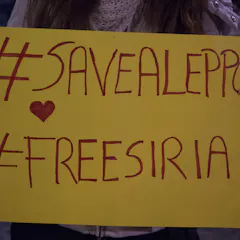
Scholars studied hashtag campaigns in Canada and Syria.

The issue in front of the US Supreme Court is seemingly mundane, about federal or state jurisdiction. But it is actually much bigger, encompassing some key questions of the 21st century.

Native American lands contain 30% of the nation’s coal, 50% of its uranium and 20% of its natural gas, as well as copper, lithium and rare earth elements.

Current citizenship laws have a narrow concept of nationhood and fail to acknowledge Indigenous ways of understanding belonging, identity and place.
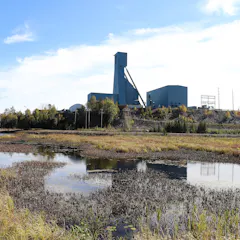
Canada’s accelerated approach to mining raises major concerns for both the environment and Indigenous rights.
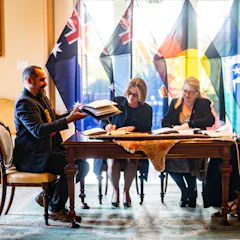
The signing of Australia’s first treaty may be a turning point not just for Victoria but the beginning of a new chapter in Australia’s history.
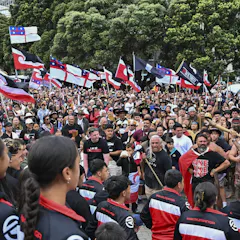
Recent Māori ward plebiscites indicate that while institutional reforms for Indigenous representation are vital, meaningful change isn’t possible without broad public understanding and trust.
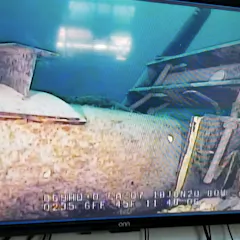
The disputes raise questions about the region’s economy and environment, as well as national priorities over energy, water, climate and Indigenous rights.

Ottawa’s initiative to quickly approve projects in the ‘national interest’ requires a visible plan for making defensible decisions in the complex and risky world of major projects.
Top contributors
-

Adjunct Professor, Stout Research Centre, Victoria University of Wellington and Auckland University of Technology, Professor of Political Science, Charles Sturt University
-
Professorial Fellow, University of Canberra
-
Project Lead, Australian Climate Accountability Project at the UNSW Australian Human Rights Institute, UNSW
-
Professor of Practice & Engagement, School for Environment & Sustainability; Director of the University of Michigan Water Center, University of Michigan
-
Associate Professor and Director, Kingsford Legal Centre, UNSW
-
PhD student of law, Universidade do Estado do Rio de Janeiro (UERJ)
-
Professor, Environment and Development Sociology, The University of Queensland
-
UN Expert Mechanism on the Rights of Indigenous Peoples (EMRIP) and Professor in Political Science, Global Affairs and Public Policy, University of Toronto
-
Professor of Indigenous Health, Executive Director, Carumba Institute, Queensland University of Technology
-
Chancellor, University of Canberra
-
Professor, RMIT University
-
Canada Research Chair in Regional Innovation, University of Saskatchewan
-
Co-Director, Institute for Genocide and Mass Atrocity Prevention, and Professor of Public Administration, Binghamton University, State University of New York
-
Senior Lecturer in History, Australian Catholic University
-
Associate Professor in Spanish, Swansea University