
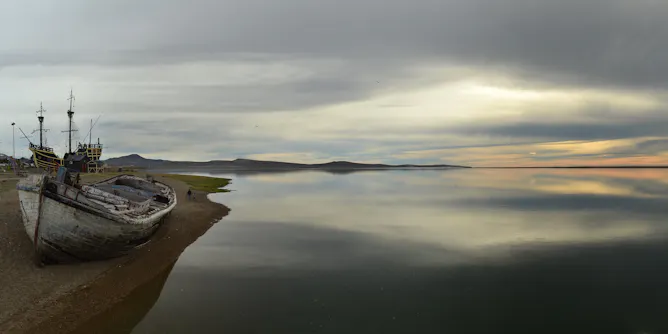
Ferdinand Magellan coined the fantasy-inspired term “Patagonians” to describe the indigenous peoples he met. It gave rise to the region’s name.
Articles on Indigenous rights
Displaying 81 - 100 of 159 articles
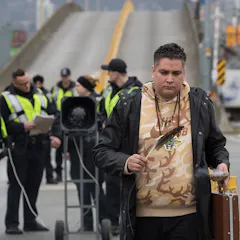
Canada is at a critical crossroads. The Wet’suwet’en conflict brings us to a deciding moment in Canada, one that will shape the future of the nation.
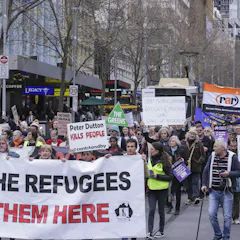
Australia has long been at the forefront of human rights internationally, while side-stepping questions about its own treatment of Indigenous peoples and refugees.

Governments and corporations seem to understand that the landscape of Indigenous resistance has shifted.
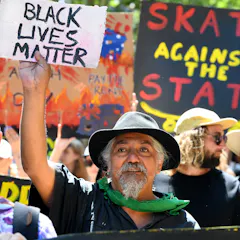
The 12th Closing the Gap report shows disappointing results on key targets, including child mortality, school attendance literacy and numeracy, employment and life expectancy.

British Columbia’s new law requires its parliament to align all laws with the UN declaration on indigenous rights. New Zealand and Australia should watch closely to see what it could mean for them.
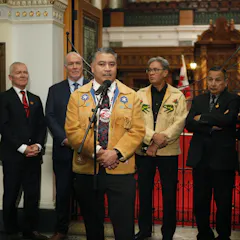
British Columbia recently introduced groundbreaking legislation to implement the rights of Indigenous Peoples. It’s impossible to overstate the importance of this historic achievement.
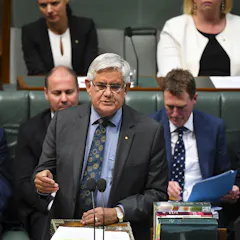
We have welcomed the opportunity to guide the co-design process because we feel this is a once-in-a-generation opportunity to recast how decisions are made in Indigenous affairs.
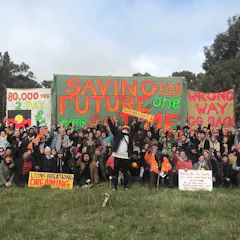
Laws in other countries recognise ‘rights of nature’. But even trees sacred to Indigenous Australian communities have no special protection.
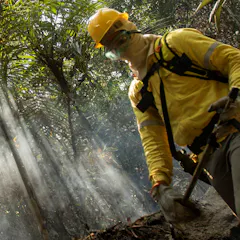
You didn’t cause the fires, but you can help prevent them spreading.
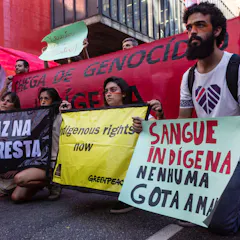
Indigenous peoples safeguard biodiversity better than any other group. But in 2018, 164 were killed defending the environment. It’s time for us to heed their knowledge, and protect their future.

Researchers have warned about the reliability of voice evidence in criminal cases. Yet, there are few legal guidelines on the use of such evidence in court.

A report on primary health care found New Zealand fails to deliver good outcomes for Māori because the state does not stand aside to allow Māori to take charge of their own affairs.

Open justice is in contest with other rights as the Northern Territory considers a bill to ban the media from juvenile court cases.

Support for Māori and Pasifika communities was a funding priority in New Zealand’s well-being budget, but a change in values may have greater impact than more money.

Last week’s attempted removal of a newborn Māori baby from his family highlights the issue that indigenous children are much more likely to be taken into state care, in New Zealand and other countries.
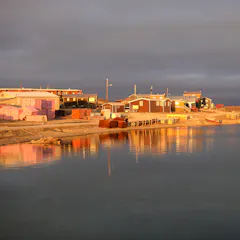
A new federal program aims to reduce diesel-dependency in remote Indigenous communities. But are these communities able to do this on their own terms?
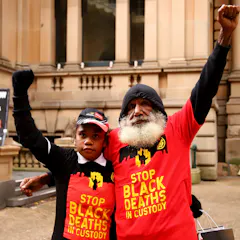
Some of the Coalition government’s initiatives on women and Indigenous issues have been more successful than others. Labor is promising much more.
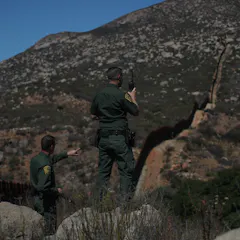
The U.S-Mexico border runs through Native American territories. A wall would further divide these communities, separating children from schools, farmers from water and families from each other.
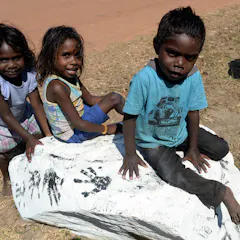
Instead of paying lip service to promoting Indigenous Australians’ rights as First Nations, the next federal government should be guided by the Uluru Statement from the Heart to make real progress.
Top contributors
-

Adjunct Professor, Stout Research Centre, Victoria University of Wellington and Auckland University of Technology, Professor of Political Science, Charles Sturt University
-
Professorial Fellow, University of Canberra
-
Project Lead, Australian Climate Accountability Project at the UNSW Australian Human Rights Institute, UNSW
-
Professor of Practice & Engagement, School for Environment & Sustainability; Director of the University of Michigan Water Center, University of Michigan
-
Associate Professor and Director, Kingsford Legal Centre, UNSW
-
PhD student of law, Universidade do Estado do Rio de Janeiro (UERJ)
-
Professor, Environment and Development Sociology, The University of Queensland
-
UN Expert Mechanism on the Rights of Indigenous Peoples (EMRIP) and Professor in Political Science, Global Affairs and Public Policy, University of Toronto
-
Professor of Indigenous Health, Executive Director, Carumba Institute, Queensland University of Technology
-
Chancellor, University of Canberra
-
Professor, RMIT University
-
Canada Research Chair in Regional Innovation, University of Saskatchewan
-
Co-Director, Institute for Genocide and Mass Atrocity Prevention, and Professor of Public Administration, Binghamton University, State University of New York
-
Senior Lecturer in History, Australian Catholic University
-
Associate Professor in Spanish, Swansea University