
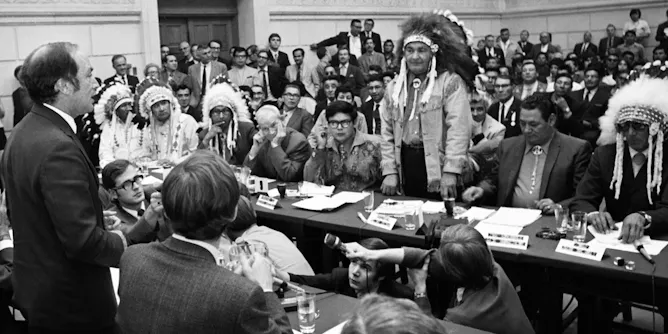
How did a national leader whose animating political spirit was protecting human rights come to adopt a passive acceptance of Canada’s worst face of colonialism?
Articles on Indigenous rights
Displaying 61 - 80 of 159 articles
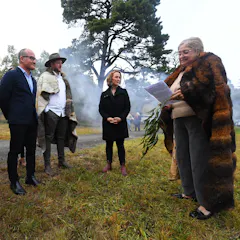
Today marks a first for Australia: a truth-telling process to begin answering for the abuses and injustices suffered by Indigenous people. Victoria’s commission can be a model for the nation.
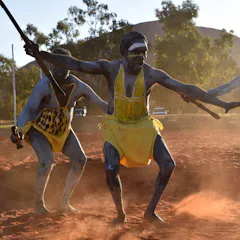
At a time when history is so contested, the gift of the Uluru Statement is that it provides a basis for redefining — and retelling the stories of — the nation.
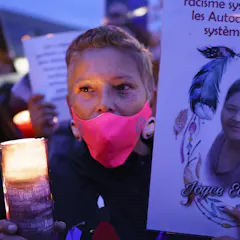
Joyce’s Principle seeks to shift the way health services are provided to Indigenous communities and ensure they are free of discrimination.
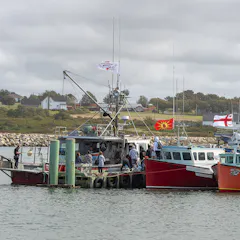
The message from commercial fishers is that fishing in St. Marys Bay outside the commercial season is illegal and a conservation concern. In fact, it is neither.

The impact of colonialism can’t be reversed, but as New Zealand implements the UN declaration new ideas emerge of a state that represents first peoples more fairly.
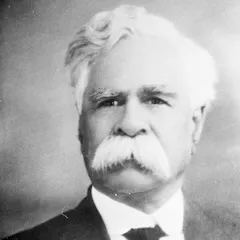
William Cooper was in his 70s when he began a remarkable political campaign, pushing for Indigenous rights and recognition.
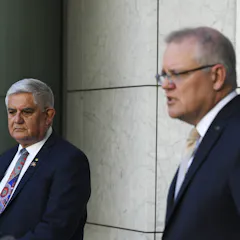
The latest Closing the Gap agreement has been billed as ‘historic’ and ‘practical’. But the fine print is vague and the targets lack ambition. Meanwhile, one key word is missing completely.
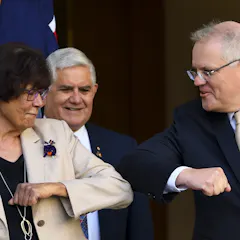
The revamped Closing the Gap agreement is a significant achievement for Indigenous organisations. But we need more detail about who will be responsible for what.
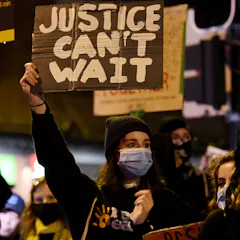
There has been some progress on judicial reform in Australia since the protests began, but structural change requires a truth-telling process and a real commitment from government for action.
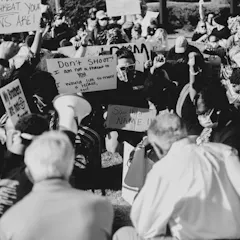
The Lumbee Tribe of North Carolina has a long history of struggle, protest and resistance to white supremacy and its social effects.
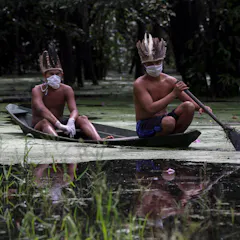
The Bolsonaro government cannot simply allow Brazil’s out-of-control coronavirus pandemic to decimate its Indigenous population, Brazil’s Supreme Court says.
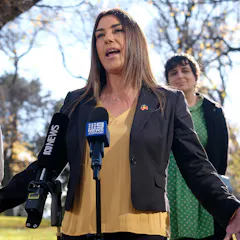
The Greens senator-elect believes a treaty should be prioritised over a Voice to Parliament. But we believe a Voice can be a pragmatic first step toward deeper reform.
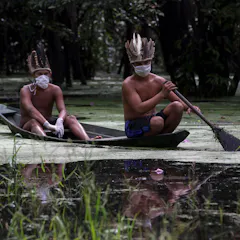
Indigenous communities were already suffering badly under Bolsonaro. Now, COVID-19 threatens their very survival.
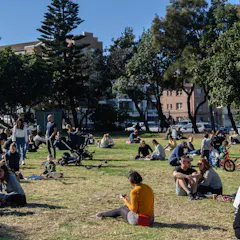
Michelle Grattan talks with Assistant Professor Caroline Fisher about the week in politics.
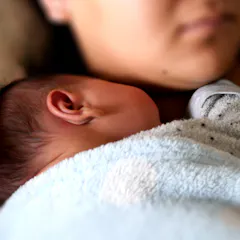
With debate still raging over the state “uplift” of Māori children, understanding our obligations under two key United Nations conventions should be a priority.
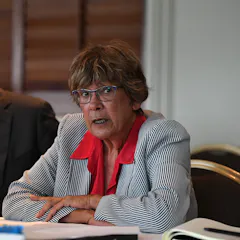
Michelle Grattan talks with aboriginal advocate Pat Turner
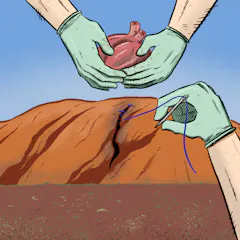
The Indigenous Constitutional Voice has been miscast by mischievous politicians as quasi-separatism. Australians were frightened by the inference it was not just illiberal, but un-Australian.

An honest reckoning with Captain Cook’s legacy won’t heal things overnight. But it’s a start
The Conversation41.4 MB (download)
The impact of 1770 has never eased for Aboriginal people. It was a collision of catastrophic proportions.

Unpicking the threads of the stories told about Captain Cook’s arrival is vital to find agreement on the provenance of materials that changed hands during colonisation.
Top contributors
-

Adjunct Professor, Stout Research Centre, Victoria University of Wellington and Auckland University of Technology, Professor of Political Science, Charles Sturt University
-
Professorial Fellow, University of Canberra
-
Project Lead, Australian Climate Accountability Project at the UNSW Australian Human Rights Institute, UNSW
-
Professor of Practice & Engagement, School for Environment & Sustainability; Director of the University of Michigan Water Center, University of Michigan
-
Associate Professor and Director, Kingsford Legal Centre, UNSW
-
PhD student of law, Universidade do Estado do Rio de Janeiro (UERJ)
-
Professor, Environment and Development Sociology, The University of Queensland
-
UN Expert Mechanism on the Rights of Indigenous Peoples (EMRIP) and Professor in Political Science, Global Affairs and Public Policy, University of Toronto
-
Professor of Indigenous Health, Executive Director, Carumba Institute, Queensland University of Technology
-
Chancellor, University of Canberra
-
Professor, RMIT University
-
Canada Research Chair in Regional Innovation, University of Saskatchewan
-
Co-Director, Institute for Genocide and Mass Atrocity Prevention, and Professor of Public Administration, Binghamton University, State University of New York
-
Senior Lecturer in History, Australian Catholic University
-
Associate Professor in Spanish, Swansea University