

Since the Voice, policies to improve the lives of First Nations people haven’t gotten much traction. What are the major parties promising this election?
Articles on Uluru statement
Displaying 1 - 20 of 52 articles

We need a richer account of democracy within which to locate the Voice, to lift the quality of public debate about it.
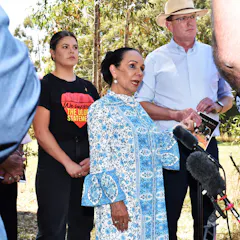
First Nations Voices from regional communities was essential in designing and advancing the idea of a Voice to Parliament, and it will be equally essential in this upcoming referendum.

The Uluru Statement from the Heart calls for truth-telling as a crucial step towards reconciliation. What does this process involve, and what are the potential promises and pitfalls?
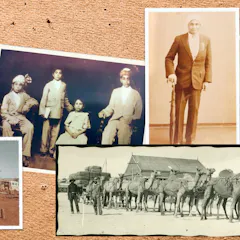
Sabah Rind’s great-grandparents, a Baloch-Afghan cameleer and a Muslim Badimiya Yamitji woman, had to battle the White Australia policy and the Aborigines Act 1905 in the course of their daily lives.
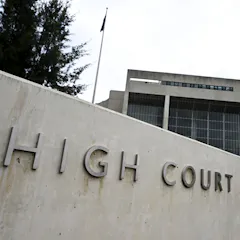
The intent to keep the Voice to Parliament amendment away from the courts and under the purview of parliament sets it apart from all other options for Indigenous recognition.
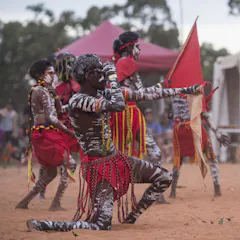
Australian Governments must embrace Indigenous Nation Building if the Uluru Statement is to lead to effective structural reform and self-determined government for First Nations peoples.
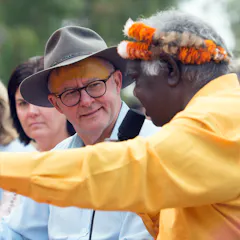
Anthony Albanese will propose draft wording to insert into the constitution an Indigenous “Voice” to parliament when he addresses the Garma Festival in Arnhem Land on Saturday. The Prime Minister is also…
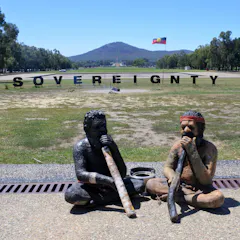
Survey findings bring insight to the general public’s thoughts and concerns of an Indigenous Voice to parliament. What questions still need to be answered to obtain a yes vote in a referendum?
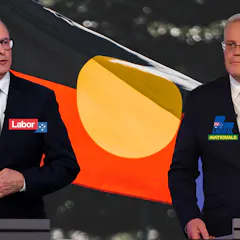
One of the recommendations from the 2017 Uluru Statement from the Heart calls for the establishment of a First Nations Voice to parliament, enshrined in the Constitution. This would ensure First Nations…
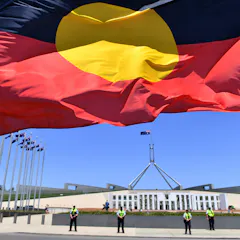
Indigenous people have 80,000 years of diplomatic practice on this continent. Yet, our views on foreign policy are routinely overlooked.
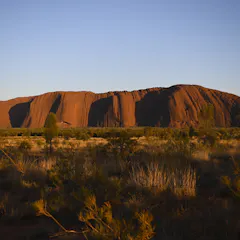
What happens when the distant frontier takes up residence in the family home? How are we to remember our flawed ancestors? A new book grapples with these questions.
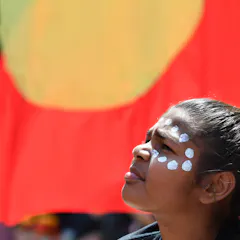
Recognition is about sovereignty, or how political authority is distributed. It can be transformative — not merely a symbolic step.
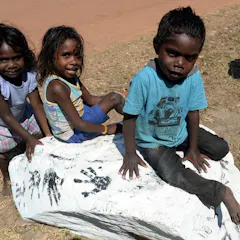
As a “Voice” that would allow Indigenous Australians to have a say in parliamentary and government decisions that affect them takes shape, it is vital it be enshrined in our Constitution.
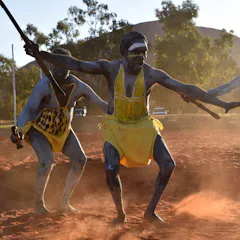
At a time when history is so contested, the gift of the Uluru Statement is that it provides a basis for redefining — and retelling the stories of — the nation.

It’s time for a new accord, with a summit led by First Nations people, bringing disparate groups together to help heal the nation and the land.
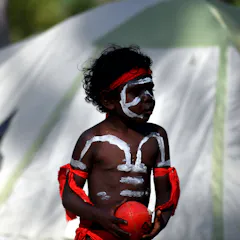
The mission of Voice. Treaty. Truth in the Uluru Statement represents very carefully sequenced reforms. A proper understanding of these should guide any constitutional changes.
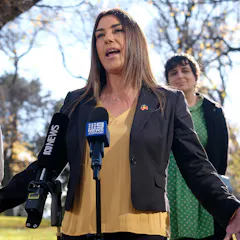
The Greens senator-elect believes a treaty should be prioritised over a Voice to Parliament. But we believe a Voice can be a pragmatic first step toward deeper reform.
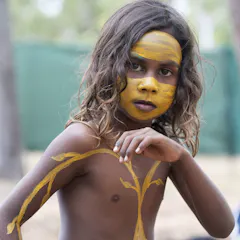
There are many ideas on how Indigenous recognition can be achieved in line with the Uluru Statement from the Heart. We need to keep exploring them until we find one that will work.
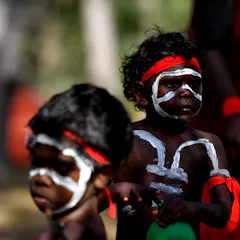
Rather than continually focusing on the “gap” between Indigenous and non-Indigenous Australians, we should look at pathways to success within First Nations communities.
Top contributors
-

Professorial Fellow, University of Canberra
-
Lecturer, Griffith Law School, Griffith University
-
Adjunct Professor, Stout Research Centre, Victoria University of Wellington and Auckland University of Technology, Professor of Political Science, Charles Sturt University
-
Research Fellow (Indigenous Diplomacy), Australian National University
-
Associate Professor, Macquarie University
-
Senior Lecturer in Law at the University of Queensland, The University of Queensland
-
Professor of Law, UNSW Law School, UNSW
-
Pro Vice-Chancellor Indigenous UNSW and Professor of Law, UNSW ; University of Pennsylvania
-
Professor in Human Rights and International Law, University of Newcastle
-
Industry Professor (Indigenous Policy), University of Technology Sydney
-
Lecturer, Centre for Aboriginal Studies, Curtin University
-
Perinatal and Pediatric Epidemiologist; Distinguished Professorial Fellow, The Kids Research Institute Australia
-
Professor Emerita in Constitutional Law, University of Sydney
-
Associate Professor, Edith Cowan University
-
Associate Professor and Director, Kingsford Legal Centre, UNSW