
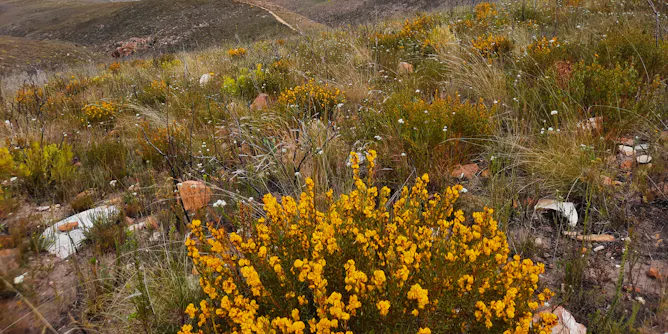
South Africa’s historical honeybush herbal tea farmers were dispossessed of their land during colonialism and apartheid. Steps must be taken to right this wrong.
Articles on Indigenous knowledge
Displaying 21 - 40 of 171 articles

Scientists added descriptive terms to the existing general Indigenous frog and reptile names to make them specific.
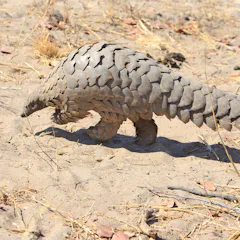
No fossilised pangolin tracks had been recorded anywhere in the world until a track was found in South Africa, dated to between 90,000 and 140,000 years ago.
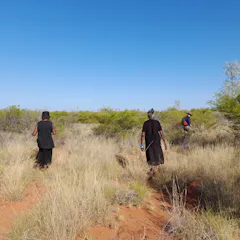
As Australia confronts biodiversity loss, this research underscores the importance of listening to those who know Country best.

Tribal governance takes a long view based in Native peoples’ deep history with these lands.
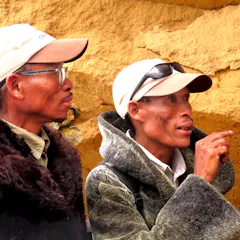
Animal trackers using traditional skills helped to find and identify fossil tracks on the coast of South Africa.
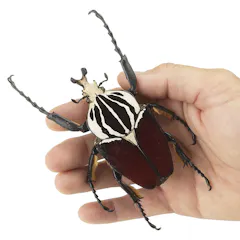
Two Goliath beetle species are in grave danger because cocoa farming has wiped out their forests and they’re being sold on the international dry insect market.
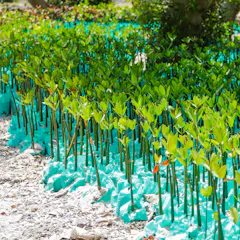
Universities in Senegal and South Africa are now teaching the skills of setting up nature-inspired projects to deal with some of the problems of climate change.
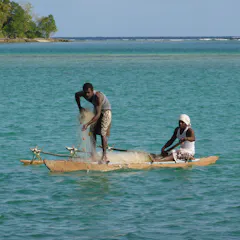
Ambae islanders combine their ecological observations with scientific data to develop an early-warning system to predict where and when fish become contaminated.
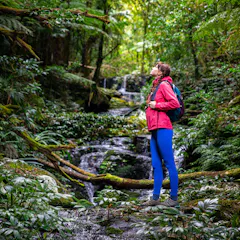
To listen deeply to nature is to become aware of behaviours, relationships and patterns of interaction between multiple species – and to learn from what we hear.

Clearing huge tracts of land to plant one crop like maize has degraded land and put healthy food out of the reach of ordinary people. A new book has solutions.

This is the oldest confirmed use of a mixture comprising two or more plant toxins specifically applied to arrowheads.

Over 1 million of South Africa’s rare succulents have been illegally harvested since 2019.
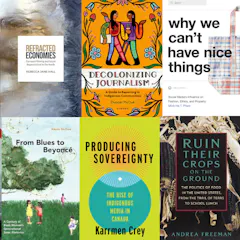
Thought-provoking reads for the critical thinker on your gift list. Each book connects with a past Don’t Call Me Resilient episode. Listen alongside reading to bring the scholar & their ideas to life.
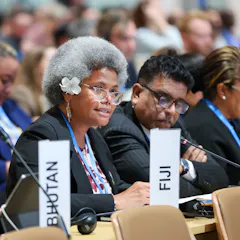
The real beneficiaries of climate finance for small island nations are private contractors brought in to build resilient infrastructure. There are now calls for a fairer money dispersal system.

New research shows how river flows in the once-mighty Murrumbidgee have dwindled over time, leaving the floodplain high and dry. But the main culprit is not climate change and we can fix it.

A policy that encourages engagement with Māori communities has made non-Māori researchers more open to consider mātauranga Māori as an equivalent, although different, knowledge framework.
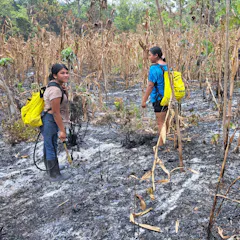
Recent wildfires in Belize shows how we must work together to revitalize Indigenous knowledge systems and plant the seeds of collaborative climate action.
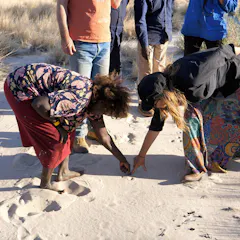
Footprints, droppings, diggings and other signs left behind by animals reveal a lot to a skilled observer. Indigenous knowledge feeds into one of Australia’s largest wildlife monitoring endeavours.

The image underscores the depth of indigenous knowledge exemplified by San people.
Top contributors
-

Research Associate, African Centre for Coastal Palaeoscience, Nelson Mandela University
-
Professor, North-West University
-
Professor, UNSW
-
Senior Scientia Lecturer (Research), UNSW
-
Associate Professor, Singapore Management University
-
Professor of Philosophy of Science, Durham University
-
Professor, University of Oxford
-
Founder of Msit No’kmaq
-
Associate professor in Vertebrate Palaeontology, University of the Witwatersrand
-
Professor of Environmental Geography, Royal Holloway, University of London
-
Research Associate, University of the Witwatersrand
-
Professor of Science, University of Technology Sydney
-
Distinguished Professor of Curriculum Studies, Stellenbosch University
-
Professor of Cross-cultural Management, Middlesex University
-
Professor, Environment and Development Sociology, The University of Queensland