
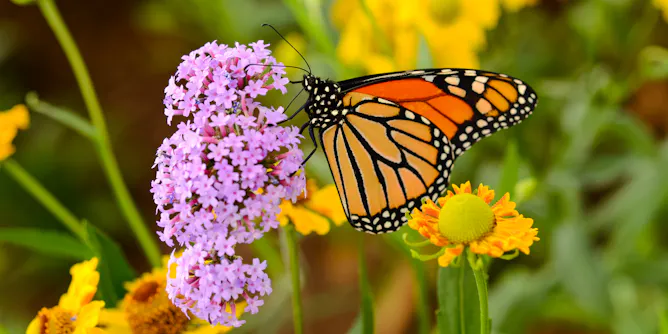
The struggles of monarch butterflies reflect a shared North American ecological and social problem.
Articles on Indigenous knowledge
Displaying 81 - 100 of 171 articles
First Nations communities have experienced data being collected by researchers unethically. Better practices and relationships with communities can happen through ways of sharing such as yarning.
In a new study, archaeologists have re-discovered the role boomerangs played in retouching stone tools.

Beyond revamping misleading terminology, some library science scholars and Indigenous knowledge holders are looking at how to index library materials in ways that reflect Indigenous knowledge.
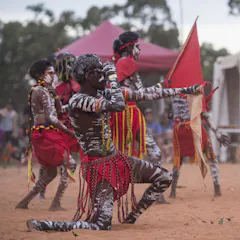
Australian Governments must embrace Indigenous Nation Building if the Uluru Statement is to lead to effective structural reform and self-determined government for First Nations peoples.

First Nations peoples have known for a long time they come from the land. There is potential for others to learn and appreciate their connection to Country as a way to better care for our planet.
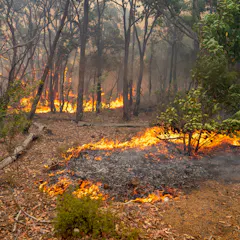
This NAIDOC Week, with the effects of climate change affecting Australia, It’s beyond time to listen to First Nations people who have extensive knowledge of caring for Country.

The DIALOG network forms a bridge between scientific and Indigenous knowledge. It renews the relationship between the university and the Indigenous world, which has for too long been one-sided.
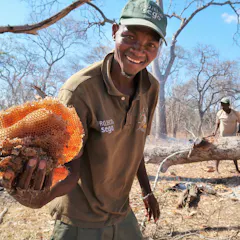
Cooperating with honeyguides has been found to increase food security. It facilitates cultural traditions and enables income or trade.

Climate artists can offer a vision of tangible networks, activities, behaviours and lifestyles that, rather than damaging the planet, support planetary — and personal — health and well-being.
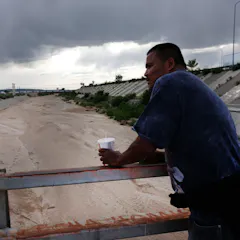
An Anglican Aboriginal pastor who attended the COP26 climate conference shares his perspective on Indigenous knowledge in dealing with climate change.
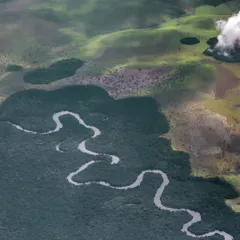
Literary texts are useful for environmental communication and can deal with the complexity of climate change.

International proposals to ban the trade of polar bear parts undercut Inuit rights, knowledge and decision-making.
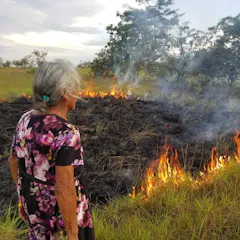
Controlled burns can benefit ecosystems and prevent wildfires burning out of control.
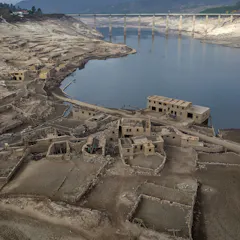
Water is central to adapting to climate change, but very few of the strategies put in place to respond to water hazards or ensure its availability have been evaluated.
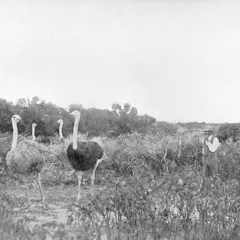
This book is a history of individuals, ideas and institutions that were at the fulcrum of important scientific developments.

Weather forecasting is complex and challenging. The process entails three steps: observation, analysis and communication.

Rather than sitting in the back seat, Indigenous Australians must be up front in managing the recovery of Australia’s unique and precious environment.
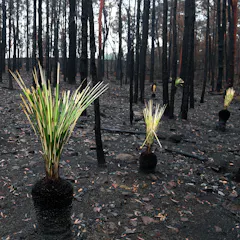
Universities must be considered as not only in crisis but also as drivers of crisis in a world of climate change, biodiversity loss, authoritarianism and deep social and economic inequalities.

In this episode, two Indigenous scientists running collaborative labs to address our climate crisis offer some ideas for environmental justice, including a redefinition of pollution.
Top contributors
-

Research Associate, African Centre for Coastal Palaeoscience, Nelson Mandela University
-
Professor, North-West University
-
Professor, UNSW
-
Senior Scientia Lecturer (Research), UNSW
-
Associate Professor, Singapore Management University
-
Professor of Philosophy of Science, Durham University
-
Professor, University of Oxford
-
Founder of Msit No’kmaq
-
Associate professor in Vertebrate Palaeontology, University of the Witwatersrand
-
Professor of Environmental Geography, Royal Holloway, University of London
-
Research Associate, University of the Witwatersrand
-
Professor of Science, University of Technology Sydney
-
Distinguished Professor of Curriculum Studies, Stellenbosch University
-
Professor of Cross-cultural Management, Middlesex University
-
Professor, Environment and Development Sociology, The University of Queensland