

Birds play a wide range of unique cultural roles for the Nuer people, who have three interchangeable names for them.
Articles on Traditional Indigenous Knowledge
Displaying all articles
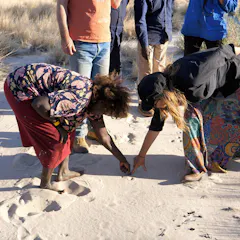
Footprints, droppings, diggings and other signs left behind by animals reveal a lot to a skilled observer. Indigenous knowledge feeds into one of Australia’s largest wildlife monitoring endeavours.

A partnership that combines Western science and Traditional Owners’ ecological knowledge is restoring the seagrass meadows of Gathaagudu/Shark Bay.
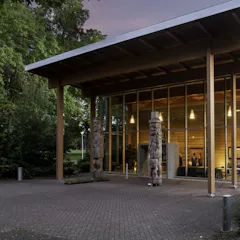
It’s possible to work with restricted resources to design and implement creative initiatives to serve the particular needs of Indigenous students at university.

INTERwoven TEXTures is a breakthrough exhibition. Here’s a review of it.

Indigenous knowledge of spiritual protection could help fight crime.

Many ‘myths’ are authentic memories of human pasts, told by people who passed down precise accounts of their history.
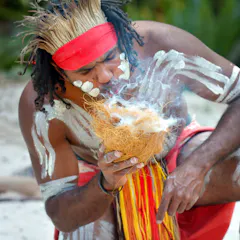
First Nations people should have a real say in decisions affecting them and their Country. Here, we look at how two current policy-making efforts measure up.

Indigenous views and ways of knowing should be applied to the way we keep, use, and kill animals, and in how we teach future generations about animal use and their care.
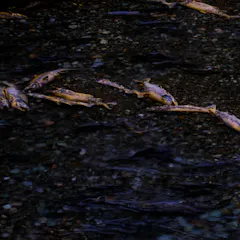
Indigenous knowledge systems are valuable in addressing the salmon crisis in British Columbia and beyond.

The First Astronomers shares the extensive star knowledge of First Peoples worldwide, stretching back millennia to reclaim so-called Western discoveries and highlight the strength of oral traditions.

In this episode, two Indigenous scientists running collaborative labs to address our climate crisis offer some ideas for environmental justice, including a redefinition of pollution.

Traditional ecological and cultural wisdom was embraced and valued, enhancing Western scientific knowledge of a beautiful, fragile marine area.

Archaeologists used to dig primarily at sites that were easy to find thanks to obvious visual clues. But technology – and listening to local people – plays a much bigger role now.
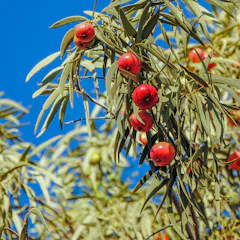
Our medicine, cosmetics and other everyday products contain compounds taken from nature. But Traditional Owners may not have given permission for the materials or their knowledge to be used.

In a land-based early childhood program sustained and enriched by relationships with Indigenous Knowledge Holders, children learn that ‘water is us.’
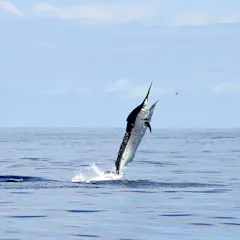
A giant ocean fish swims into the heart of industrial Port Kembla looking for food. What if we take its presence, a few km from an ancient, living midden, as a symbol of both new and old ways to learn in the age of the Anthropocene?
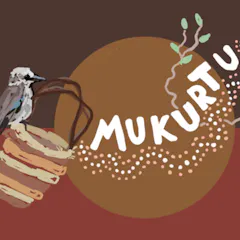
Mukurtu: an online dilly bag for keeping Indigenous digital archives safe
The Conversation71.5 MB (download)
Mukurtu - Warumungu word meaning 'dilly bag' or a safe keeping place for sacred materials - is an online system helping Indigenous people conserve photos, songs and other digital archives.
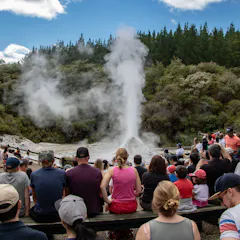
Can tourism ever be sustainable? Only if operators and consumers start looking beyond the idyllic postcard images and take undesirable consequences of tourism into account.
Science is a multicultural enterprise that benefits from and indeed requires competing views.
Top contributors
-

PhD Candidate, Doctor of Social Sciences, Royal Roads University
-
Senior Researcher, Jumbunna Institute for Indigenous Education & Research, University of Technology Sydney
-
Assistant Teaching Professor, Academic and Technical Writing Program, University of Victoria
-
Associate Professor of Anthropology, Michigan State University
-
CEO of Aboriginal Carbon Foundation, Indigenous Knowledge
-
Associate Professor, School of Management and Marketing, University of Waikato
-
Research Fellow and Indigenous Partnerships, Australian Institute of Marine Science
-
Atlantic Fellow, The University of Melbourne
-
Assistant Professor, Institute for the Oceans and Fisheries, University of British Columbia
-
Lecturer in Archaeology, Flinders University
-
Faculty in Horticulture, Indigenous Education Assistant, Environmental Stewardship Coordinator, Humber College
-
Lecturer in Intellectual Property Law, Queen's University Belfast
-
Associate Professor and Director of Christiansborg Archaeological Heritage Project, Associate Graduate Faculty, Rutgers University
-
Professor of Anthropology, Michigan State University
-
CEO and Chairperson of Chuulangun Aboriginal Corporation, Indigenous Knowledge