

The report focuses on unaccounted missing children, unmarked grave sites, and the roles of government and churches in the Indian Residential School genocide.
Articles on Indigenous
Displaying 101 - 120 of 758 articles
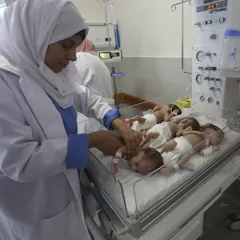
Health-care workers have a direct impact in areas of conflict due to their ability to provide care — and bear direct witness to atrocities. In Gaza, Canada and beyond, they must be heeded.

On July 4, 1891, Oklahoman farmer Oscar Weber Bilby served his neighbors the very first hamburgers on buns.
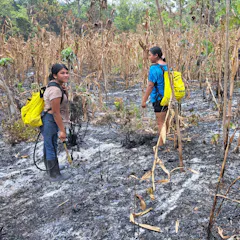
Recent wildfires in Belize shows how we must work together to revitalize Indigenous knowledge systems and plant the seeds of collaborative climate action.
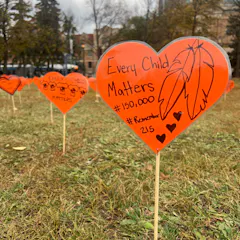
When universities declare commitments to reconciliation, these commitments must accompany changes necessary to ensure Indigenous students are truly welcomed and celebrated on campuses.

The Canadian Medical Association’s apology for harms to Indigenous Peoples is an opportunity to reflect on the gap between apologies and the work of true repair necessary for reconciliation.
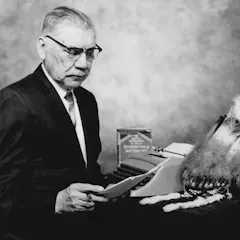
‘Brown Tom’s Schooldays’ was first self-published decades ago, and shows how one First Nations boy came of age and grappled with the assimilation agenda of Indian Residential Schools.

This playlist of podcast episodes invites listeners to engage in learning and unlearning; to acknowledge the tragic legacies of residential schools and to move beyond a single day of remembrance.

A new mathematical model shows the numbers able to speak te reo Māori will likely keep growing – as long as the right government policies and public support are maintained.
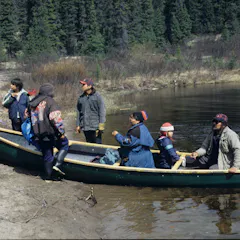
The emergence of a well-resourced rival claim to Indigenous land rights is of growing concern to the Innu people of Labrador-Quebec.
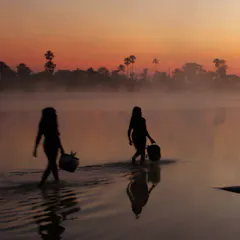
There is ample evidence showing Indigenous Peoples and their territories are essential to the world’s biodiversity. We don’t need an unsupported statistic to prove it.

A course exemplifies one way group collaboration to address the climate crisis can begin: with each person identifying key moments in their engagement, and contributing this to a larger ‘river’ model.

Harry Mosby won a silver medal for Australia at the 1976 Paralympics. It has only recently come to light how significant that achievement was.
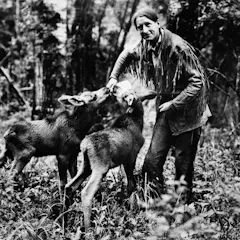
Four Red River Métis scholars discuss their intimate role in the ongoing issue of Indigenous identity fraud.

The B.C. Court’s dismissal of Chief Dsta’hyl’s justification that he was following Wet’suwet’en law points to the need for broader discussion regarding rights and jurisdiction.
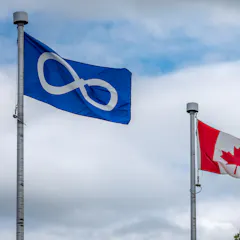
Now more than ever we need Red River Métis health data that is conducted ethically and is respectful of both individual and collective rights, and accurately represents our distinct population.

The dispute between the Blueberry River First Nations and the government of B.C. reveals deeper issues with imposed Indigenous governance systems.

The agreement between the Haida Nation and B.C. is laudable. However, Canada’s history of false promises means the federal government is unlikely to enact similar deals any time soon.
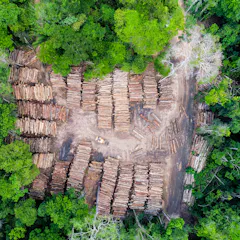
To reduce deforestation and boost biodiversity to help address climate change, returning lands to Indigenous communities is crucial and effective.
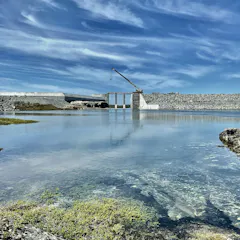
The energy transition requires the development of new infrastructure, which can have adverse effects on the environment and on certain communities.
Top contributors
-

Professorial Fellow, University of Canberra
-
Professor of Law, University of Technology Sydney
-
Assistant Professor, Indigenous Methodologies, Chanie Wenjack School of Indigenous Studies, Trent University
-
Professor of Economics and Public Policy, ANU College of Arts and Social Sciences, Australian National University
-
Professor, Faculty of Education, University of Manitoba
-
Associate Professor, Departments of History and Indigenous Studies, University of Manitoba
-
Professor of Political Science, University of Guelph
-
Associate professor, McGill University
-
Associate Professor, UNSW
-
Executive Co-Director, UNU Hub on Empowering Communities to Adapt to Environmental Change, United Nations University; University of Calgary
-
Professorial Fellow, Jumbunna IHL, University of Technology Sydney
-
Professor, Critical Indigenous Studies and Director of The Centre for Global Indigenous Futures, Macquarie University
-
Associate Professor, Faculty of Law & Justice, UNSW
-
Professor of History, University of Illinois Urbana-Champaign
-
Associate Professor of Gender, Religion and Critical Studies, University of Regina