
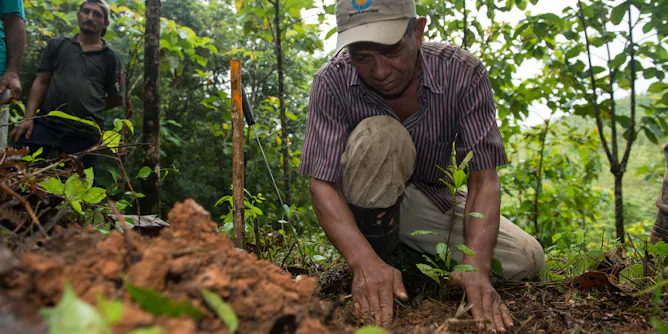
It might seem counterintuitive to suggest timber harvesting when the goal is to restore forests, but that gives landholders the economic incentive to protect and manage forests over time.
Articles on Indigenous
Displaying 161 - 180 of 758 articles
The early heat melted snow and warmed rivers, heating up the land and downstream ocean areas. The effects harmed salmon fisheries, melted sea ice and fueled widespread fires.
What’s in a name? A lot, if you’re an Audubon’s Oriole or a Townsend’s Solitaire.

New research shows the uncomfortable and shocking truth behind a revered scientist’s reputation.
Seven Williams Treaties First Nations continue to call on the provincial government to adequately consult them when making important decisions on their lands in the Greenbelt and beyond.

Food insecurity is an issue felt particularly acutely by Inuit across Northern Canada. Culturally appropriate food systems may be the solution.
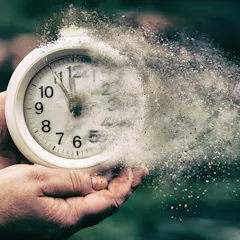
We use space to understand the passage of time, but don’t assume everyone thinks of the future as in front and the past as behind.
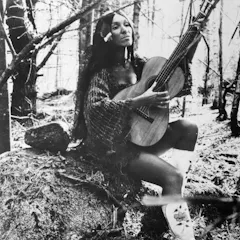
Lori Campbell, a ‘60s Scoop survivor, challenges the CBC’s motives in their exposé on the questionable Indigenous roots of legendary singer-songwriter Buffy Sainte-Marie.
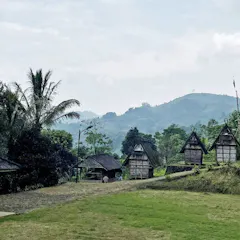
The Conversation’s senior religion and ethics editor traveled the world to learn more about Indigenous populations. See one piece of what she discovered.
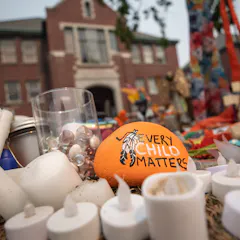
Contrary to what some ‘denialists’ believe, research shows that Canadian media outlets did not help circulate a ‘mass grave hoax’ regarding unmarked graves at former Indian Residential Schools.
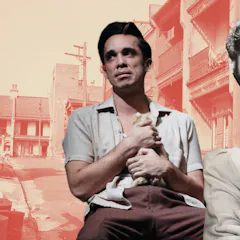
The Harp in the South has been published in 37 languages since 1948. Ruth Park was compared to Dickens for her lively portrayal of Sydney’s slums. But what does the character of Charlie Roche reveal?

Researchers from an Indigenous literatures lab examine texts that are well-suited for a new Grade 11 course, First Voices.
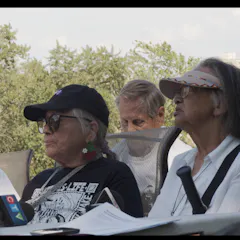
Debates over what “mapping” means show how Indigenous communities still have to advocate for and defend their cartographic methods in order to uphold their connections to the land.

The author led a search for unmarked graves at the site of Blue Quills, a former residential school. She found more areas of interest (potential graves) than the official record shows.
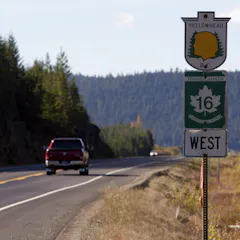
Transport development paved the way for colonization and is directly linked to the chronic and extreme social inequities Indigenous communities continue to face to this day.
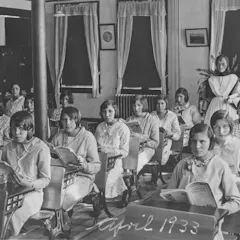
Survivors of multiple colonial school systems need their voices to be heard. An exhibit examines how colonial schooling policies over a century and a half influenced the Blood People.
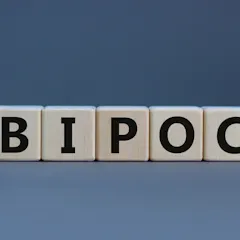
Acronyms like BIPOC can highlight the similar ways racism impacts different people. However, they can also gloss over the distinct experiences of communities.
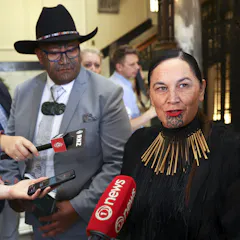
Te Pāti Māori was born out of protest. After almost two decades, the party is carving out a political presence beyond its traditional base of support.

The decision of the people of Ecuador to halt oil extraction in the Yasuní is a trend-setting precedent of global importance and a victory that Canadians should build upon.
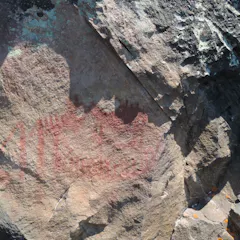
The deeper spiritual, cultural and Anishinaabe connections at Bon Echo Park can only endure if we actively commit to their protection.
Top contributors
-

Professorial Fellow, University of Canberra
-
Professor of Law, University of Technology Sydney
-
Assistant Professor, Indigenous Methodologies, Chanie Wenjack School of Indigenous Studies, Trent University
-
Professor of Economics and Public Policy, ANU College of Arts and Social Sciences, Australian National University
-
Professor, Faculty of Education, University of Manitoba
-
Associate Professor, Departments of History and Indigenous Studies, University of Manitoba
-
Professor of Political Science, University of Guelph
-
Associate professor, McGill University
-
Associate Professor, UNSW
-
Executive Co-Director, UNU Hub on Empowering Communities to Adapt to Environmental Change, United Nations University; University of Calgary
-
Professorial Fellow, Jumbunna IHL, University of Technology Sydney
-
Professor, Critical Indigenous Studies and Director of The Centre for Global Indigenous Futures, Macquarie University
-
Associate Professor, Faculty of Law & Justice, UNSW
-
Professor of History, University of Illinois Urbana-Champaign
-
Associate Professor of Gender, Religion and Critical Studies, University of Regina