
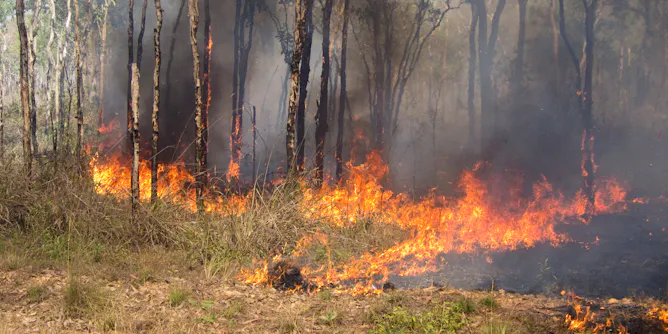
How to prevent future disasters by learning from the past. Listen to episode 21 of The Conversation Weekly podcast.
Articles on Indigenous
Displaying 381 - 400 of 758 articles
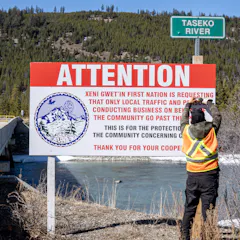
The minutiae of bureaucratic policy and procedure perpetuates colonialism and undermined a fully Tŝilhqot’in-led pandemic response.

Acts of genocide were strategically implemented by church and the Canadian government to remove Indigenous people from their land and, in turn, their culture.

The MMIWG Inquiry two years later: What’s changed and what still needs to be done?
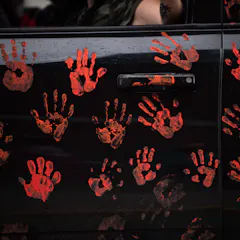
Ending the Canadian genocide of Indigenous peoples is a legal obligation, requiring honest, active decolonization. The lawyer who wrote the MMIWG’s inquiry’s legal analysis of genocide explains.
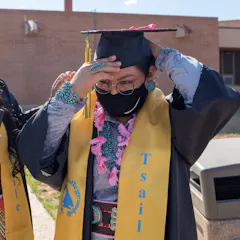
President Biden wants more funding for Tribal Colleges and Universities. An Indigenous scholar and professor of education explains why that’s critical for these schools to survive and thrive.
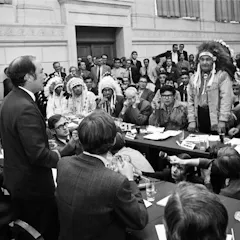
How did a national leader whose animating political spirit was protecting human rights come to adopt a passive acceptance of Canada’s worst face of colonialism?
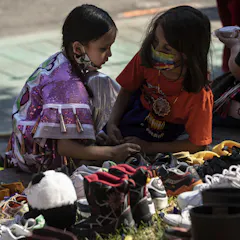
An Indigenous lawyer makes the case that what happened to Indigenous children who went to residential schools is genocide and the case should be tried by the International Criminal Court.
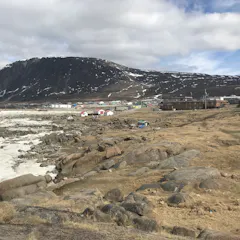
Inuit living in their traditional territory must travel long distances — often with no personal support — for specialized health-care services like cancer care, obstetrics and dialysis.

A commitment to eliminating racism must be reflected in accountability mechanisms that focus on the impacts of coordinated and consistent anti-racist action.

Canadians need to understand the basic harms and violences that continue to be experienced by Indigenous people across the land we call Canada.
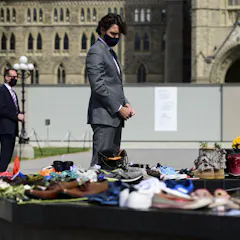
Canada has officially recognized eight genocides that have happened around the world. It has not done the same for its own treatment of Indigenous children who they sent to Indian Residential Schools.
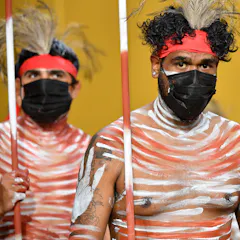
In a survey of Stolen Generation survivors, two-thirds reported a decline in their physical health as a result of COVID restrictions, while 75% reported a decline in their mental health and wellbeing.

Ground-penetrating radar located the remains of 215 First Nations children in a mass unmarked grave, revealing a macabre part of Canada’s hidden history.
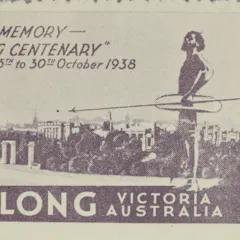
Gwoja Tjungurrayi features on our $2 coin and was the first living Australian to feature on a postage stamp. It turns out he made his stamp debut much earlier.
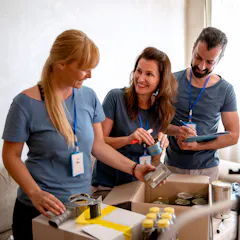
More than most other countries, the non-profit sector in Canada relies on government funding. Yet there is a shocking lack of transparency.
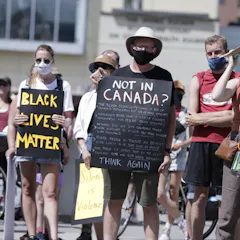
The Canadian response to racism south of the border can be described as an Americanization of Canadian history.
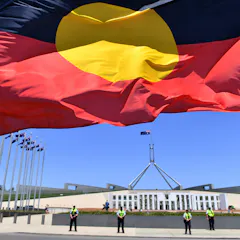
Indigenous people have 80,000 years of diplomatic practice on this continent. Yet, our views on foreign policy are routinely overlooked.
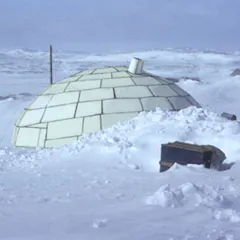
Plastic versions of igloos show an early example of culturally sensitive housing, abandoned in favour of inadequate southern-style structures.
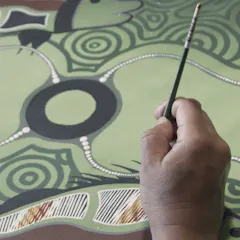
With 350 artworks created by 320 Indigenous artists who are in or recently released from prison, The Torch is making a difference to how people are seen and how they see themselves.
Top contributors
-

Professorial Fellow, University of Canberra
-
Professor of Law, University of Technology Sydney
-
Associate Professor, Departments of History and Indigenous Studies, University of Manitoba
-
Associate professor, McGill University
-
Professor of Political Science, University of Guelph
-
Professor, Faculty of Education, University of Manitoba
-
Professor of Economics and Public Policy, ANU College of Arts and Social Sciences, Australian National University
-
Assistant Professor, Indigenous Methodologies, Chanie Wenjack School of Indigenous Studies, Trent University
-
Professor, Critical Indigenous Studies and Director of The Centre for Global Indigenous Futures, Macquarie University
-
Executive Co-Director, UNU Hub on Empowering Communities to Adapt to Environmental Change, United Nations University; University of Calgary
-
Associate Professor, UNSW
-
Professorial Fellow, Jumbunna IHL, University of Technology Sydney
-
Associate Professor of Public Policy, Crawford School of Public Policy, Australian National University
-
Adjunct Professor, Stout Research Centre, Victoria University of Wellington and Auckland University of Technology, Professor of Political Science, Charles Sturt University
-
Associate Professor in Curriculum, Teaching and Learning, Ontario Institute for Studies in Education, University of Toronto