

Variations on the myth of “good intentions” are invoked as a tool against the truth that the legacy of the IRS tells. Here’s why that needs to stop.
Articles on Indian Residential Schools
Displaying 41 - 60 of 67 articles
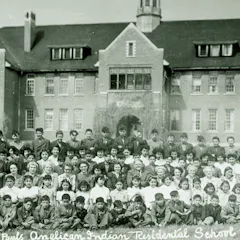
Research about colonial schooling in Treaty 7 territory in southern Alberta exemplifies how donors helped fund residential schools.

How can settler-Canadians cheer for their country at the Tokyo Olympics after the recent discoveries of hundreds of unmarked graves of children who attended Indian Residential Schools?

Secret burials are the stuff of gothic fiction, but these gothic events actually happened to Indigenous children.
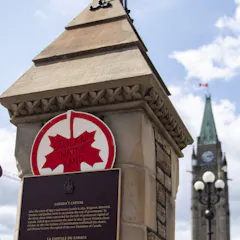
Considering our relationships to stories about the past and looking at learning as a process of encounter can help Canadians to become better treaty partners.
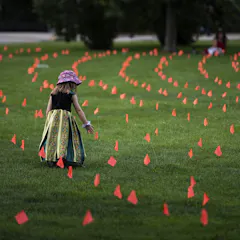
Canadians who wish to pay tribute to the children who died at Indian Residential Schools should demand the government stop fighting First Nations children in court.
Summer 2021 is too soon for southern-based researchers and travellers to return to northern, Indigenous communities in the wake of COVID-19, for research fieldwork or leisure.

People often decry words and call for action after tragic events. But words are action and they’re fundamental to Canadian democracy.
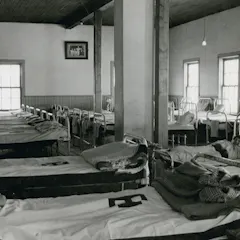
We must recognize and understand the harms that malnutrition and nutrition experiments on Indigenous people caused and the legacy they have left.

Non-Indigenous Canadians are right to feel shame about Indian Residential Schools. But what comes next?

Acts of genocide were strategically implemented by church and the Canadian government to remove Indigenous people from their land and, in turn, their culture.
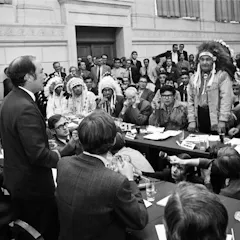
How did a national leader whose animating political spirit was protecting human rights come to adopt a passive acceptance of Canada’s worst face of colonialism?
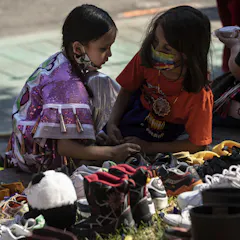
An Indigenous lawyer makes the case that what happened to Indigenous children who went to residential schools is genocide and the case should be tried by the International Criminal Court.

A commitment to eliminating racism must be reflected in accountability mechanisms that focus on the impacts of coordinated and consistent anti-racist action.

Canadians need to understand the basic harms and violences that continue to be experienced by Indigenous people across the land we call Canada.
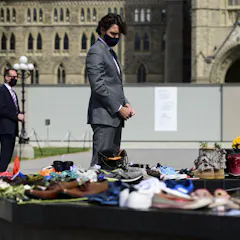
Canada has officially recognized eight genocides that have happened around the world. It has not done the same for its own treatment of Indigenous children who they sent to Indian Residential Schools.

Ground-penetrating radar located the remains of 215 First Nations children in a mass unmarked grave, revealing a macabre part of Canada’s hidden history.
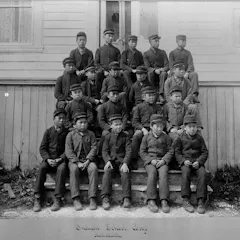
The destruction of IAP residential school records and media reports that continually emphasize compensation will ensure that if remembered, the process will be remembered through a colonial gaze.

Leaked curriculum drafts in Alberta show a desire to revive old colonial myths. To face today’s challenges, we need stories that teach how humans are related to each other and to all life forms.
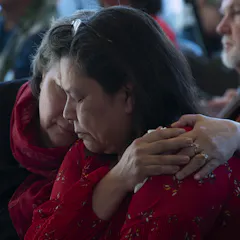
Canada is accepting claims emerging from a settlement with survivors of Indian day schools, but there has yet to be a public inquiry. There is an urgent need to hold Canada accountable.
Top contributors
-

Associate Professor, Departments of History and Indigenous Studies, University of Manitoba
-
Associate professor, Faculty of Law, L’Université d’Ottawa/University of Ottawa
-
Assistant Professor, Sociology Department, University of Lethbridge
-
Associate professor, McGill University
-
Assistant Professor, Faculty of Health Sciences, University of Manitoba
-
Associate Professor, Dept. of History, Classics, & Religion and the Faculty of Native Studies, University of Alberta
-
Professor of History, University of Winnipeg
-
Professor of Political Science, University of Guelph
-
Director, Indigenous Initiatives, MacEwan University
-
Professor, Sociology & Criminology, University of Manitoba
-
Assistant Professor, Indigenous Methodologies, Chanie Wenjack School of Indigenous Studies, Trent University
-
Professor, Dept of Sociology and Social Studies, University of Regina
-
Professor, Department of Sociology & Anthropology, Carleton University
-
Rogers Journalist in Residence at the TMU School of Journalism/Host and Producer, CBC Radio, Toronto Metropolitan University; Carleton University
-
Associate Professor, Department of Eductional Studies, Brock University