

Apologizing for people versus the establishment that upheld not only the Indian Residential Schools system but protected – and continues to protect — the people who committed the crimes is horrifying.
Articles on Indian Residential Schools
Displaying 21 - 40 of 67 articles

Whether this apology has truly advanced the goal of healing may become evident only in years and decades to come.

Residential schools and the papal bulls justifying the doctrine of discovery call out for concrete acts of atonement and reparation on the part of the church.

Pope Francis’ visit concerns all Canadians. It’s about our relationship to history and the construction of a state that marginalized Indigenous people and tried to assimilate them.
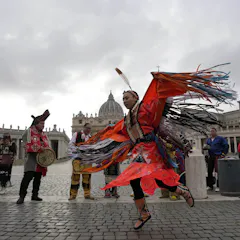
Pope Francis and the Catholic Church must make a plan with Indigenous Peoples, not for us, in order to walk the path of reconciliation. Some initial suggestions of what a plan might include.

Under international law, children have the right to be heard in legal proceedings directly or indirectly affecting them. Canada must step up to ensure all human rights apply to kids as they do adults.

As the number of unmarked graves found will likely only increase over the months and years to come, we can’t forget that every child matters.

In today’s episode of Don’t Call Me Resilient, we take a look at what has happened since the unmarked graves of 215 Indigenous children were found in Kamloops B.C.

Incorporating lessons from Ryerson University’s renaming process could help Canadian institutions address colonization.
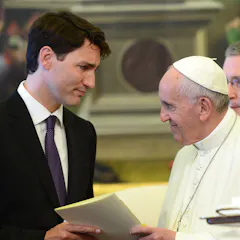
It is worth considering whether efforts to enlist the church in reconciliation have been helped or hindered by how settlers think about early written records.
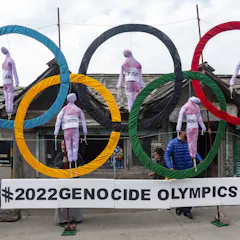
The similarities between ongoing settler-colonialism in China and the history of settler-colonialism in Canada are frighteningly similar.

Plus, a lawyer explains the legal battle over Canada’s discriminatory First Nations child welfare system. Listen to The Conversation Weekly.
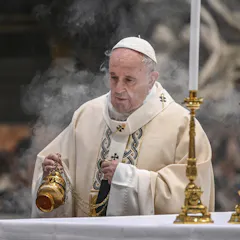
A papal apology, if done in ‘a good way,’ could help remove barriers to transforming harmful relationships between Indigenous Peoples and the Catholic Church.
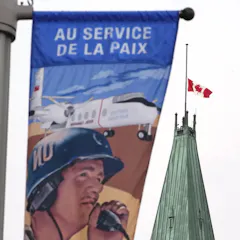
Remembrance Day has typically focused on commemorating the costs of military conflict. It is time to reconsider what and we remember and how.

A better understanding of what most genocide scholars believe can help people understand how Canada’s Indian Residential School system fits with the definition of genocide.
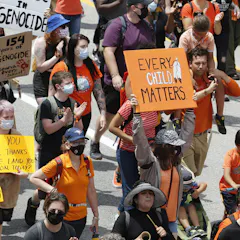
It is important for people who are part of educational institutions to honour the year-round significance of the new National Day for Truth and Reconciliation on Sept. 30.

The aim of transitional justice is to usher in a peaceful society after mass atrocity, periods of systemic human rights violations and violent authoritarian regimes. It should be a Canadian priority.

Indigenous people and communities are not monolithic. How they react to and deal with tragedy will be different. Acknowledging that will help us all heal.

Residential school denialism is the rejection or misrepresentation of basic facts about residential schools to undermine truth and reconciliation efforts.
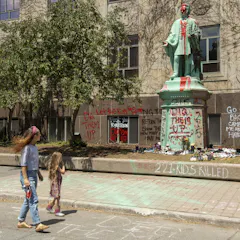
Discussions on the renaming of Ryerson University must prioritize the public interest and meet the collective responsibility to engage with Canada’s history of Indigenous oppression.
Top contributors
-

Associate Professor, Departments of History and Indigenous Studies, University of Manitoba
-
Associate professor, Faculty of Law, L’Université d’Ottawa/University of Ottawa
-
Assistant Professor, Sociology Department, University of Lethbridge
-
Associate professor, McGill University
-
Assistant Professor, Faculty of Health Sciences, University of Manitoba
-
Associate Professor, Dept. of History, Classics, & Religion and the Faculty of Native Studies, University of Alberta
-
Professor of History, University of Winnipeg
-
Professor of Political Science, University of Guelph
-
Director, Indigenous Initiatives, MacEwan University
-
Professor, Sociology & Criminology, University of Manitoba
-
Assistant Professor, Indigenous Methodologies, Chanie Wenjack School of Indigenous Studies, Trent University
-
Professor, Dept of Sociology and Social Studies, University of Regina
-
Professor, Department of Sociology & Anthropology, Carleton University
-
Rogers Journalist in Residence at the TMU School of Journalism/Host and Producer, CBC Radio, Toronto Metropolitan University; Carleton University
-
Associate Professor, Department of Eductional Studies, Brock University