

Ottawa has left the outdated 2009 Discover Canada booklet in place, pushing the work of teaching reconciliation to newcomers onto underfunded community educators.
Articles on Genocide
Displaying 1 - 20 of 332 articles
As mass atrocities continue worldwide, finding ways to spot warning signs earlier could help mitigate or prevent future catastrophe.
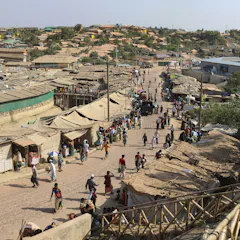
The International Court of Justice is expected to deliver its ruling in the genocide case against Myanmar next month.
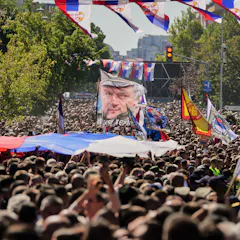
On The Conversation Weekly podcast, an international law expert explains why some Serbs revered convicted war criminal Ratko Mladić.

The dehumanizing language used by Israeli officials reflects and enables an underlying disregard for Palestinian life that connects to the findings of the recent June 2026 UN Commission of Inquiry report.

Bosnia remains a country divided by contrasting histories and narratives about the war. Mladić is a symbolic reminder of this.
A community – bystanders, law enforcement, colleagues and family – is likely to deny an atrocity when acknowledging it requires action.

Every year on August 2, the Congolese community around the world observes a day of remembrance for the victims of the genocide perpetrated against the people of eastern DRC for economic gain.

The men responsible for the bloodshed 150 years ago were never prosecuted; instead, they rose to South Carolina’s highest offices.
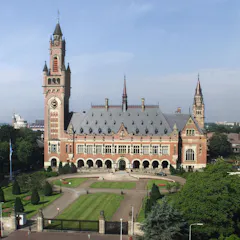
The DRC is making a third attempt to bring Rwanda before the world’s highest court in relation to the violence in its eastern region.

Almost all major human rights organisations agree the destruction of Gaza meets the legal definition of genocide. Yet liberal news outlets still do not use the word.
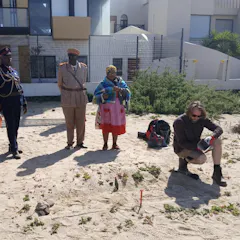
Without intervention, the important surviving physical evidence and the opportunity for commemoration will be lost.

Donald Trump’s pre-ceasefire social media post was unprecedented, immoral, and a diplomatic blunder for the US’s standing in the world.

A new book explores the country’s history, from world famous rock art to colonial genocide and the struggle for freedom.

Forty years of data suggests atrocities are on the rise globally.

The IOC has failed, yet again, to be a global leader in the promotion of peace and human rights.
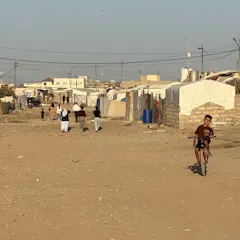
In January 2023, the German parliament formally recognised Yazidi genocide. Yet, the recognition remains largely symbolic and has no influence on asylum decisions.
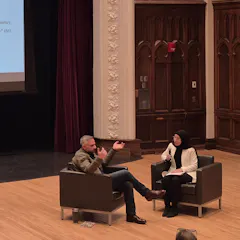
‘You Will Not Kill Our Imagination: A Memoir of Palestine and Writing in Dark Times,’ sees author Saeed Teebi examine the effects of the genocide on Palestinian art and imagination.
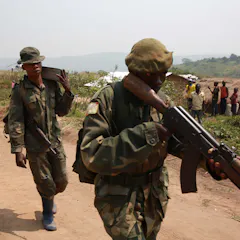
Roger Lumbala offers a test case for France’s prosecution of atrocity crimes committed elsewhere.
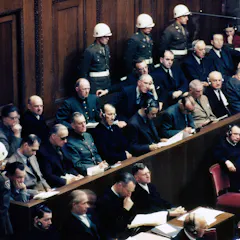
The new film highlights how the tribunal broke ground – and where it fell short – raising enduring questions about complicity, morality and whether humanity can ever truly judge its worst crimes.
Top contributors
-

Extraordinary Professor, Department of Political Sciences, University of Pretoria
-
Co-Director, Institute for Genocide and Mass Atrocity Prevention, and Professor of Public Administration, Binghamton University, State University of New York
-
Distinguished Professor of Anthropology; Director, Center for the Study of Genocide and Human Rights, Rutgers University - Newark
-
Professor of Law, University of Waikato
-
Professor in Political Science, Arnold Bergstraesser Institute
-
Associate Professor International Law, Roskilde University
-
Co-Director, Institute for Genocide and Mass Atrocity Prevention, Professor, Department of Philosophy, Binghamton University, State University of New York
-
Professor Emeritus, Department of Political Science, Wilfrid Laurier University
-
Postdoctoral Research Associate, King's College London
-
Professor, Lancaster Law School, Lancaster University
-
Assistant Professor of Law, Osgoode Hall Law School, York University, Canada
-
Professor Emeritus in Global Health & Humanitarian Affairs, University of Manchester
-
Professor of Anthropology, University of the Western Cape
-
Adjunct Professor of Mass Atrocities Prevention, Georgetown University; University of Connecticut
-
Associate Professor, Departments of History and Indigenous Studies, University of Manitoba