

Ottawa has left the outdated 2009 Discover Canada booklet in place, pushing the work of teaching reconciliation to newcomers onto underfunded community educators.
Articles on Truth and reconciliation
Displaying 1 - 20 of 57 articles

The best way to apologize involves making victims the primary focus, not the apologizing state. Apologies that prioritize rehumanizing victims prove more effective at rehumanizing apologizers too.

Indigenous communities have long fought to control their own education. A scholar traces that history and examines what a new Inuit-led university could mean for Inuit self-determination.
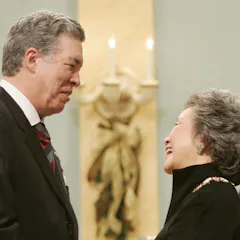
Apart from impacting individuals, false declarations of Indigenous identity can impact institutions’ reputations and harm Indigenous academics and research communities.

Amid national truth and reconciliation processes, Scandinavian churches are taking stock of their past policies toward the Sámi people.

Claims that dismantling public statues and renaming roads and schools somehow erases Canadian history profoundly misunderstand how history works.
When it comes to the energy transition, focus tends to be on solar, wind or hydroelectricity. But small modular nuclear reactors are showing promise globally.

The Canadian Medical Association’s apology for harms to Indigenous Peoples is an opportunity to reflect on the gap between apologies and the work of true repair necessary for reconciliation.

This playlist of podcast episodes invites listeners to engage in learning and unlearning; to acknowledge the tragic legacies of residential schools and to move beyond a single day of remembrance.

Opponents of the U.K. government’s Northern Ireland Troubles Act argue it violates the Good Friday Agreement by denying victims their right to justice.
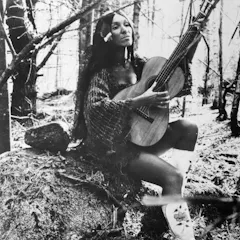
Lori Campbell, a ‘60s Scoop survivor, challenges the CBC’s motives in their exposé on the questionable Indigenous roots of legendary singer-songwriter Buffy Sainte-Marie.
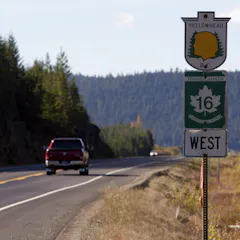
Transport development paved the way for colonization and is directly linked to the chronic and extreme social inequities Indigenous communities continue to face to this day.
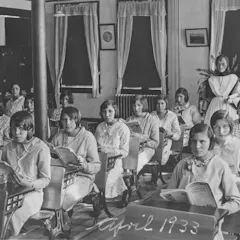
Survivors of multiple colonial school systems need their voices to be heard. An exhibit examines how colonial schooling policies over a century and a half influenced the Blood People.

Manitoba’s provincial government has declined to support a search for three murdered Indigenous women, citing health and safety concerns. An ethicist explains why this decision needs to be rethought.

How we represent a place can reveal much about it and even more about who we are and what we value.

The Uluru Statement from the Heart calls for truth-telling as a crucial step towards reconciliation. What does this process involve, and what are the potential promises and pitfalls?
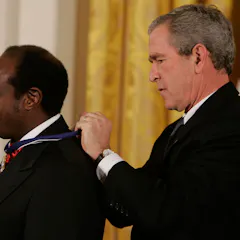
Rusesabagina’s release portrays Rwanda’s president as a pragmatist – one willing to negotiate once a security threat is neutralised.

For Indigenous literature courses to be successful, Indigenous cultural safety must be centred, and commitment to teacher professional development is a must.
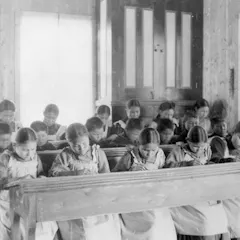
Canada’s recent resolution to label the Indian Residential School system as genocide (and not cultural genocide) is not a mere alteration of words, it is a significant and consequential change.
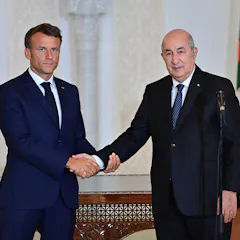
France’s ‘renewed partnership’ with Algeria may be less about exploring a difficult and painful past and more about pressing political concerns.
Top contributors
-

Professor of Political Science, University of Guelph
-
Associate Professor, Departments of History and Indigenous Studies, University of Manitoba
-
Professor, Faculty of Education, University of Manitoba
-
Professor, Lancaster Law School, Lancaster University
-
Research fellow at the International Development Department, University of Birmingham
-
Senior Lecturer, Edge Hill University
-
Professor and Canada Research Chair in Children, Families and Armed Conflict, McGill University
-
Associate Professor, Design Anthropology, Swinburne University of Technology
-
Professor, School of International Relations, University of St Andrews
-
Lecturer in European Studies, University of Sydney
-
Assistant researcher, University of Sydney
-
Professor and Chair of Gender and Women's Same-Sex Relations Crossculturally, University of Amsterdam
-
Research fellow, Queen's University Belfast
-
Professeur associé/Adjunct professor, École nationale d'administration publique, École nationale d'administration publique (ENAP)
-
Lecturer, University of Aberdeen