

The Antarctic ice sheet’s future depends how a chain of events plays out. A new study finds the evidence points in one direction.
Articles on Antarctic ice sheet
Displaying 1 - 20 of 33 articles
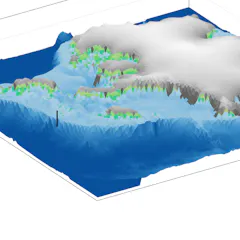
A picture of what West Antarctica looked like when its ice sheet melted in the past can offer insight into the continent’s future as the climate warms.
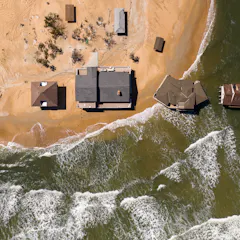
Understanding what happens to Antarctica’s ice matters, because as it melts, sea levels rise, affecting lives and economies around the world.
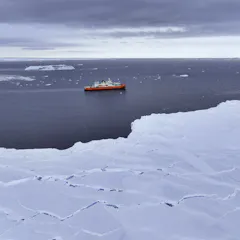
The Antarctic Slope Current shields Antarctica from warm waters. But new research shows meltwater is speeding up the current, which could make it more unstable.
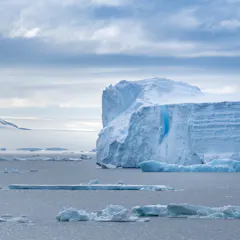
A new study found parts of Antartica could pass a tipping point for mass ice sheet losses as soon as 2050 – pushing sea levels 2 metres higher by 2300 than currently predicted.
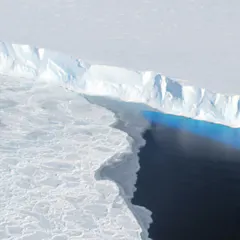
Antarctica’s riskiest glacier is a disaster in slow motion, a polar scientist writes. But in a rare bit of good news, the worst-case scenario may be off the table.
To narrow our predictions of global sea level rise, we need to know more about these sudden ‘non-linear’ changes to ice sheets.
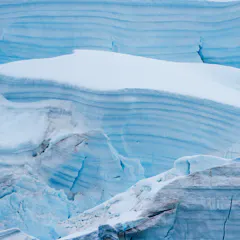
The world is on track to exceed 2°C warming within the next five years, with dire consequences for polar ice, mountain glaciers and permafrost – and human society.
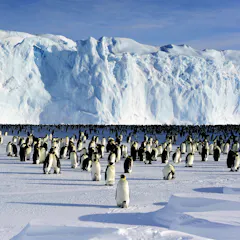
The first comprehensive assessment of trends in Southern Ocean ecosystems reveals an urgent need to address climate change. The summary for policymakers can guide decision-makers.
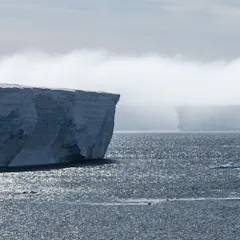
Freshening seawater around Antarctica is disrupting a global ocean conveyor which regulates the climate.
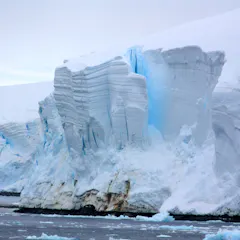
Seafloor landforms reveal that ice sheets can collapse at 600 metres per day.
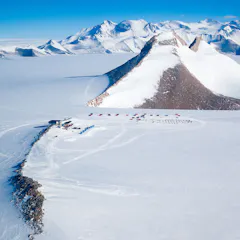
Unravelling the mystery of how life in Antarctica survived past ice ages involved sampling some of the oldest museum records. When combined with a dating database, a familiar story is revealed.
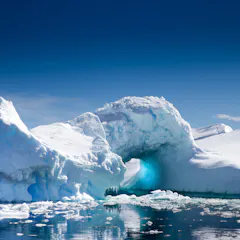
The melting of the Antarctic ice sheet will contribute for a long time to sea level rise, which will test humanity’s capacity to adapt.
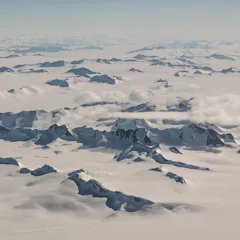
Scientists used satellites to map tens of thousands of glacial landforms in Antarctica’s highest mountains.
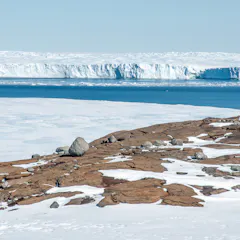
Interestingly, we also found a major period of ice loss in Antarctica was followed by a period of gain, starting some 5,000 years ago.
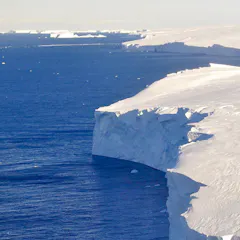
Thwaites Glacier’s ice shelf appears to be splintering, and scientists fear it could give way in the next few years. A polar scientist takes us on a tour under the ice to explain the forces at work.
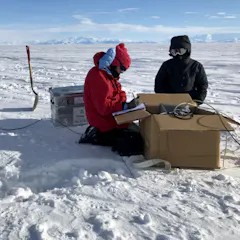
Liquid water below the ice determines how fast an ice stream flows. As the ice sheet gets thinner, more of that salty groundwater could rise.
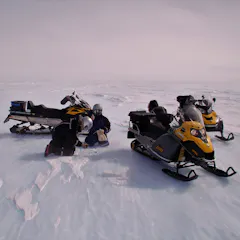
Scientists have crafted the world’s first “treasure map” to reveal Antarctica’s meteorites. These chunks of stone-like material could throw light on the mysteries of our early solar system.
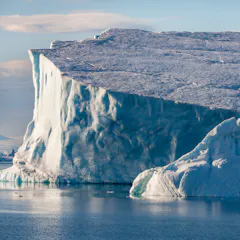
For the first time since satellites started studying the continent, East Antarctica has lost an entire ice shelf.
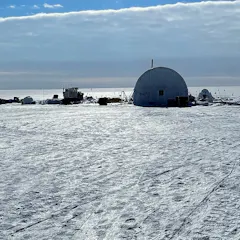
Researchers have surveyed an Antarctic under-ice river for the first time directly, and their observations support the idea that such sub-glacial rivers form estuaries as they flow into the ocean.
Top contributors
-

Professor in Earth Sciences, Te Herenga Waka — Victoria University of Wellington
-
ARC DECRA Senior Research Fellow, Institute for Marine and Antarctic Studies, University of Tasmania
-
Professor of Climate Science and Meteorology, University of Lincoln
-
Research Scientist, ETH Zurich
-
Adjunct professor, University of Lapland
-
Instructor of Natural Sciences, University of Oregon
-
PhD Candidate in Cryospheric Remote Sensing, Durham University
-
Pro Vice-Chancellor of Research, University of Technology Sydney
-
Professor of Geosciences, UMass Amherst
-
Assistant Professor of Geophysics and Hydrologic Science and Engineering, Colorado School of Mines
-
NERC Independent Research Fellow in Oceanography, University of Southampton
-
Leverhulme Early Career Fellow, Geosciences, University of Edinburgh
-
Professor of Geosciences and International Affairs, Princeton University
-
Senior Research Scientist, Earth & Biological Sciences, South Australian Museum; Adelaide University
-
Postdoctoral Research Scientist in Geophysics, Scripps Institution of Oceanography, University of California, San Diego