
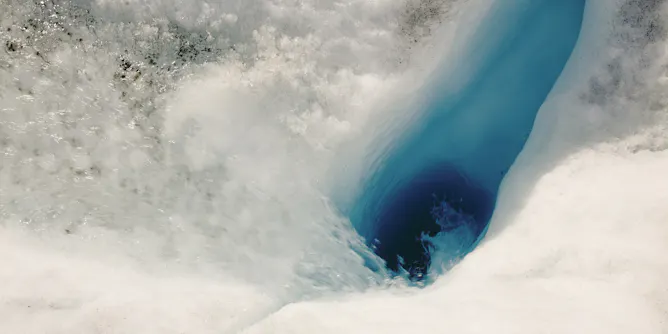
An important ocean circulation system is slowing down faster than expected.
Articles on Greenland ice sheet
Displaying 1 - 20 of 32 articles
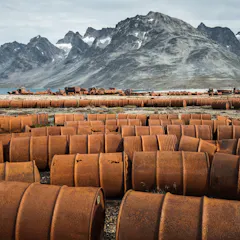
History also shows that many of the fanciful engineering ideas for Greenland failed because they misjudged the island’s harsh climate and dynamic ice sheet.

There could be an irreversible retreat of parts of the ice sheets, raising sea levels much faster than currently planned.
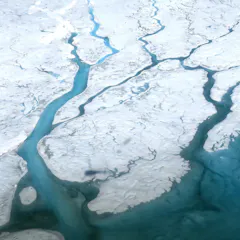
A report warns that coral reefs may have reached their tipping point, and ice sheets, ocean currents and the Amazon are at growing risk. But, what does that actually mean?
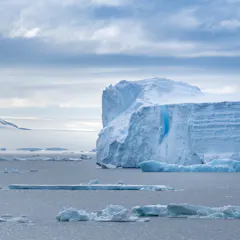
A new study found parts of Antartica could pass a tipping point for mass ice sheet losses as soon as 2050 – pushing sea levels 2 metres higher by 2300 than currently predicted.
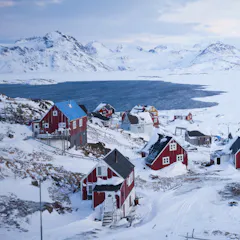
Melting ice, thawing permafrost and crumbling fjord walls are just a few of the risks climate change poses for those living and working in Greenland.
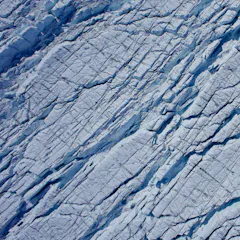
We analysed 8,000 maps and found crevasses are increasing in size and depth.

The Danish-controlled island is coveted by some external actors who see the vast territory as a vector for precious minerals and great-power politics.
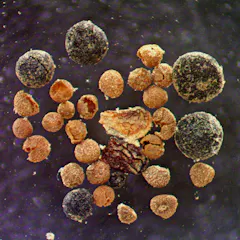
Our discovery of a tundra ecosystem, frozen under the center of Greenland’s ice sheet, holds a warning about the threat that climate change poses for the future.
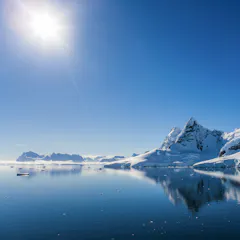
To narrow our predictions of global sea level rise, we need to know more about these sudden ‘non-linear’ changes to ice sheets.
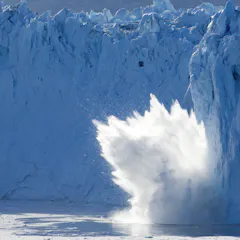
Scientists now have a better understanding of the risks ahead and a new early warning signal to watch for.

The ice will survive if temperatures are soon brought back down – new study.
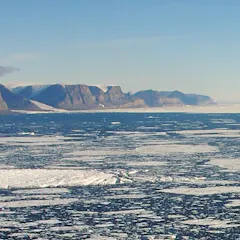
Some of the world’s biggest glaciers flow into fjords in Greenland and we need to know what they’ll bump into on the seabed.
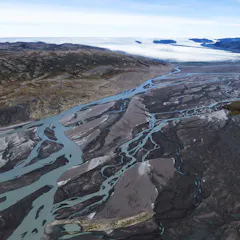
The soil was extracted during the Cold War from beneath one of the U.S military’s most unusual bases, then forgotten for decades.
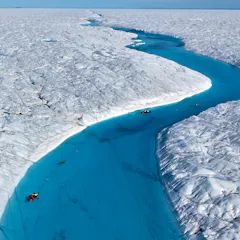
Glaciologists are discovering new ways surface meltwater alters the internal structure of ice sheets, and raising an alarm that sea level rise could be much more abrupt than current models forecast.
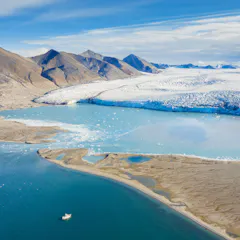
To fully understand the extent of climate-related dangers the Arctic – and our planet – is facing, we must focus on organisms too small to be seen with the naked eye.
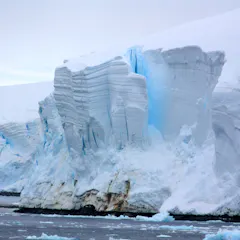
Seafloor landforms reveal that ice sheets can collapse at 600 metres per day.
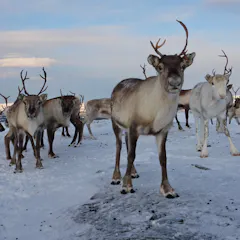
The annual report is also a reminder that what happens in the Arctic affects the rest of the world.

A recent paper suggested damaging climate tipping points could be closer than first thought.
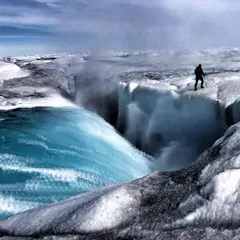
A field glaciologist explains the changes scientists are now seeing.
Top contributors
-

Professor of Natural Resources and Environmental Science, University of Vermont
-
Professor of Glaciology and Earth Observation, University of Bristol
-
Professor of Glaciology, Fulbright Scholar, University of Tromsø
-
ARC DECRA Senior Research Fellow, Institute for Marine and Antarctic Studies, University of Tasmania
-
Senior Lecturer, School of Geography, Planning, and Spatial Sciences, University of Tasmania
-
Professor of Geosciences, University of Montana
-
Chair Professor, Climate Change Research Centre, UNSW
-
Postdoctoral Research Associate, University of Cambridge
-
Principal Research Scientist, CSIRO
-
Assistant Professor in Physical Geography and Environmental Science, Northumbria University, Newcastle
-
Professor in Applied Mathematics, Te Kunenga ki Pūrehuroa – Massey University
-
Reader in Biology, Department of Life Sciences, Aberystwyth University
-
Deputy Lead Scientist, National Snow and Ice Data Center (NSIDC), Cooperative Institute for Research in Environmental Sciences (CIRES), University of Colorado Boulder
-
Associate Professor of Geoscience, University of Arizona
-
Research scientist, Memorial University of Newfoundland