
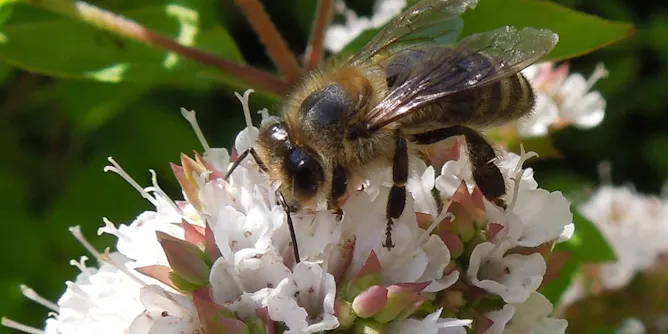
Garden pollinators can turn their noses up at the flowers human eyes find most beautiful.
Articles on Honeybees
Displaying 121 - 140 of 161 articles
Here’s how to take the sting out of these harmful pesticides.
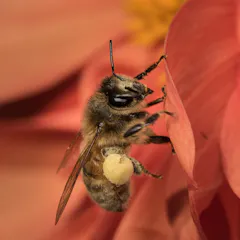
Extra “eyes” on top of bee heads help them see colours the same way under all light conditions. And it’s an approach that could help us design better cameras.
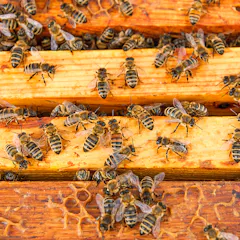
Two large-scale studies confirm that neonicotinoid pesticides can harm bees. But the effects vary widely in different countries, suggesting that calls for a world ban would be premature.

Beekeeping cannot depend on a single forage source. This makes the business of ensuring bees have what they need to stay healthy a precarious business.
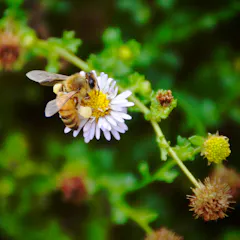
It’s a decade since US beekeepers first noticed that their bees were mysteriously dying. Now we know much more about Colony Collapse Disorder, raising hopes that we can turn bees’ fortunes around.
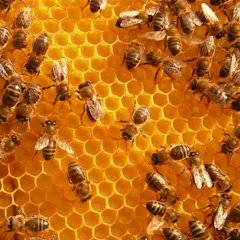
Every new batch of bees needs the equivalent of eight hectares of lavender fields to prosper.
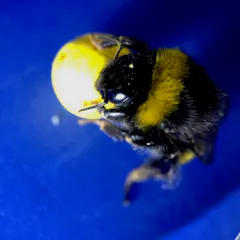
They shoot, they score … if there’s a sugary reward at the end of it.

Collecting pollen takes a surprising amount of teamwork.
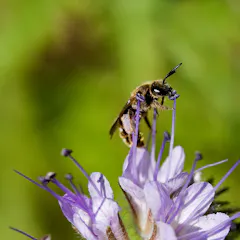
Two new studies have linked controversial pesticides neonicotinoides to wild bee and butterfly declines.
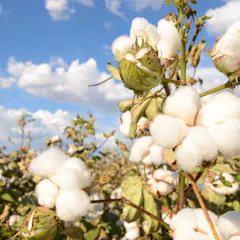
Bees and other pollinating insects are under stress worldwide. Research in South Texas shows that simple steps like planting wildflowers near fields can help pollinators and boost farmers’ profits.
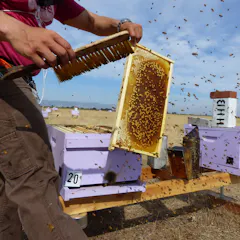
Honey bees, which pollinate many valuable crops, are threatened by parasites, pesticides and development. But selective breeding, more benign pesticides and better nutrition could help turn the tide.
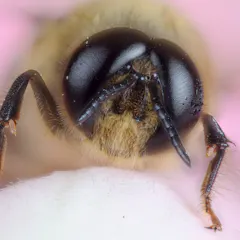
Insects have similar structures in their brains as do we, and that might mean that have a basic form of consciousness.
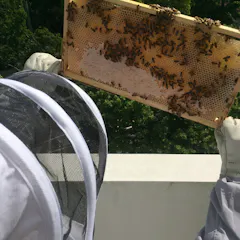
Honey bees are in decline and the current method of keeping them can be disruptive to a colony. But new designs allow beekeepers to monitor a hive remotely, even sniff out disease and pests.

Tasmania’s bushfires have hurt not only the state’s forests, but also the honey industry that depends on access to the region’s unique trees.
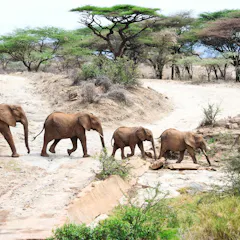
Elephant numbers are increasing in parts of sub-Saharan Africa. Their search for food is leading them into conflict with farmers living adjacent to game parks. Bees could prove to be the answer to the problem.

New study maps the spread of ‘deformed wing virus’ – and it follows patterns of human trade.
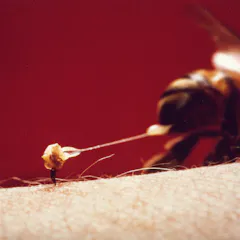
To understand why insects sting and why the stings of such tiny animals hurt so much, we first needed a way to measure the pain they cause. So I created a sting pain index.
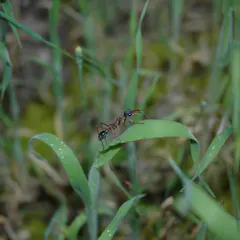
Bees, wasps and ants – a group known as Hymenoptera – can claim the title of deadliest insects. How did they evolve to be so painful?
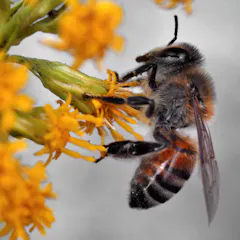
It’s difficult to individually track tiny insects but researchers think they’ve found a way to harness a bee’s own energy.
Top contributors
-

Associate Professor, Department of Physiology, Monash University
-
Research Fellow, School of Biological Sciences, Monash University
-
Researcher and analyst, Monash University
-
Lecturer in Ecology, University of New England
-
Associate Professor in Entomology, University of Sydney
-
Lecturer, School of Life and Environmental Sciences, University of Sydney
-
Professor, School of Natural Sciences, Macquarie University
-
Associate Professor of Biology, Tufts University
-
Professor of Quantum Physics and Australian Research Council Future Fellow, RMIT University
-
Senior Research Associate in Entomology, Lancaster University
-
Lecturer in Biological Sciences, University of Wollongong
-
Ph.D. Candidate, School of Environment and Forest Sciences, University of Washington
-
Scientist, South African National Biodiversity Institute
-
Emeritus Professor of Apiculture, University of Sussex
-
Researcher in Mechanical Engineering, University of Leeds