

Bees may provide surprising insights into the kinds of environments that are best for learning.
Articles on Honeybees
Displaying 81 - 100 of 161 articles

From dietary supplements to poop transplants, probiotics are now a multi-billion dollar market.
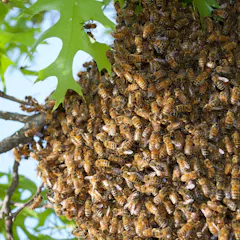
A swarm of honeybees can provide valuable lessons about how a group of many individuals can work together to accomplish a task, even with no one in charge. Roboticists are taking notes.
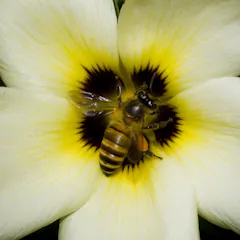
Bees innocuously buzzing ‘round the birdbath may be a barometer for burgeoning bee invasions.
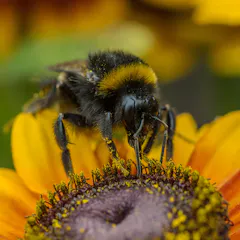
Regulators are still licensing insecticides without properly assessing whether they harm the wildlife on which we rely.
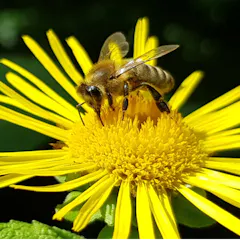
Honeybees are good at maths, but it was thought they could only count to four. That is, unless you present them with a task in which they are punished with a bitter-tasting drink for getting it wrong.
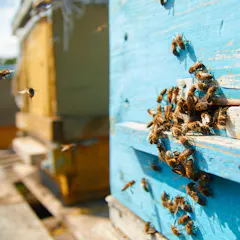
Beehive designs haven’t changed since the 1940s.
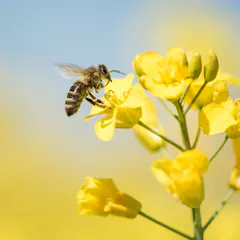
It’s unlikely that all species of bees will go extinct anytime soon – but current losses could still have a terrible impact on food supplies and ecosystems.
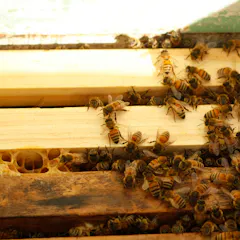
We’re left wondering whether we as humans are so very special after all – that perhaps the ability to learn mathematics could be universal.

Wild bees pollinate trees and shrubs that feed and shelter wildlife, provide flood control, prevent soil erosion and help regulate the climate.

Urban beekeeping is growing in popularity, but so is the backlash against honey bees.

Urban pollutants are a health concern in growing cities. Scientists are turning to honey bees to help monitor contaminants in soil, water, air and plants.
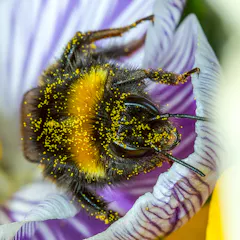
For human planting to support bee diversity, we need to know which flowers the insects want to visit.
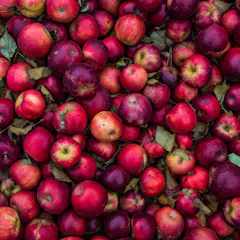
The six food trends likely to be front and centre in 2019.
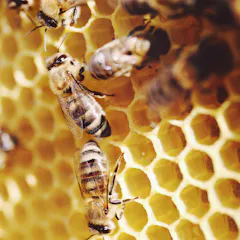
Bee brains contain less than one million neurons. Despite this, new research shows the honeybee can use symbols to perform basic maths, including addition and subtraction.
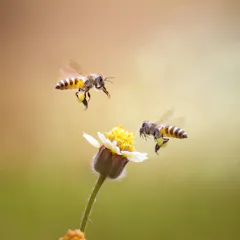
Bees need flowers to live, and we need bees to pollinate our crops. Understanding bee vision can help us better support our buzzy friends and the critical pollination services they provide.

Bees can pick up unique characteristics in paintings by zipping quickly back and forth in front of them to detect abrupt changes in the brightness of an image.
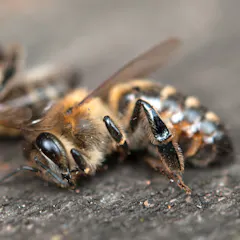
Bee colonies are threatened by a mite. However, a different mite has been evaluated for its potential to address this threat.

Research shows that managed honey bees may pose a threat to free roaming honey bee populations.
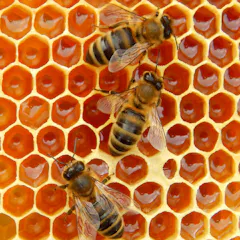
Remote sensors allowed us to observe the in-hive activities of honeybees, which could be key to keeping bee colonies worldwide healthy.
Top contributors
-

Associate Professor, Department of Physiology, Monash University
-
Research Fellow, School of Biological Sciences, Monash University
-
Researcher and analyst, Monash University
-
Lecturer in Ecology, University of New England
-
Associate Professor in Entomology, University of Sydney
-
Lecturer, School of Life and Environmental Sciences, University of Sydney
-
Professor, School of Natural Sciences, Macquarie University
-
Associate Professor of Biology, Tufts University
-
Professor of Quantum Physics and Australian Research Council Future Fellow, RMIT University
-
Senior Research Associate in Entomology, Lancaster University
-
Lecturer in Biological Sciences, University of Wollongong
-
Ph.D. Candidate, School of Environment and Forest Sciences, University of Washington
-
Scientist, South African National Biodiversity Institute
-
Emeritus Professor of Apiculture, University of Sussex
-
Researcher in Mechanical Engineering, University of Leeds