
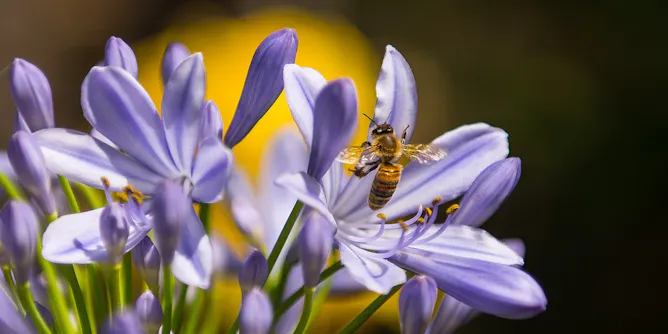
The world’s most widely used herbicide poses a threat to honey bees.
Articles on Honeybees
Displaying 101 - 120 of 161 articles

You have to draw an ethical line somewhere so if you were vegan, would you still eat avocados?

All too often the media buzz is centred around the managed honeybee, at the expense of other wild bee species.
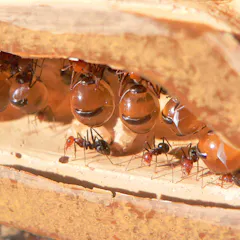
Honey might be synonymous with bees, but they’re not the only insects that come up with the goods.
Australia’s largest honey producer has been accused of selling fake honey. But what is fake honey – and why has it only been found now?
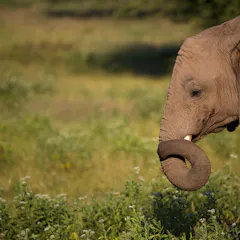
There is indeed merit to using beehives to keep elephants from eating and destroying crops.

Pollination by commercially raised bees is important to a variety of crops but none more than California almonds. In turn, beekeepers depend on them.
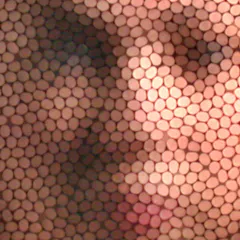
Bees and wasps can recognise people’s faces – despite having less than one million brain cells, compared to 86,000 million brain cells that make up a human brain.
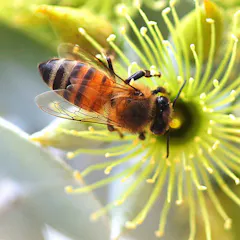
Australia’s distinctive native plants give our honey a distinctive stamp. Welcome to melissopalynology: the study of pollen.
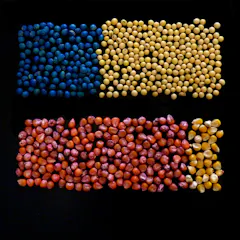
US farmers are planting more and more acres with seeds coated with neonicotinoid pesticides. An ecologist explains why this approach is overkill and may be doing more harm than good.
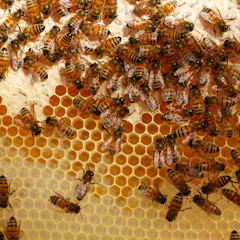
The Romans may not have had a symbol for zero, but bees understand what it means beyond just the simple assumption “there’s nothing there”.
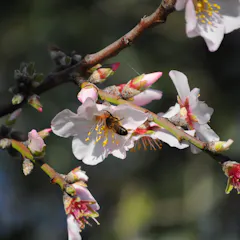
Many fruits, nuts and other crops rely on bees to pollinate their flowers at just the right time of year. Many farmers rent bees to get the job done at pollination time.
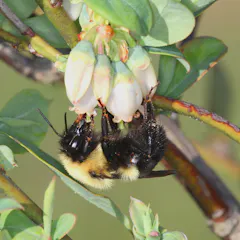
Honeybees receive a lot of attention, but the first North American bee to be listed as an endangered species is a wild bumble bee. Wild bees are vital pollinators, and some are declining rapidly.
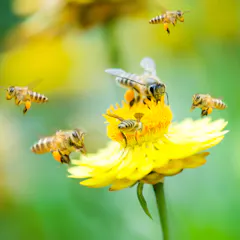
Honeybees are responsible for only a third of crop pollination in Britain.
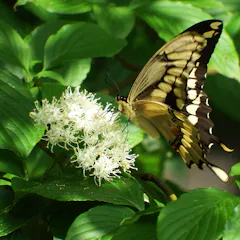
We’re in the middle of an Insectageddon. But a garden of native plants can help insects, as well as birds and other wildlife.
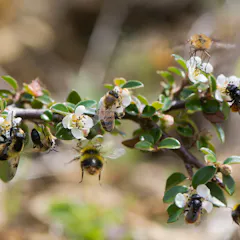
Hoverflies are helping spread disease among the already declining bee population.
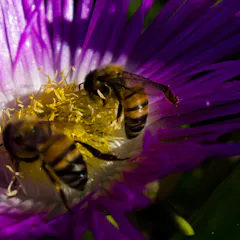
To learn about how humans, animals and insects experience vision illusions, we had to find a way to ask bees what they saw.
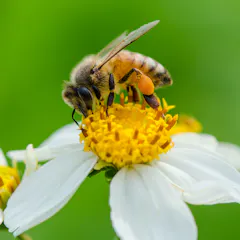
Urban bees deal with what’s known as “habitat patches,” discontinuous patches of green like gardens, parks and ravines. Green roofs could offer relief to bees dealing with habitat fragmentation.
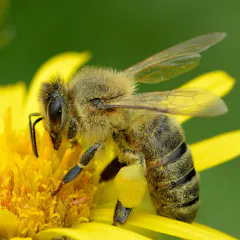
Bees need pollen to survive and grow, but not all plants can provide the right mix.
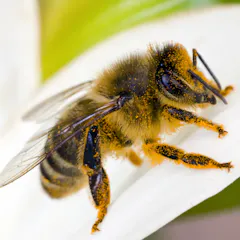
Bees and home security cameras use the same complex techniques to monitor their environments.
Top contributors
-

Associate Professor, Department of Physiology, Monash University
-
Research Fellow, School of Biological Sciences, Monash University
-
Researcher and analyst, Monash University
-
Lecturer in Ecology, University of New England
-
Associate Professor in Entomology, University of Sydney
-
Lecturer, School of Life and Environmental Sciences, University of Sydney
-
Professor, School of Natural Sciences, Macquarie University
-
Associate Professor of Biology, Tufts University
-
Professor of Quantum Physics and Australian Research Council Future Fellow, RMIT University
-
Senior Research Associate in Entomology, Lancaster University
-
Lecturer in Biological Sciences, University of Wollongong
-
Ph.D. Candidate, School of Environment and Forest Sciences, University of Washington
-
Scientist, South African National Biodiversity Institute
-
Emeritus Professor of Apiculture, University of Sussex
-
Researcher in Mechanical Engineering, University of Leeds