
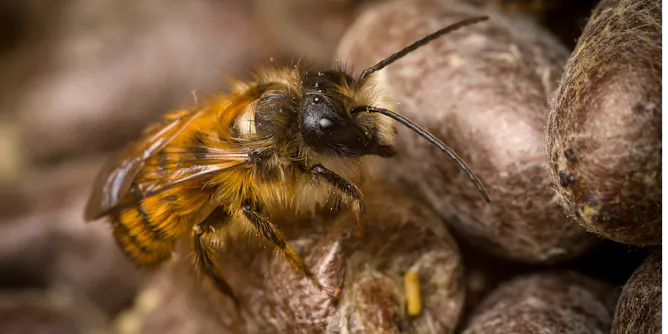
First ever feeding experiments reveal that solitary bees need to carb-load – and can be picky when it comes to dieting.
Articles on Honeybees
Displaying 61 - 80 of 161 articles
A diverse pollinator community is a reliable one.
EU-banned pesticides could not only threaten wild bees where they eat, but where they sleep too.
Not all flowers smell good, to people at least, but their scents are a way to attract pollinators.
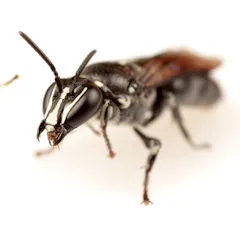
The last time a specimen was collected was in 1923.

While you may have seen a lot of bees around lately, there’s no reason to be afraid. Some don’t sting, and others might actually be flies.
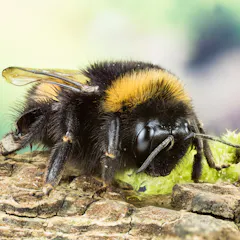
Chemicals banned in the EU were recently granted an exemption for limited use in the UK.
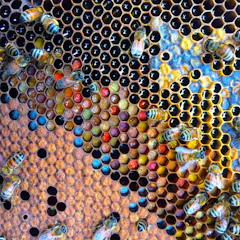
A single colony of bees can have 60,000 bees in it. Together, they can visit up to 50 million flowers each day to collect pollen and nectar. They’re not called ‘busy bees’ for nothing!

Life in a honey bee hive is all about cooperating for the collective good.

Honey bees in the most polluted parts of an Indian city were more likely to die sooner and showed clear signs of poor health.
Urban green spaces can be a rich habitat for diverse pollinators, if they’re managed properly.
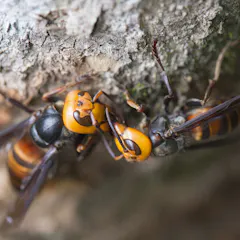
Asian giant hornets have received plenty of media attention recently. The only tangible threat they pose is to honey bees, which has nothing to do with the hornets — and everything to do with us.
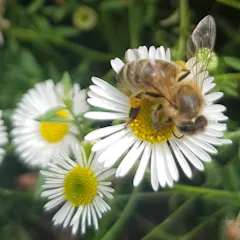
Past research has shown honeybees can add, subtract and even understand ‘zero’. But according to new findings, they can’t tell four flowers from five in natural settings.
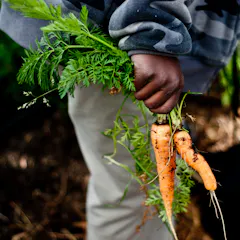
Victory gardens were popular during wartime, and have made a comeback during the current pandemic.
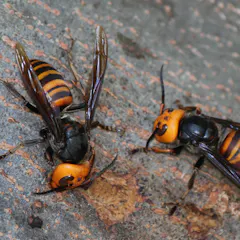
Are ‘murder hornets’ from Asia invading North America? A Japanese entomologist who’s been stung by one and lived to tell the tale explains what’s true about these predatory insects.

One bee may lay thousands of offspring in late spring. Give her room to build a nest and manage her reproductive duties.

Three foods and some cool stuff you should know about them.

Wild bees provide many lessons. Watching and learning from them may help keep honeybees safe and thriving.
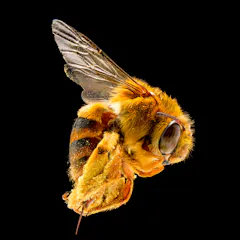
In NSW, honeybees are listed as a key threatening process to biodiversity.

‘Bee-washing,’ marketing claims that purport to help bees, can diminish the important distinction between a honey bee and native bee.
Top contributors
-

Associate Professor, Department of Physiology, Monash University
-
Research Fellow, School of Biological Sciences, Monash University
-
Researcher and analyst, Monash University
-
Lecturer in Ecology, University of New England
-
Associate Professor in Entomology, University of Sydney
-
Lecturer, School of Life and Environmental Sciences, University of Sydney
-
Professor, School of Natural Sciences, Macquarie University
-
Associate Professor of Biology, Tufts University
-
Professor of Quantum Physics and Australian Research Council Future Fellow, RMIT University
-
Senior Research Associate in Entomology, Lancaster University
-
Lecturer in Biological Sciences, University of Wollongong
-
Ph.D. Candidate, School of Environment and Forest Sciences, University of Washington
-
Scientist, South African National Biodiversity Institute
-
Emeritus Professor of Apiculture, University of Sussex
-
Researcher in Mechanical Engineering, University of Leeds