

Nutrition is another factor - in addition to pesticides and bee disease - that has led to the dwindling of the global bee population.
Articles on Honeybees
Displaying 141 - 160 of 161 articles
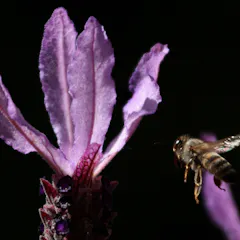
The way the Africa honeybee’s deal with parasites and pathogens can teach western beekeepers and researchers how to adapt their bees to fight diseases.
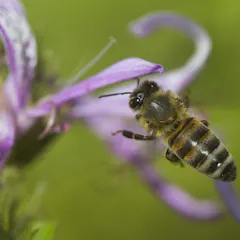
American Foulbrood is causing serious damage to the bee population in the Western Cape.
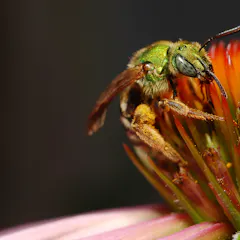
Meet some of the weird and wonderful bees that don’t bumble or make honey.
Honeybee reproductive cycles begin when the colony grows to a certain size. Cornell University researchers found honeybee…
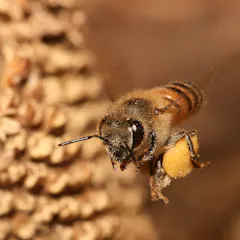
Ancient woodlands and flower-rich meadows have disappeared to make way for agriculture and urbanisation, but attempts are being made to reverse the decline using “green” farming projects. The question…
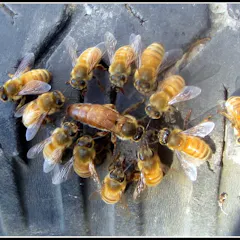
Much like people, insect colonies like to know if her majesty is at home. In the ants, bees, wasps and termites (the “big four” of the social insect world), the queen has long been suspected of using special…
A new facet of the honeybee “waggle dance” - in which bees dance to inform their counterparts where to find a food source…
Queen bees have been found to display honesty signals about their reproductive status and quality. The new research by the…
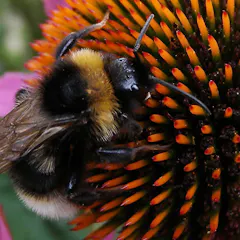
The EU banned the use of neonicotinoid pesticides for two years in April, after a sustained campaign by beekeepers, green groups and environmental organisations across Europe. These groups are convinced…
By analysing the flight of bees, the University of Queensland’s Brain Institute has learned how bees gain maximum fuel efficiency…
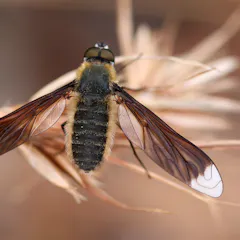
News that the European Union (EU) has restricted the use of neonicotinoid insecticides was welcomed by scientists, farmers, beekeepers and politicians around the world. But the limitations of the restriction…
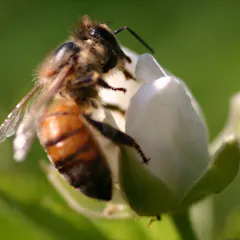
The European Union has just banned three pesticides thought to affect the learning behaviour of bees. The two-year ban, which takes effect in December, is in response to a dramatic drop in bee numbers…
Honeybees may have an advantage over other pollinators – caffeine improves performance. The findings, from Newcastle University…
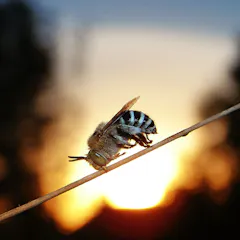
Honeybees are in trouble - a stressful lifestyle and an unhealthy diet are being compounded by mite attacks - but we needn’t panic about pollination. Australia has many native bee (and other pollinator…
A breakthrough in the understanding of how bees process complex visual tasks may lead to the development of artificial vision…
Tiny snippets of genetic code called micro-RNAs are responsible for the highly scripted, age-dependent division of labour…
Honeybees that scout for new food sources or nest sites have gene activity in their brains associated with novelty-seeking…
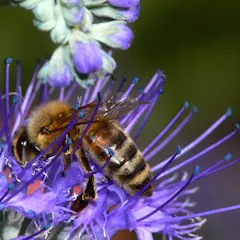
In many countries there has been concern about a decline in honeybees. You may have even heard that honeybees face dangers so dire that their imminent decline threatens world food production, with potential…
Monitoring the brain of the humble honeybee could help improve our understanding of mental disorders such as schizophrenia…
Top contributors
-

Associate Professor, Department of Physiology, Monash University
-
Research Fellow, School of Biological Sciences, Monash University
-
Researcher and analyst, Monash University
-
Lecturer in Ecology, University of New England
-
Associate Professor in Entomology, University of Sydney
-
Lecturer, School of Life and Environmental Sciences, University of Sydney
-
Professor, School of Natural Sciences, Macquarie University
-
Associate Professor of Biology, Tufts University
-
Professor of Quantum Physics and Australian Research Council Future Fellow, RMIT University
-
Senior Research Associate in Entomology, Lancaster University
-
Lecturer in Biological Sciences, University of Wollongong
-
Ph.D. Candidate, School of Environment and Forest Sciences, University of Washington
-
Scientist, South African National Biodiversity Institute
-
Emeritus Professor of Apiculture, University of Sussex
-
Researcher in Mechanical Engineering, University of Leeds