
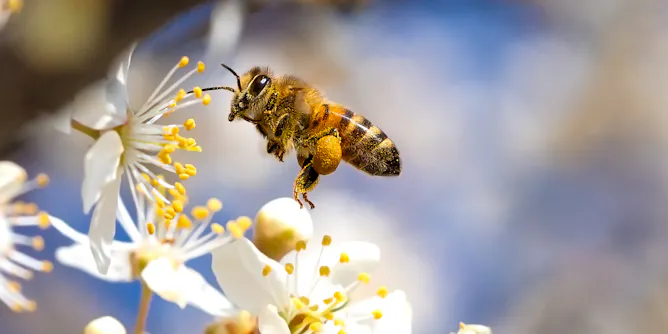
Wild honey bee colonies outnumber those managed in commercial hives.
Articles on Honeybees
Displaying 21 - 40 of 161 articles
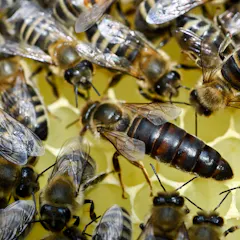
A queen’s main job in the hive is to lay eggs and pass genes on to offspring. But many bee species do just fine without queens or big colonies.
Australia could still take action in the fight against Varroa that wasn’t possible elsewhere. But to do so, we need to fill urgent gaps in bee research.
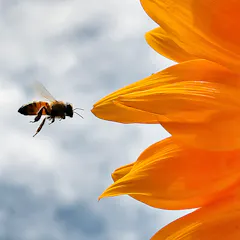
Inert ingredients are added for purposes other than killing pests and are not required under federal law to be tested for safety or identified on pesticide labels.
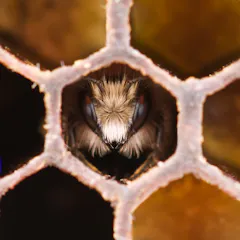
New research shows honeybee hive clusters are a sign of desperation, not insulation.

The Varroa mite is here to stay. This will have wide-ranging impacts on beekeeping and the crops that rely on honey bee pollination in Australia.

Invasive Asian hornets are a top predator of bees in the UK – and sightings are starting to soar.
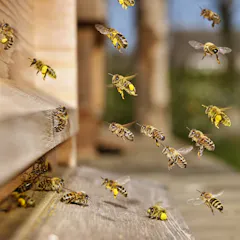
Using bees as biomonitors can be a more sensitive and effective way of detecting contaminants than traditional sampling methods, new research shows.
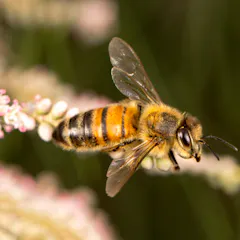
Feral honeybees have become a major problem in Australia. It’s time to develop effective and practical control measures.
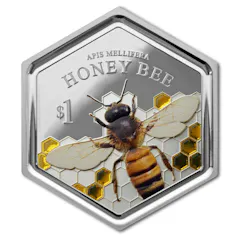
The surprising frequency of bees on coins through history shows the enduring importance to human societies of our buzzing companions.
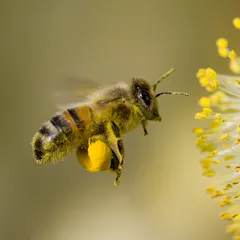
Picking the correct flowers is a crucial job for honey bees, so it’s no wonder they are incredibly efficient at it. But how can such little brains do it?
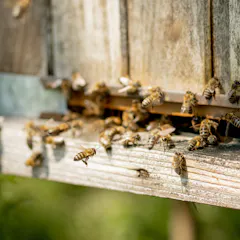
Honeybees have the potential to cause damage to the structure of homes. The honey and wax produced by bees can melt under certain circumstances, like when the colony dies or during hot weather.

Australia is the last continent to be invaded by the dangerous honey bee parasite, and has an opportunity to be the first to eradicate it.
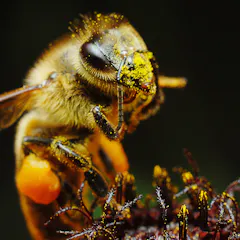
We all know bees are vital pollinators. But they’re also art critics, social learners, dancers and so much more.

The waggle dance is performed by forager bees to convey important information about food sources.
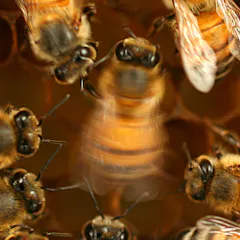
Honeybees possess one of the most complex examples of nonhuman communication. New research suggests that it is learned and culturally passed down from older to younger bees.
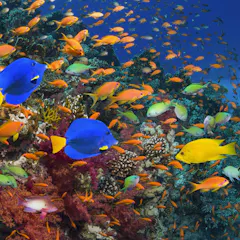
Scientists are learning that diversity has many perks – whether in multispecies groups of animals or human society.
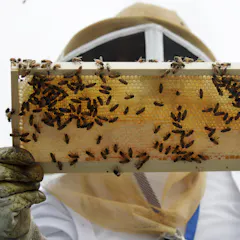
A vaccine for bees may evoke images of teeny hypodermic needles, but this product works in a sophisticated way that reflects the social structure of honeybee colonies.

The report results could help explain honeybee colony deaths.

Honey bees, wild and native bees face threats from parasites, pesticides and habitat loss. Shorter winters, more extreme weather and more habitat destruction won’t help.
Top contributors
-

Associate Professor, Department of Physiology, Monash University
-
Research Fellow, School of Biological Sciences, Monash University
-
Researcher and analyst, Monash University
-
Lecturer in Ecology, University of New England
-
Associate Professor in Entomology, University of Sydney
-
Lecturer, School of Life and Environmental Sciences, University of Sydney
-
Professor, School of Natural Sciences, Macquarie University
-
Associate Professor of Biology, Tufts University
-
Professor of Quantum Physics and Australian Research Council Future Fellow, RMIT University
-
Senior Research Associate in Entomology, Lancaster University
-
Lecturer in Biological Sciences, University of Wollongong
-
Ph.D. Candidate, School of Environment and Forest Sciences, University of Washington
-
Scientist, South African National Biodiversity Institute
-
Emeritus Professor of Apiculture, University of Sussex
-
Researcher in Mechanical Engineering, University of Leeds